211 HP Under $30K? The Skoda Epiq Might Change the EV Game Forever
With 273 miles of real-world range, a trunk that shames larger SUVs, and a price that undercuts comparable gas-powered rivals after European incentives, the 2027 Skoda Epiq is quietly rewriting the rules of affordable electric mobility.


Por: Danniel Bittencourt
22/05/2026
2027 Skoda Epiq: The Electric SUV That Removes Every Excuse to Stay With Gas
Starting at around $27,500 in Europe — and potentially dropping below the price of an equivalent gas SUV after government incentives — the 2027 Skoda Epiq isn’t just another EV trying to exist. It’s a calculated, precisely engineered answer to every objection everyday drivers have raised against going electric. No compromises on space. No anxiety about range. No premium penalty for choosing clean energy.
Built on Volkswagen Group’s next-generation MEB+ platform, the Epiq rolls off the same production line in Pamplona, Spain, as the VW ID.2 and Cupra Raval. But where those siblings lean into brand emotion and sporty attitude, the Epiq plays a smarter, more grounded game: maximum usable space, family-first practicality, and the kind of real-world efficiency that makes ownership math genuinely work.
Its closest rivals are the Renault 4 Electric and the Ford Puma Gen-E — both strong contenders in the European compact SUV segment. The Epiq targets young urban families and suburban commuters who need an EV that can handle both the school run and a weekend road trip without compromise. No official U.S. launch has been confirmed at this time.
Sharp, Clean and Built to Last: The Design Language That Retired the Old Skoda Look for Good
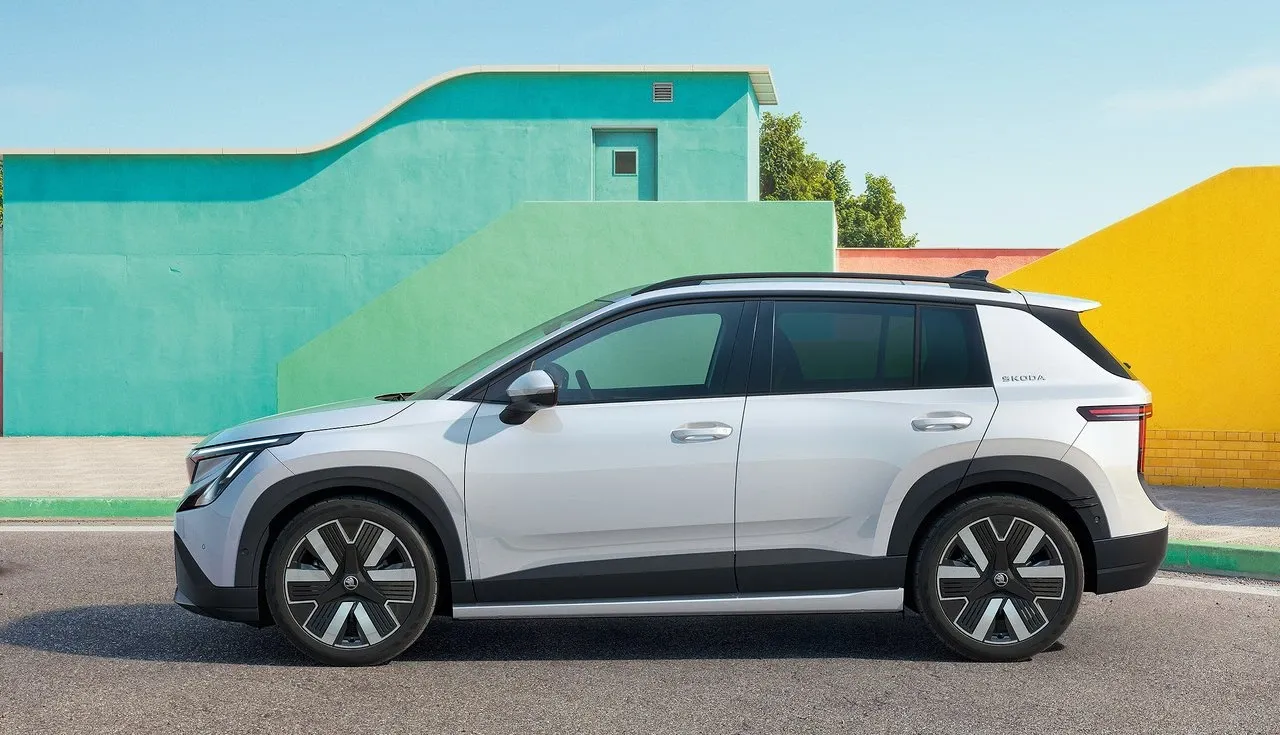
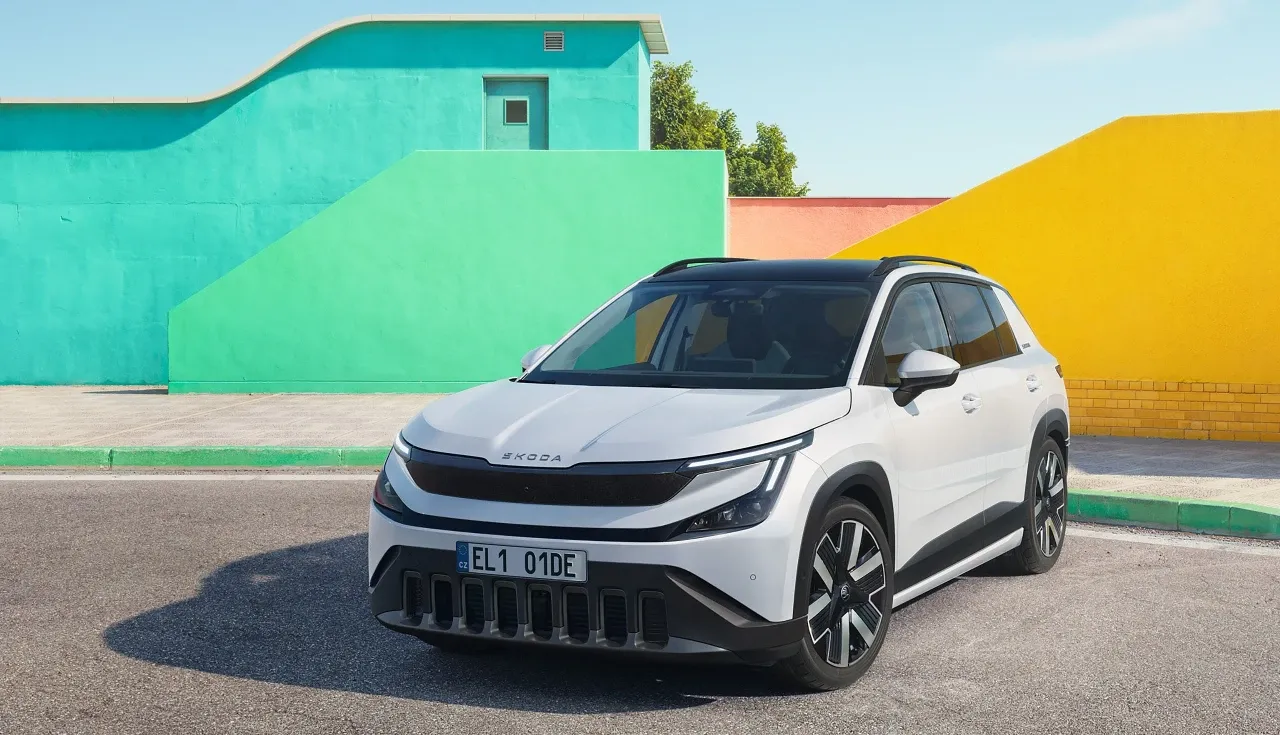
At just 164.2 inches long, the Skoda Epiq pulls off something most compact SUVs can’t — it looks and feels bigger than it actually is. The silhouette is deliberately clean, planted and confident, ditching the forced creases and oversized grilles that defined the last decade of automotive design in favor of something more timeless and architecturally honest.
Up front, Skoda’s iconic butterfly grille is gone for good. In its place sits the “Tech-Deck Face” — a smooth, darkened panel that conceals the full sensor array powering the driver assistance systems. The headlights follow a distinctive T-shaped graphic signature, split into two functional zones: daytime running lights and turn signals on top, with the main LED beam integrated cleanly into the lower bumper. Opt for the available Matrix LED system and you get 12 individually controlled light segments that actively prevent glare for oncoming drivers while keeping the full beam on everything else — adjusting width and reach across four intelligent modes depending on speed and conditions.
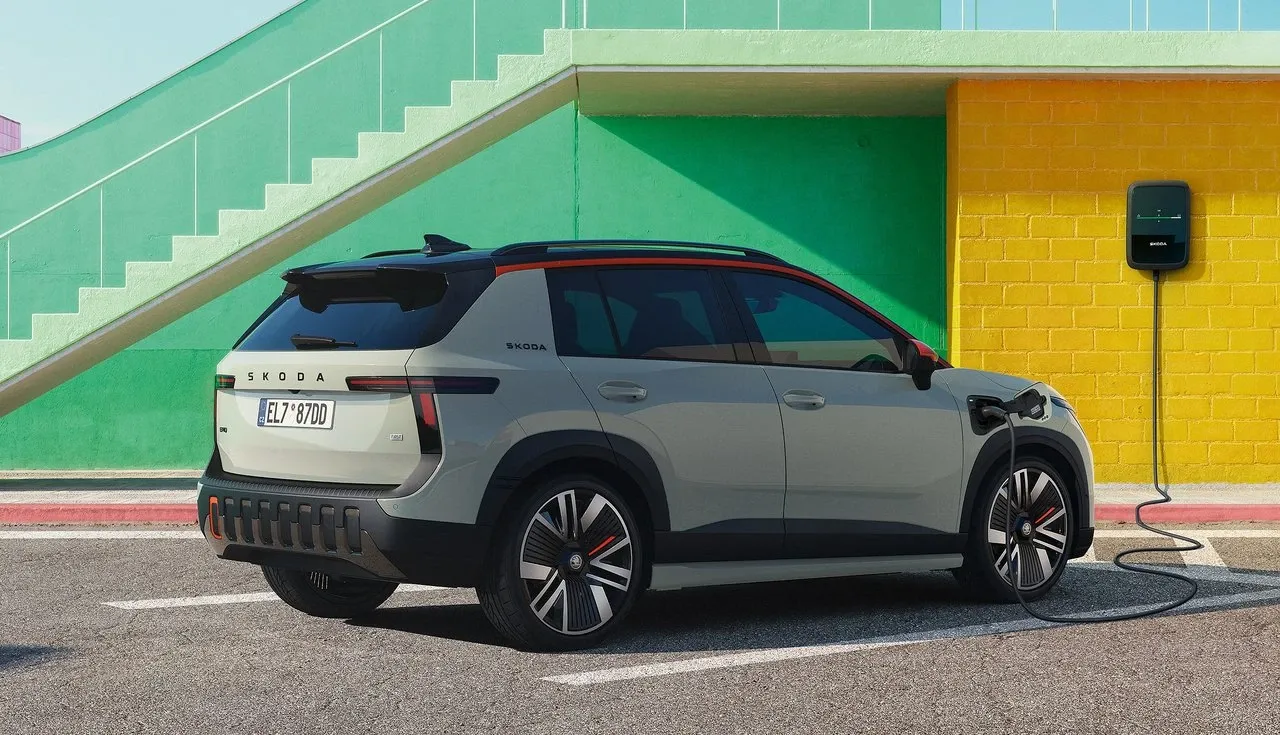
The side profile is defined by pronounced wheel arches with functional plastic cladding, flush door handles that keep the bodywork visually uninterrupted, and wheels ranging from 17 to 20 inches depending on trim. Out back, slim T-pattern taillights frame the centered “Skoda” wordmark — no circular badge, no clutter. The whole package reads as mature, considered design that will age well — the exact opposite of a trendy styling exercise that dates itself within three years.
No Leather, No Problem: The Epiq’s Cabin Is Built From the Future
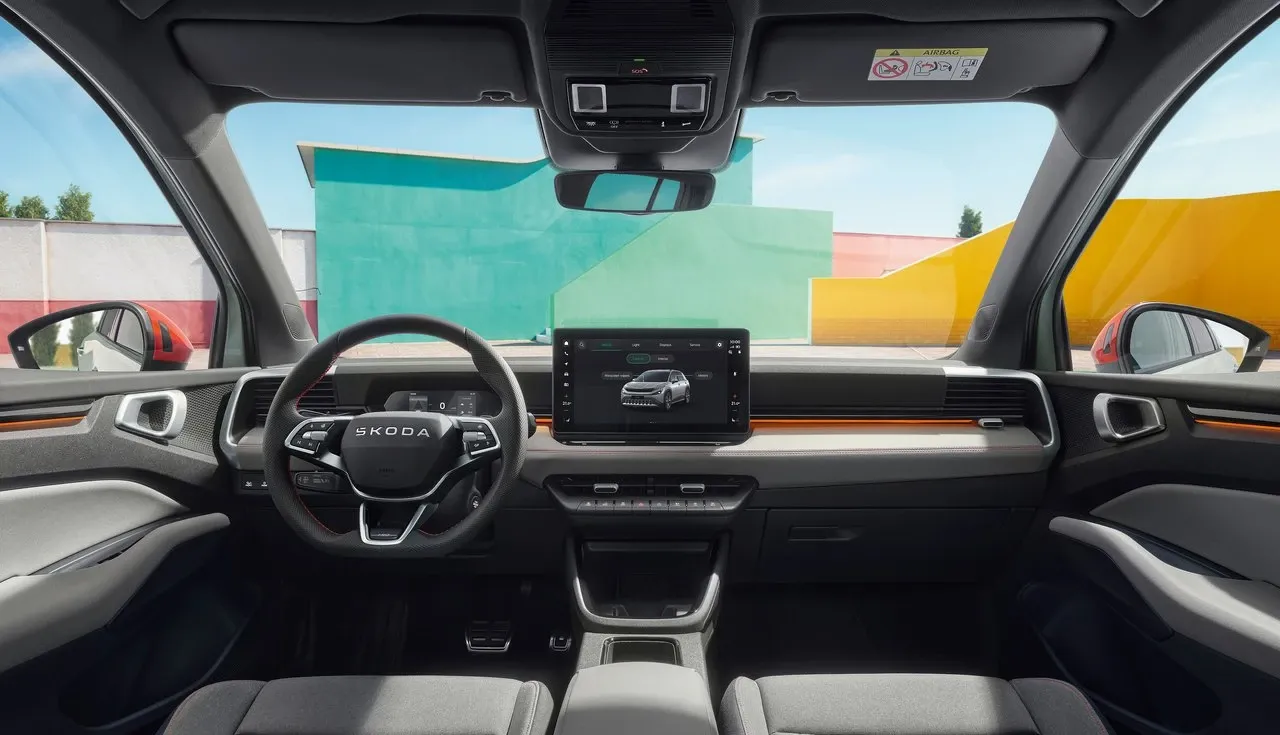
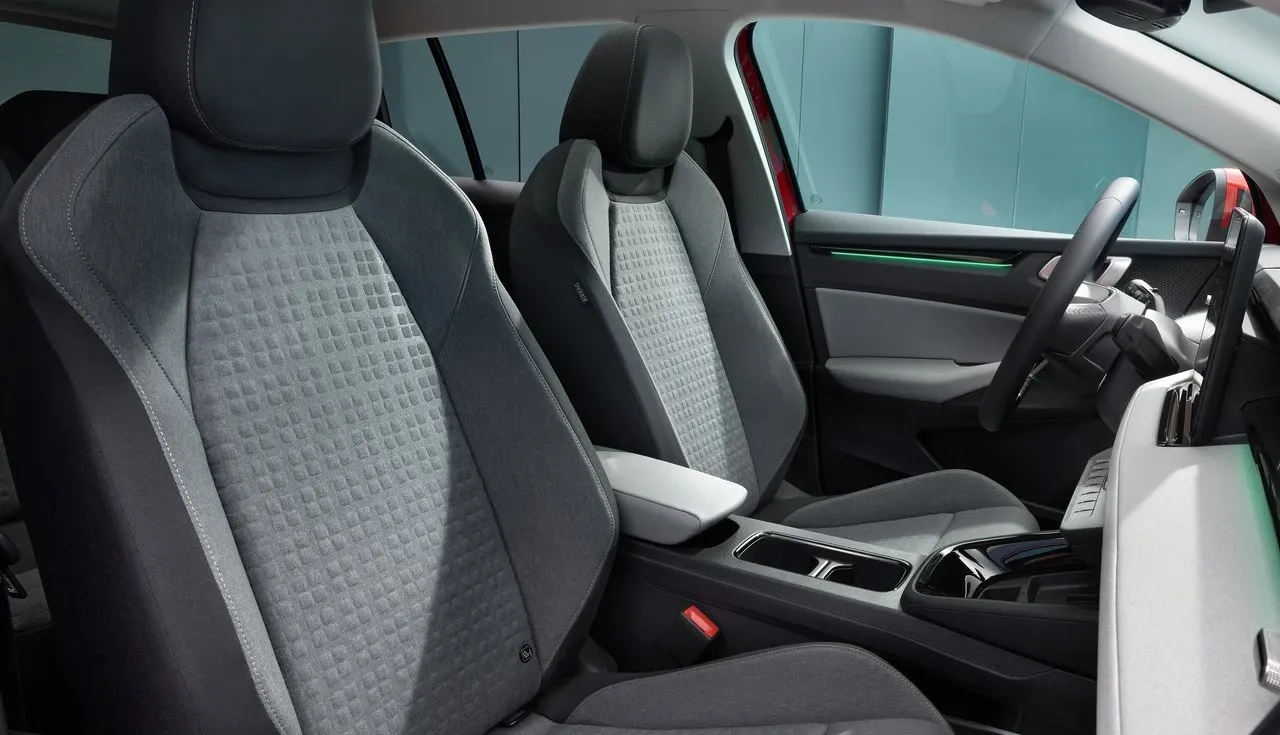
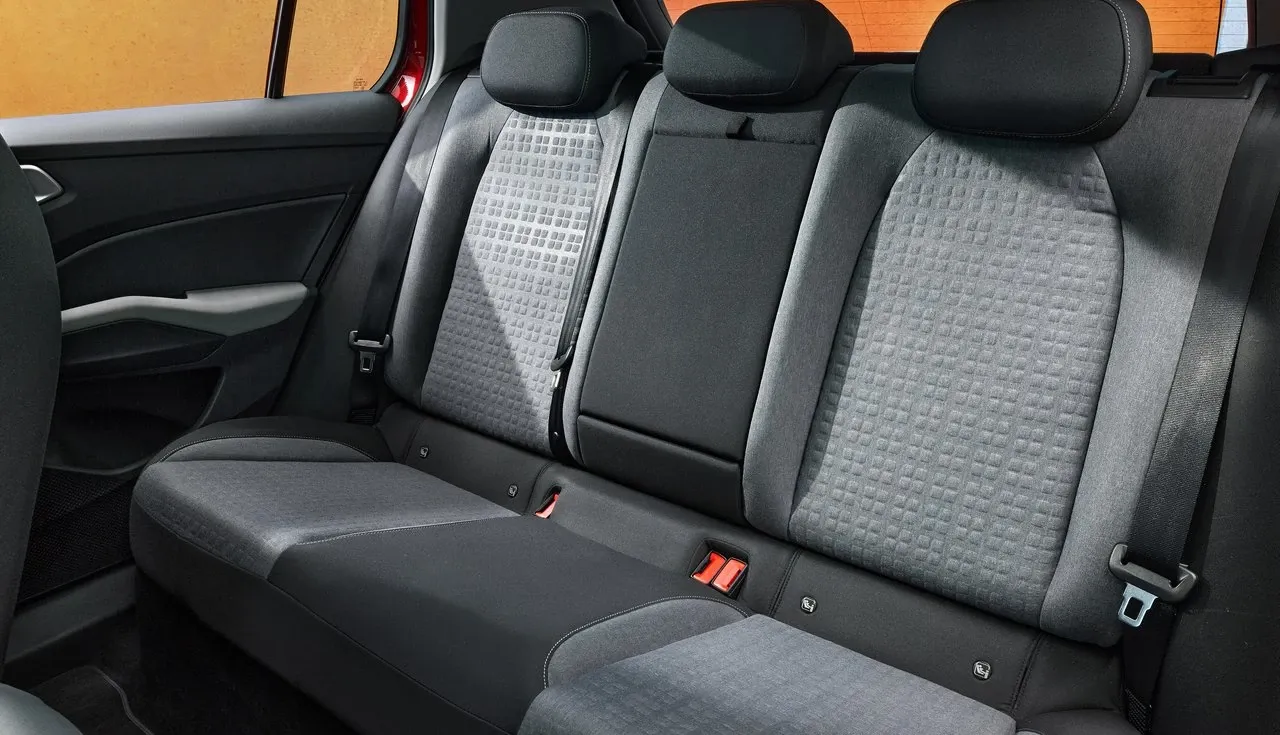
Step inside the Skoda Epiq and the flat floor hits you immediately — a direct benefit of the electric platform that eliminates the transmission tunnel entirely. The result is a cabin that genuinely feels like it belongs in a car a full size larger. Front seats are upholstered in 100% recycled polyester derived from post-consumer PET bottles, and in higher trims, the Suedia microfiber finish — a high-density material with a suede-like texture — adds a level of tactile refinement that surprises at this price point. The dashboard uses Techtona, a synthetic premium-feel material that replaces animal leather across every surface without sacrificing perceived quality.
The four Design Selection themes — Studio, Loft Grey, Loft Mint, and Suite — go well beyond color swaps. Each one reconfigures the entire ambient atmosphere of the cabin through horizontal LED mood lighting that runs across the dashboard and door panels. The available panoramic sunroof with an electrically operated thermal shade isn’t just a comfort feature — it actively reduces air conditioning load, protecting real-world range on sunny days.
Android Automotive, a 13-Inch Display, and the One Trade-Off Skoda Made
The centerpiece of the Epiq’s tech stack is a 13-inch floating touchscreen running Android Automotive OS — with a native app store, built-in streaming, and wireless phone mirroring. A secondary digital instrument cluster (~11 inches) keeps speed, charge level and navigation front and center without clutter. The ADAS suite is genuinely impressive for the segment: Travel Assist 3.0 combines adaptive cruise control with lane centering for hands-on highway assist, while Front Assist delivers autonomous emergency braking that recognizes pedestrians and cyclists. A full 360-degree camera system with perimeter sensors rounds out the safety package.
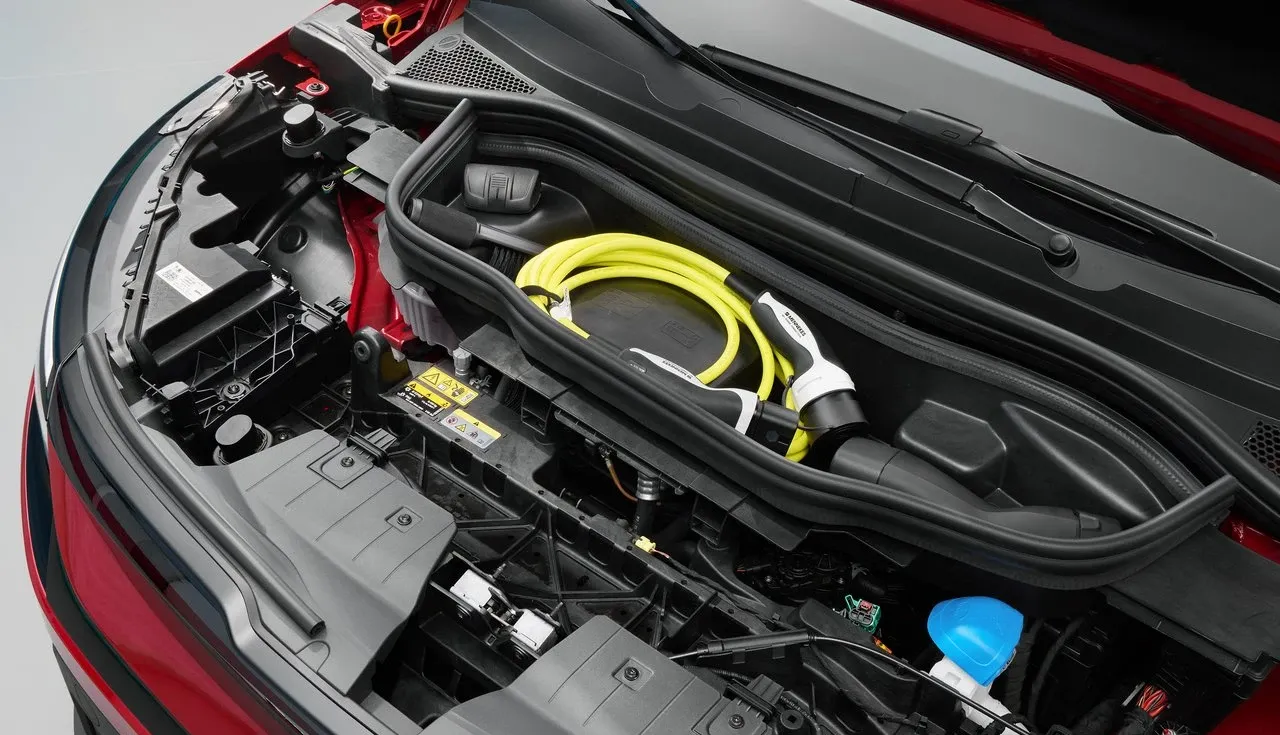
Rear passenger space is generous given the car’s footprint, and the 475-liter trunk paired with a 25-liter front storage compartment makes cargo capacity one of the strongest arguments for the Epiq over any rival in its class. The standout strength is undeniably that space-to-size ratio. The real limitation, though, is honest: climate controls and most functions are buried in the touchscreen, requiring eyes-off interactions that physical buttons would handle far more safely at speed.


One Platform, Three Powertrains: How the Epiq Delivers From Practical to Seriously Fast
The Skoda Epiq runs on the MEB+ architecture with a single front-mounted synchronous electric motor driving the front wheels through a single-speed fixed reduction — no traditional transmission, no clutch, no shift points. The choice of front-wheel drive was a deliberate engineering trade-off: it freed up the rear axle space that directly enables the class-leading trunk volume, while keeping production costs in check. It does, however, reintroduce a dynamic characteristic that performance-focused EVs had moved past — torque steer under aggressive acceleration.
The base Epiq 35 produces 116 horsepower and 197 lb-ft of torque, hitting 60 mph in roughly 11 seconds with a 93-mph top speed. It’s tuned for smooth urban driving and the lowest entry price, not outright pace. The mid-range Epiq 40 uses the same battery pack but with reprogrammed inverter software unlocking 135 hp — the 0–60 drops to around 9.8 seconds, a meaningful improvement for real-world highway merging and passing.
The version that defines the lineup is the Epiq 55: 211 horsepower, 214 lb-ft of torque, a high-density NMC battery delivering 273 miles of real-world range, and a 0–60 time of 7.1 to 7.4 seconds — genuinely quick for a family hauler. Top speed reaches 99 mph. The regenerative braking system in B mode enables effective one-pedal driving in most traffic situations, significantly extending brake pad life over time. The Epiq 55 is also rated to tow up to 2,645 lbs with a braked trailer — an unusual and practical capability for this class.
Technical Specifications — 2027 Skoda Epiq
| Specification | Detail |
|---|---|
| Motor Type | Single Front-Mounted Synchronous Electric |
| Output (by trim) | 116 hp / 135 hp / 211 hp |
| Torque (by trim) | 197 lb-ft / 197 lb-ft / 214 lb-ft |
| Transmission | Single-speed fixed reduction |
| Drivetrain | Front-Wheel Drive (FWD) |
| 0–60 mph (top trim) | 7.1–7.4 seconds |
| Range (EPA est.) | ~193 miles (35/40) / ~273 miles (55) |
| Charging (DC Fast, 10–80%) | 24 minutes (Epiq 55) |
| Max Towing Capacity | 2,645 lbs (Epiq 55, braked) |
| Cargo Volume | 16.8 cu ft + 0.9 cu ft (frunk) |
| Wheelbase | 102.4 inches |
| Overall Length | 164.2 inches |
What the Skoda Epiq Actually Costs — And Why the Price Story Is More Complicated Than It Looks
In Europe, the Epiq’s entry price of around $27,500 functions primarily as a headline number — the kind that generates buzz and attracts fleet buyers. The trim that will actually move volume at dealerships is the Epiq 55, ranging from roughly $35,000 (Urban) to $41,000 (First Edition) at full retail. Once European government incentives and manufacturer discounts are combined through programs like Spain’s Plan Auto+, those figures collapse to approximately $24,000, $27,000 and $29,500 respectively — undercutting comparable gas-powered compact SUVs on sticker price alone.
For American shoppers, no official U.S. pricing or launch timeline has been announced. If the Epiq eventually makes it stateside, a market estimate — based on European pricing, import costs, and current segment benchmarks — would place it somewhere between $32,000 and $42,000 before any federal EV tax credits. That’s an estimate, not an official figure. Depending on eligibility under clean vehicle incentive programs, the effective out-of-pocket cost could shift significantly.
On ownership costs, the Epiq’s electric architecture is a genuine long-term financial advantage. No oil changes, no timing belt, no clutch replacement — scheduled maintenance narrows down to battery coolant service every two years, cabin air filter replacements, and suspension inspections. Regenerative braking in daily use meaningfully extends brake pad and rotor life, with some EV owners surpassing 60,000 miles on original brake components. Insurance, however, sits at a medium-to-high profile: the radar arrays behind that darkened front panel, the Matrix LED modules, and the lithium battery pack under the floor all elevate repair costs after even minor collisions, pushing premiums closer to midsize crossover territory than entry-level compact.
The Epiq makes the most financial sense for buyers with home charging access who want to maximize incentive windows. Waiting for the market to mature is a reasonable strategy only if public charging infrastructure in your area remains limited.
The Questions Every Skoda Epiq Buyer Is Googling — Answered Straight
What is the real-world range of the Skoda Epiq? The Epiq 55 is rated at approximately 273 miles under real-world conditions. Heavy climate control use — heating in winter or AC in summer — can reduce that figure by up to 26%, so plan accordingly on longer trips.
How fast does the Skoda Epiq charge? The Epiq 55 charges from 10% to 80% in 24 minutes at a DC fast-charging station. The base Epiq 35 peaks at just 50 kW, making long-distance stops noticeably longer — a real limitation worth considering before choosing a trim.
Who are the Skoda Epiq’s main competitors? The closest rivals are the Renault 4 Electric, Ford Puma Gen-E, and Kia EV2. The VW ID.Cross shares the same platform but targets a slightly different buyer through brand positioning.
Is the Skoda Epiq coming to the United States? As of now, no official U.S. launch has been confirmed. Production is based in Spain and initial deliveries are targeted at European markets beginning late 2026.
Is the 2027 Skoda Epiq Worth Buying?
For buyers with home charging and access to active EV incentives, the answer is a clear yes. The Epiq 55 delivers more cargo space, more power, and lower running costs than most gas-powered compact SUVs at the same price point — and it does so without asking you to sacrifice practicality for the sake of going green.
It’s not the right choice for drivers who rely on public charging infrastructure alone, or for those who want an analog, tactile driving experience. Front-wheel drive with 211 horsepower demands respect in the wet, and the touchscreen-heavy interface will frustrate anyone who values simplicity at speed.
But strip away the caveats, and what remains is the most well-rounded, genuinely affordable electric SUV the European market has produced. The Epiq doesn’t ask you to compromise. It just asks you to plug in.
Share this article
Related posts