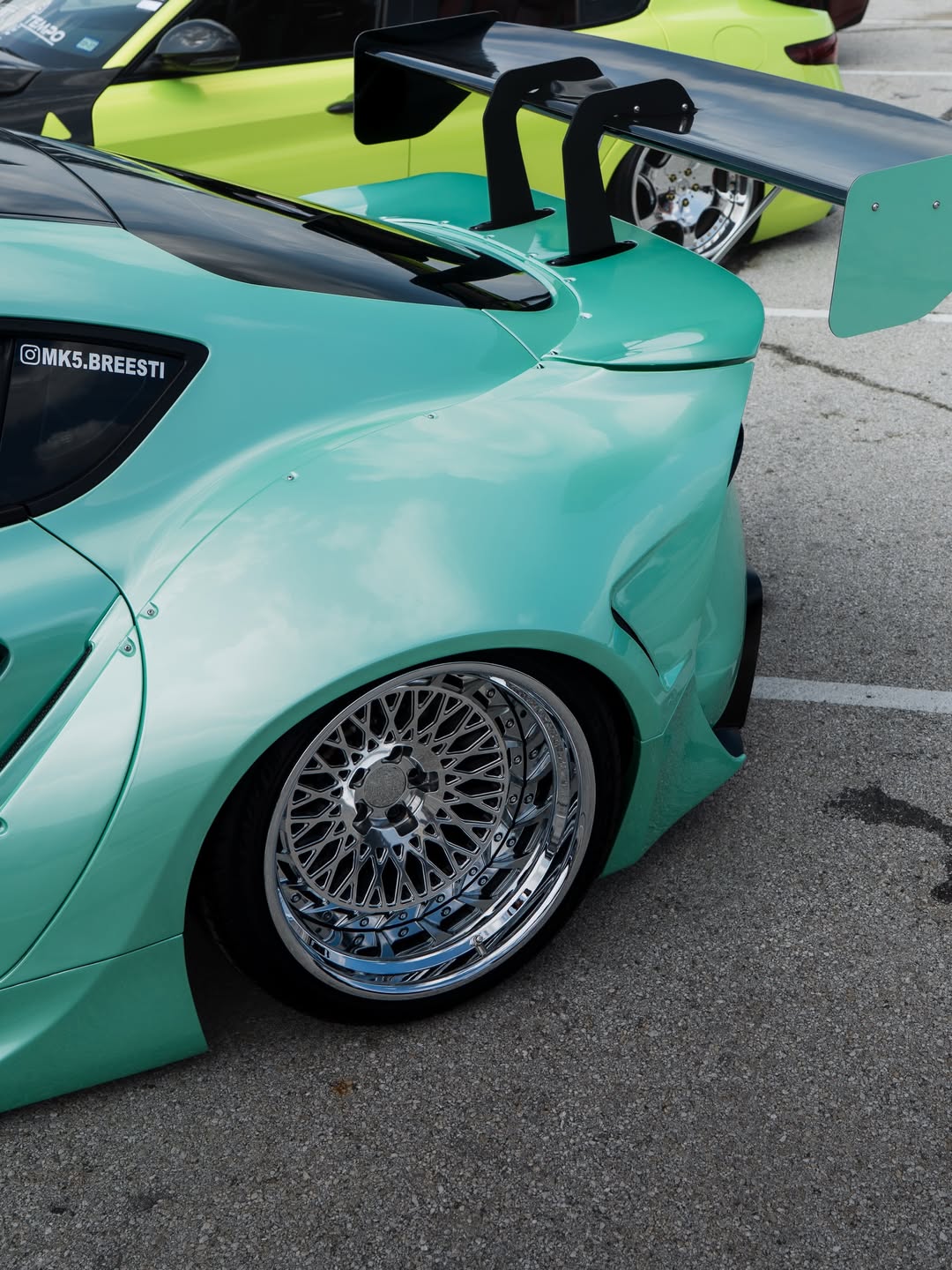
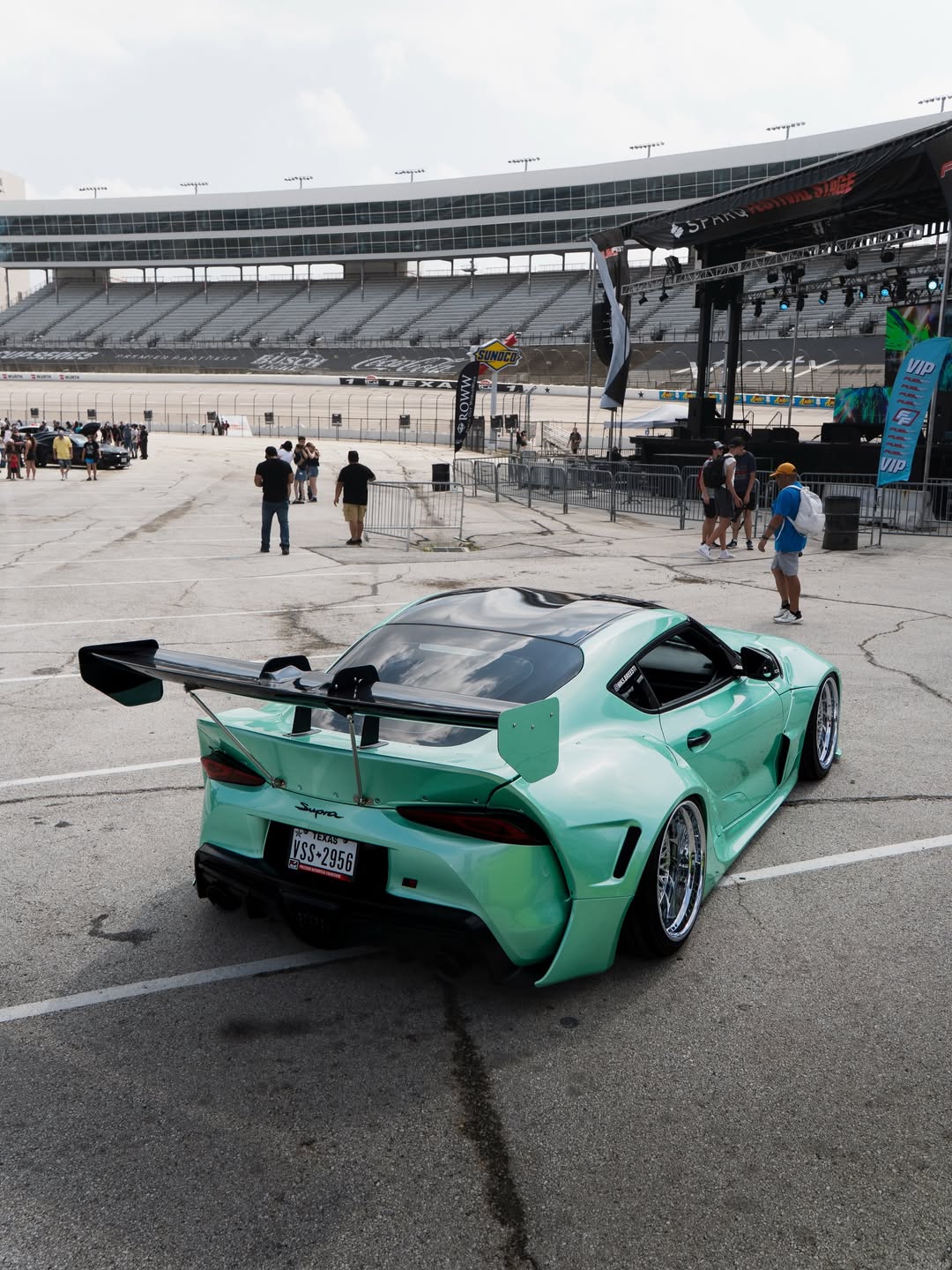
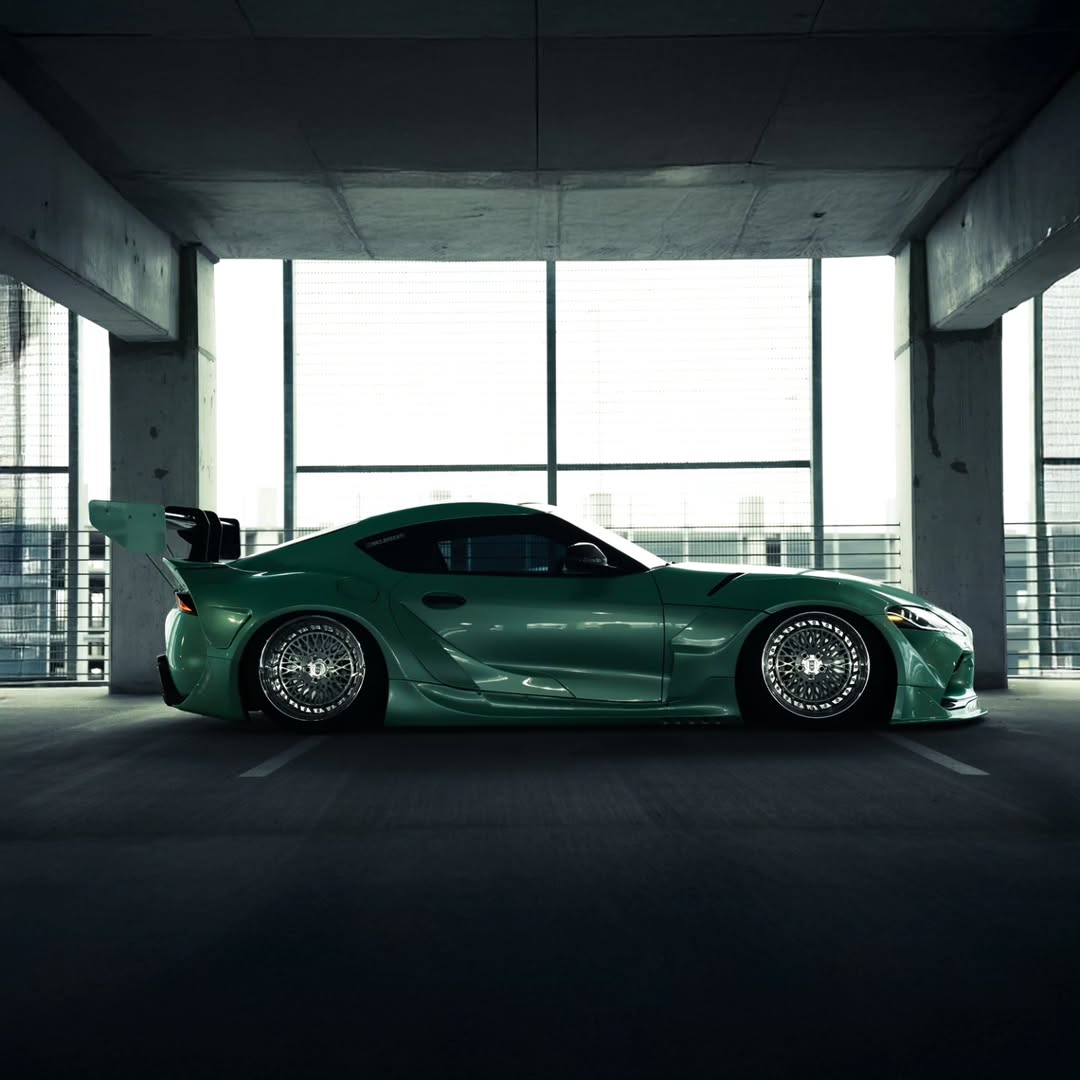
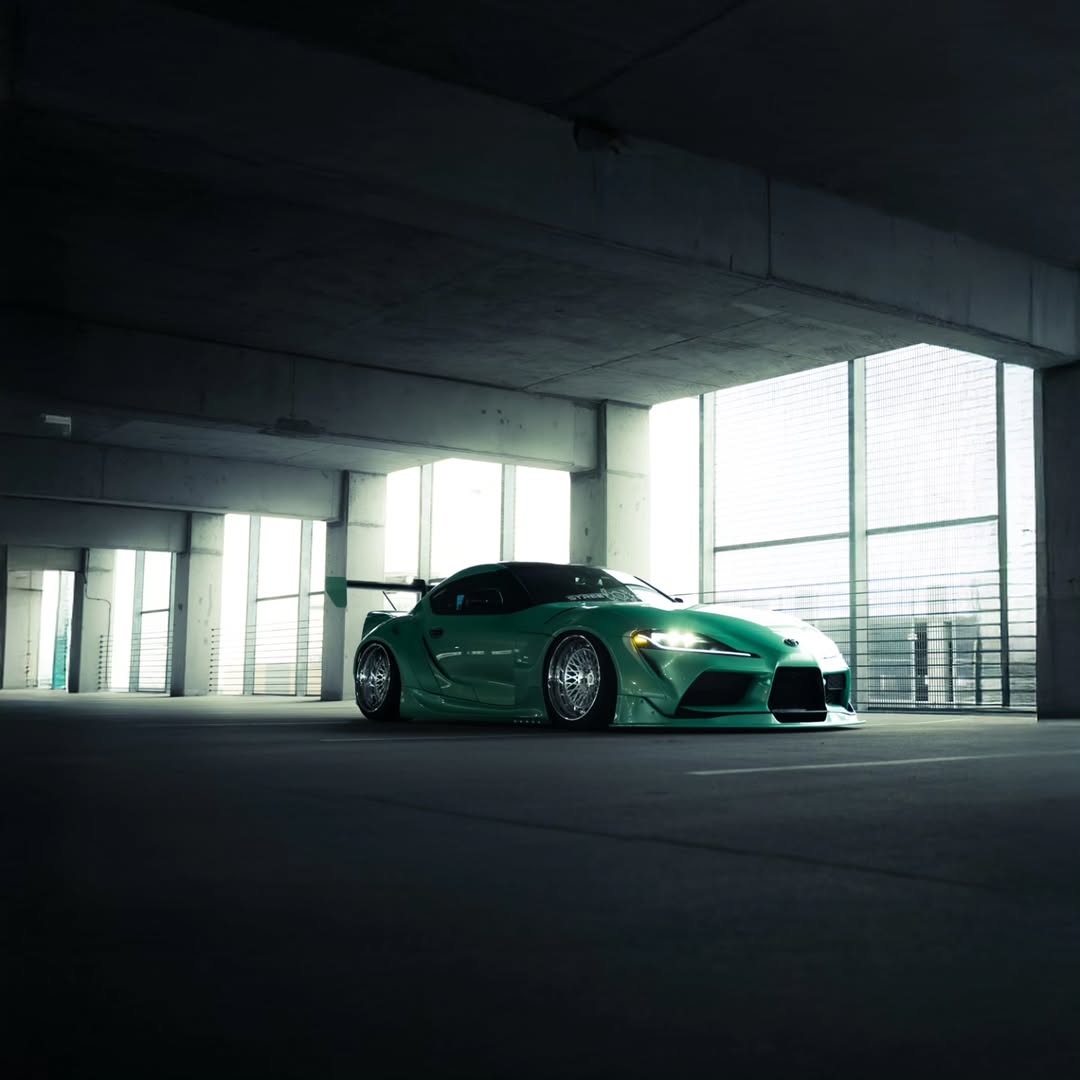
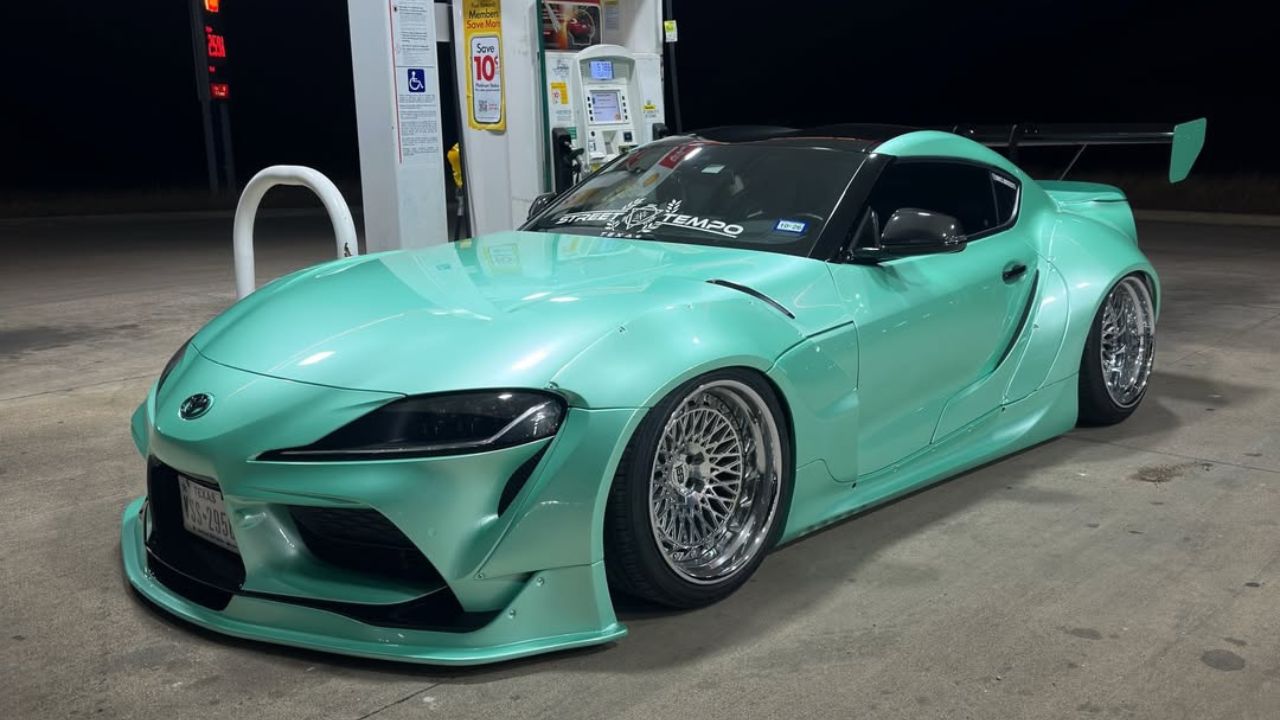
This is the Toyota GR Supra joining the internet’s most hyped car gallery.
The deep, throaty growl of the inline-six engine wakes up your senses before the sports car even turns the corner. The GR Supra hits the streets with an intimidating stance, blending visceral nostalgia with the surgical precision of top-tier engineering.
The Return of an Icon: Way Beyond Design
Before we dissect every inch of this wind-sculpted bodywork, we need to look at the raw numbers that dictate the rhythm of this machine.
Quick Specs:
Engine: 3.0L Turbocharged Inline-6
Horsepower: 382 hp (US Spec)
Torque: 368 lb-ft at 1,800 rpm
Transmission: 8-speed automatic (6-speed manual available)
Drivetrain: Rear-Wheel Drive (RWD)
0-60 mph: ~3.9 seconds
The current design is the offspring of a partnership that still sparks heated debates at every local car meet. The immortal heritage of Japan collided with German engineering, merging two completely different philosophies to build a machine entirely focused on the connection between driver and asphalt.
It doesn’t try to be a comfortable grand tourer; it’s wide, low, and delivers a rare, immediate dynamic response. Toyota absolutely nailed it by turning the gorgeous lines of concept cars, like the acclaimed FT-1, into a tangible, street-legal production model.
Head-to-Head: The Track Battle
In a segment where every tenth of a second matters, here is how the Supra stacks up against rivals that share the same mechanical ethos and price bracket.
| Model | Engine | Horsepower | 0-60 mph |
| GR Supra 3.0 | 3.0L Turbo Inline-6 | 382 hp | 3.9 s |
| BMW Z4 M40i | 3.0L Turbo Inline-6 | 382 hp | 3.9 s |
| Porsche 718 Cayman S | 2.5L Turbo Flat-4 | 350 hp | 4.0 s |
The Heart and Soul (Mechanics and Interior)
Open the door and drop—literally drop—into the aggressive bucket seats. The driving position is glued to the floorboards, letting your hips feel every single imperfection in the tarmac. The interior wraps around you like a fighter jet cockpit, with the center console and controls tilted aggressively toward your hands.
Under the massive clamshell hood rests the highly praised B58 engine, an incredibly robust and elastic powerplant. Throttle response is ferocious, delivering peak torque at incredibly low RPMs, pushing you into the back of your seat instantly.
Over time, this sports car has evolved. Responding to the heavy backlash from purists who love classic cars, the automaker recently introduced a six-speed manual gearbox. This transmission was specifically developed to handle the car’s torque curve, arriving alongside retuned suspension mounts and a recalibrated traction control system.
These images are from an Instagram profile of a true car lover, the kind of person who lives and breathes this lifestyle every single day, and their Instagram handle will be linked at the end of this article.
Where the Supra Shines (Strengths)
Mind-bending chassis dynamics: The torsional rigidity is actually higher than the legendary Lexus LFA. The short wheelbase crossed with a wide track creates a lethal agility in tight corners.
Over-engineered powertrain: The inline-six block is a masterpiece. It consistently puts down dyno numbers that are noticeably higher than what the factory manual claims.
Neck-breaking aesthetics: The double-bubble roof and flared fenders give it a visual presence that easily outshines supercars costing three times its sticker price.
Where It Falls Short (Weaknesses)
Excessive German DNA inside: The radio buttons, shift lever, and even the warning chimes are pulled straight from a BMW parts bin, which breaks the immersion of sitting in a purebred JDM legend.
Unbearable wind buffeting: Driving with both windows down at speeds over 50 mph creates a violent, helicopter-like wind turbulence inside the cabin that is extremely uncomfortable.
Severe blind spots: The massive B-pillars and tiny rear window make low-speed parking lot maneuvers a pure exercise in faith and heavy reliance on the backup cameras.
The Future of the Dynasty
With environmental regulations getting stricter by the minute, the fate of the model as we know it remains uncertain. Rumors surrounding upcoming new releases point out that a natural successor might need to adopt heavy hybridization or pivot to a fully electric platform.
Until then, the current iteration has been fully embraced by the modified cars scene. Tuners are easily pushing well over 700 horsepower out of the stock block with just a few bolt-ons, officially keeping the legendary tuner legacy of the 90s alive.
FAQ
1. What engine is in the Toyota GR Supra? The most sought-after version features a 3.0-liter turbocharged inline-six engine, codenamed the B58, supplied by BMW. There is also a more affordable 2.0-liter turbocharged four-cylinder option available for entry-level buyers.
2. How much does a Toyota Supra cost? In the US market, the base 2.0-liter model starts at an MSRP of around $46,000. If you want the more powerful 3.0-liter inline-six, prices start closer to $55,000, with special editions pushing the sticker price past the $60k mark.
3. Is the Supra built by BMW? Yes, practically speaking. It is assembled at the Magna Steyr plant in Graz, Austria, on the exact same assembly line as the BMW Z4. While they share the chassis, engine, and transmission, Toyota calibrated the steering and suspension entirely on their own.
4. Does the GR Supra come in a manual transmission? The first few model years were exclusively available with an 8-speed ZF automatic. However, answering the prayers of enthusiasts, Toyota finally added a bespoke 6-speed manual transmission option specifically engineered for the 3.0-liter models.
5. What is the top speed of the GR Supra? Straight from the factory, the top speed is electronically limited to 155 mph (250 km/h) due to safety regulations and European industry agreements. However, without the governor, the car has the aerodynamic and mechanical capability to go much faster.
6. How much horsepower does the MK5 Supra have? The 3.0-liter US-spec models deliver a rated 382 horsepower and 368 lb-ft of torque. However, many owners have put their stock cars on dynamometers and found that the engine actually produces closer to 400 horsepower at the crank.
7. What does GR stand for on the Supra? The acronym GR stands for “Gazoo Racing,” which is Toyota’s official global motorsport and high-performance division. This is the same department responsible for the brand’s World Rally Championship (WRC) cars and other hot hatches like the GR Corolla.
8. Does the MK5 Supra replace the classic MK4? It acts as the spiritual and chronological successor to the legendary fourth-generation model from the 1990s. However, because of the long production hiatus and the shift in engineering philosophy, the driving dynamics of the MK5 are fundamentally different from the old classic.
9. Is the new Supra rear-wheel drive? Absolutely. Staying true to the traditional sports car formula—and making it an excellent platform for drifting—all the power is sent exclusively to the rear wheels, managed by an active rear differential to maximize grip out of corners.
10. Can the Supra engine handle tuning and remaps? The B58 engine is widely considered the modern-day 2JZ. It is incredibly overbuilt and can handle massive power gains with simple ECU flash tunes (remaps), intake, and exhaust upgrades, all without needing to open up the engine to forge internal components.

Danniel Bittencourt
Danniel Bittencourt He is an automotive expert and enthusiast specializing in vehicle reviews, new releases, and global market trends. He is the founder of the website and the creator behind several YouTube channels dedicated to the automotive world.
Related posts >