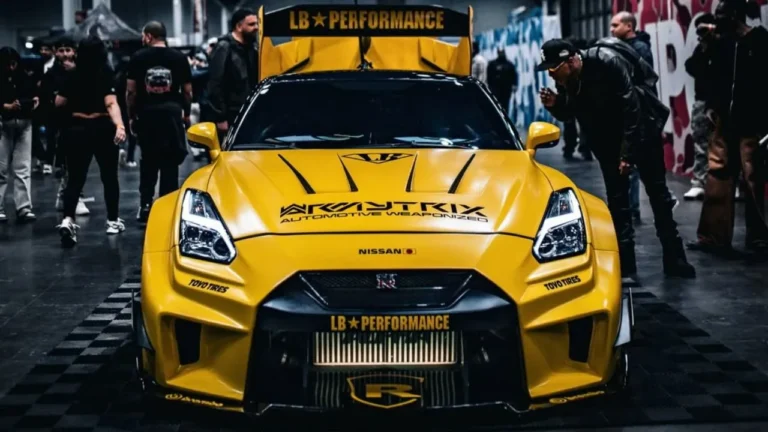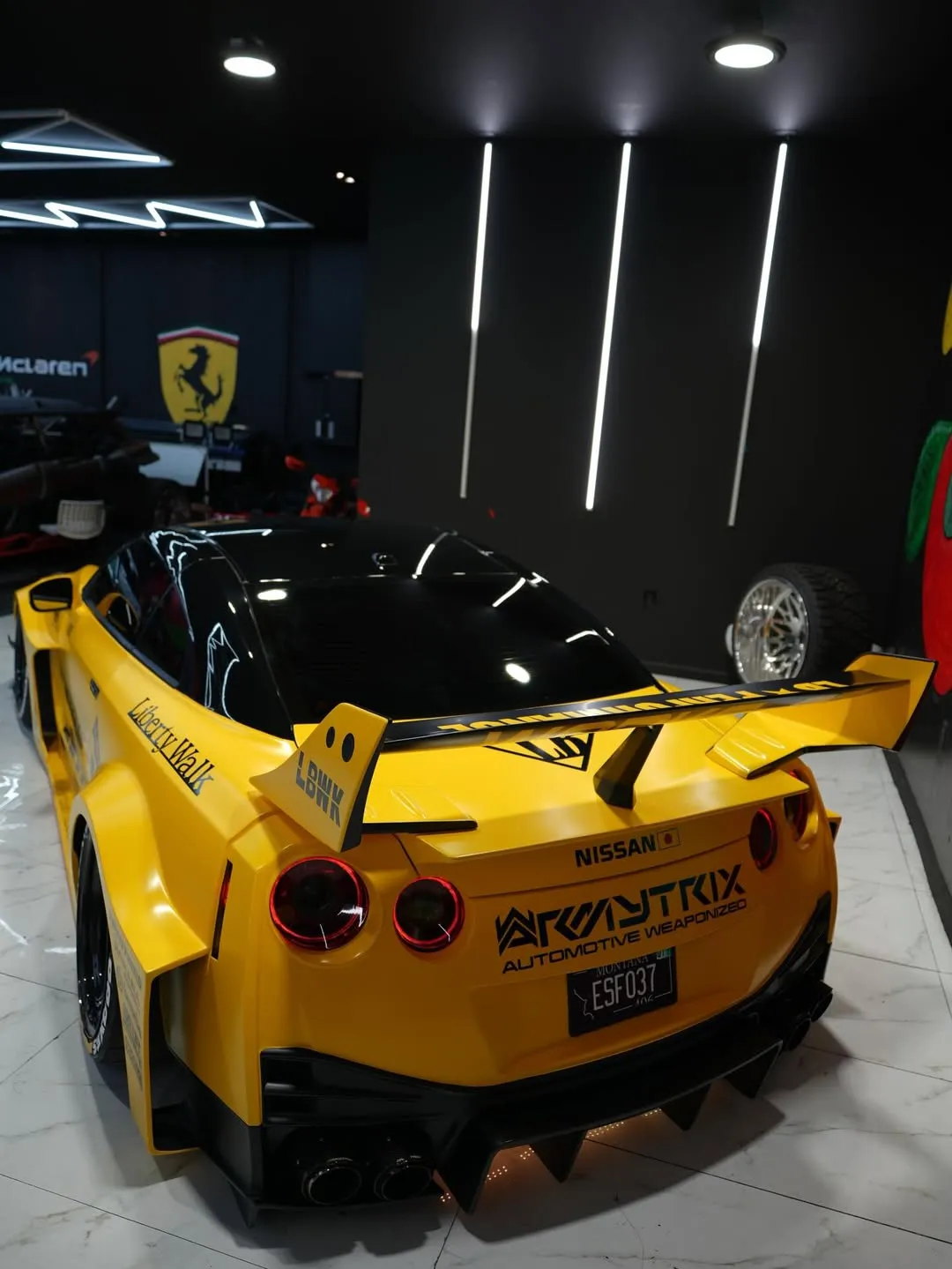
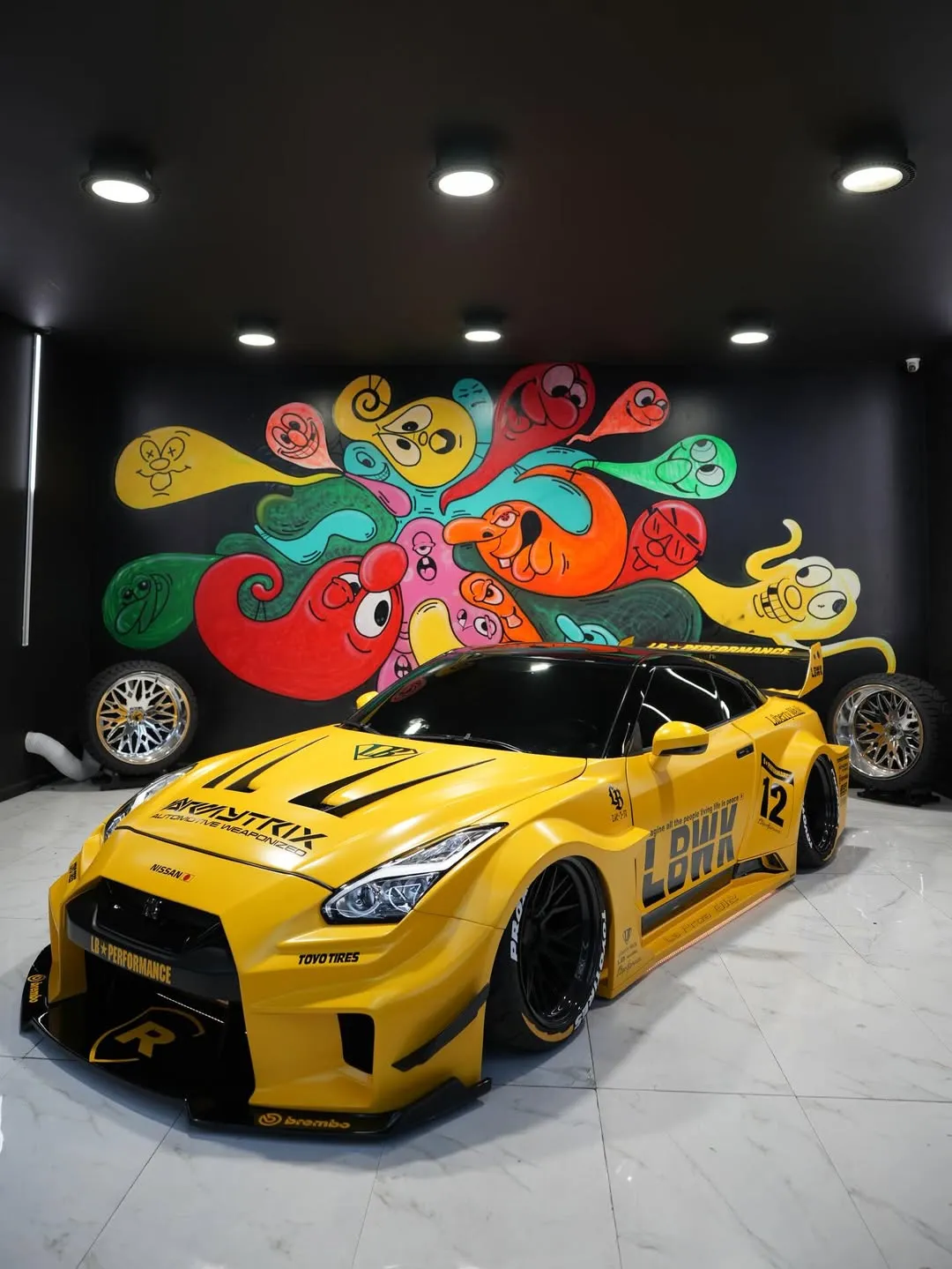
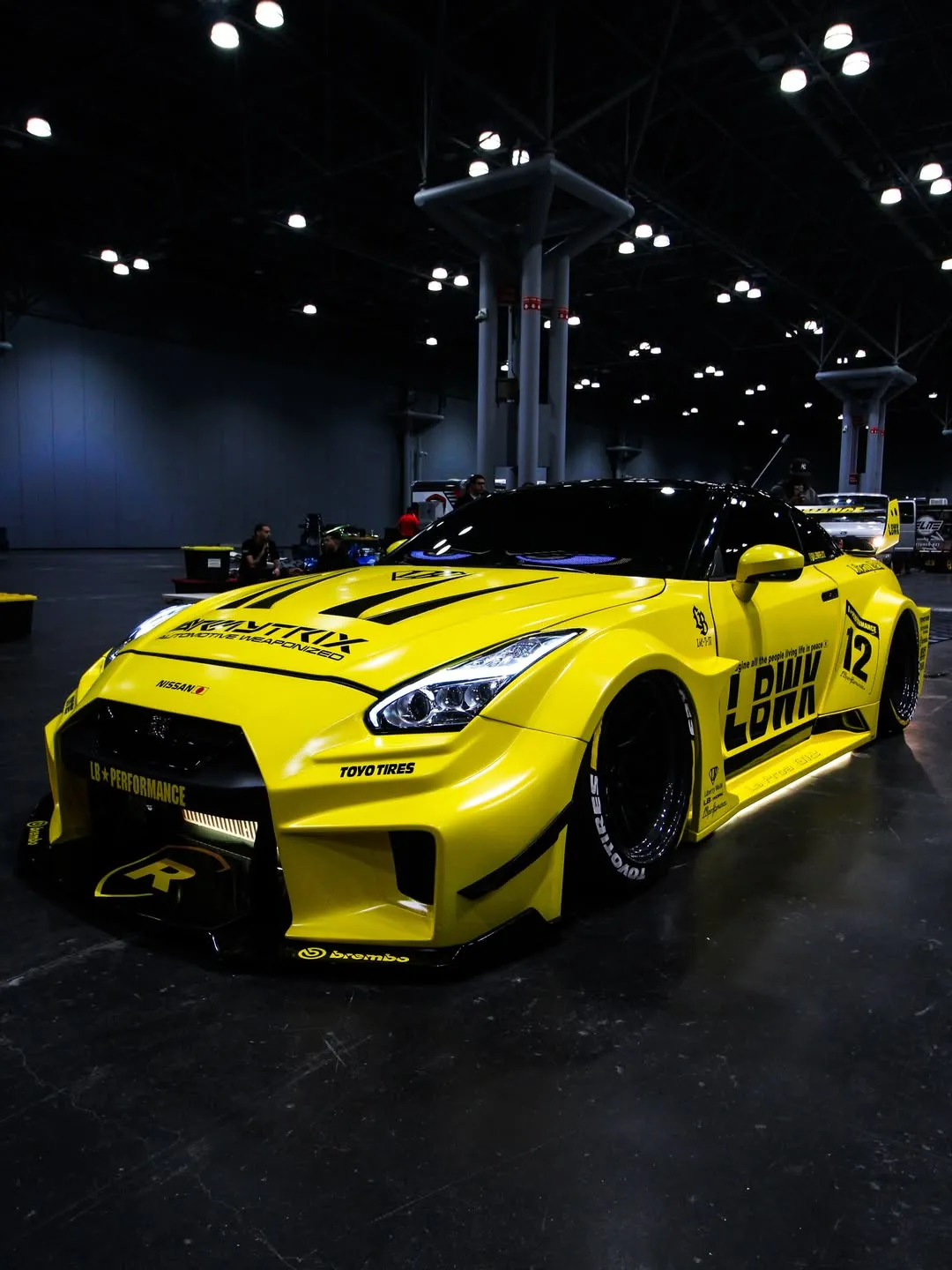
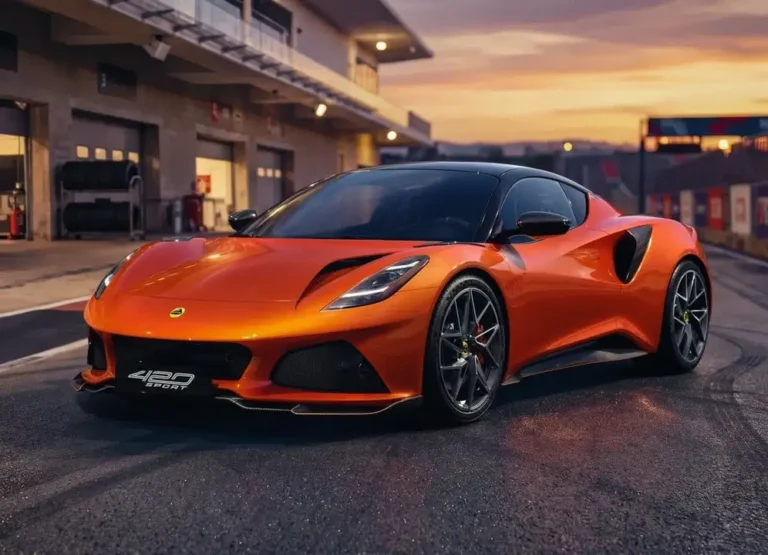
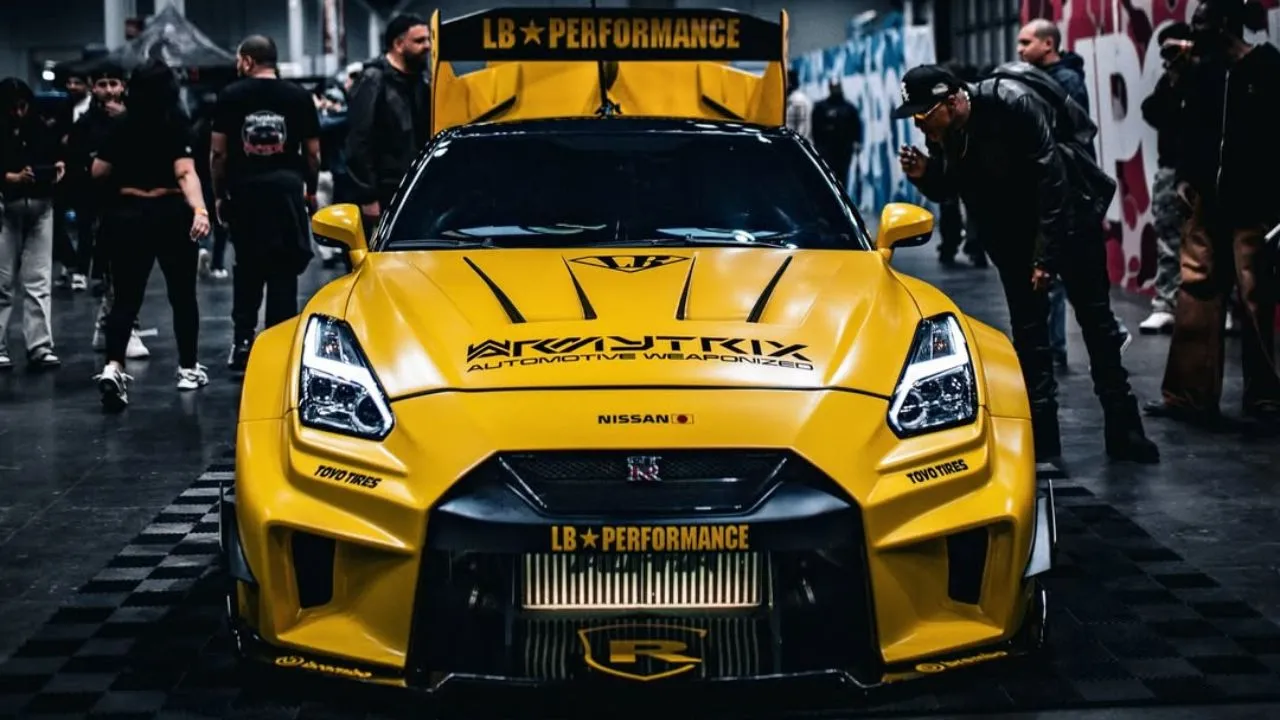
This is the Nissan GT R35 that joins the gallery of the most hyped cars on the internet.
Godzilla doesn’t ask for permission; it simply dominates the asphalt. This Japanese-born monster rewrote the supercar rulebook, proving that intelligent all-wheel drive and twin-turbos outclass European heritage every single day.
The Spec Sheet of a Giant
| Specification | Detail |
| Engine | 3.8-liter Twin-Turbo V6 (VR38DETT) hand-assembled |
| Power | 480 hp (2007) up to 600+ hp (modern Nismo variants) |
| Torque | Up to 481 lb-ft (Nismo models) |
| Transmission | 6-speed dual-clutch, rear-mounted transaxle |
| Drivetrain | ATTESA E-TS All-Wheel Drive system |
| 0 to 60 mph | ~2.7 seconds (depending on year and trim) |
Raw Presence: The Design and Engineering of the R35
Standing next to a GT-R R35 is an intense experience. It completely lacks the flowing, delicate curves of an Italian exotic. Instead, it looks like it was chiseled out of a solid block of metal with a clear directive: slice through the air and force the rubber onto the pavement. The signature roofline, the massive front grille devouring air to feed the intercoolers, and those iconic four round taillights create an undeniably menacing silhouette.
These images showing off the pure visual impact of the car are from the Instagram profile of a true car enthusiast, one of those people who live this lifestyle day in and day out, and their handle will be shared at the end of this article.
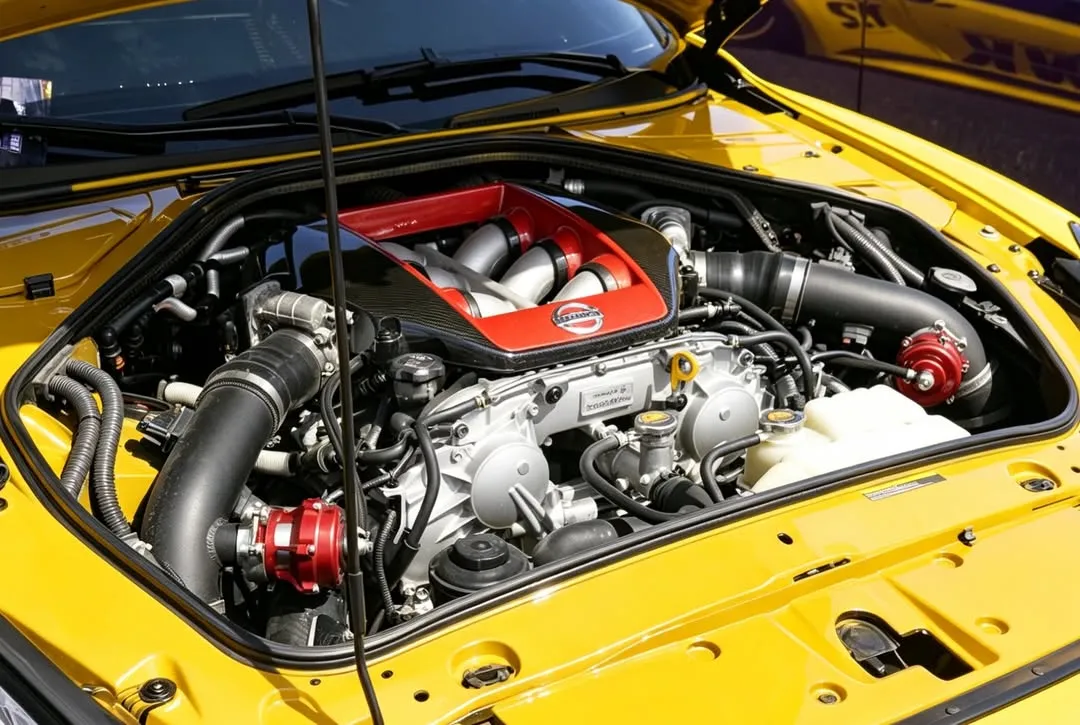
When Nissan dropped the R35 back in 2007, the entire automotive industry felt the tremor. It stripped away the legendary “Skyline” badge to stand completely on its own four wheels. At its core lies the VR38DETT power plant, an engine that has achieved legendary status. Every single block is built from scratch by a Takumi—a master craftsman in Japan who hand-assembles the engine and affixes a personalized plaque bearing his name right onto the metal.
Mechanically, the R35 relies on brilliant weight distribution and physics-defying traction. The dual-clutch transmission sits at the back as a transaxle, connected to the front engine via a carbon-composite main driveshaft. A second driveshaft runs forward to feed power to the front wheels. This intricate setup ensures incredible mechanical grip when rocketing out of corners. It is exactly why the platform became a global favorite for building high-horsepower custom cars, with blocks regularly handling well over 1,000 horsepower on forged internals.
Throughout its long production run, the R35 underwent meticulous evolution. Engineers stiffened the chassis, fine-tuned the dampening, upgraded the cabin materials, and integrated turbochargers straight from the GT3 race program for sharper throttle response. While critics point out that the overall design aged over the years, its performance continued to humble brand-new cars arriving on the market. Its future replacement remains shrouded in mystery, with electric concepts hinting that the era of the raw, unadulterated internal combustion monster is drawing to a close.
Godzilla vs. The Competition
To truly grasp the impact of this platform, it must be measured against the benchmarks it was engineered to hunt down.
| Feature | Nissan GT-R R35 | Porsche 911 Turbo S (991) | Audi R8 V10 Plus |
| Layout | Front-Engine, AWD | Rear-Engine, AWD | Mid-Engine, AWD |
| Driving Dynamics | Brutal grip, relentless force | Surgical precision | Visceral sound, neutral balance |
| Vibe | Digital fighter jet | High-tech scalpel | Pure analog supercar |
Why the R35 Rules the Streets (Pros)
Mind-Bending Traction: The all-wheel-drive logic recalculates grip instantly, sending power to the exact wheel with the most contact. The resulting launch control feels like a physical punch to the chest.
Massive Tuning Potential: The engine block is notoriously over-engineered. Simple bolt-ons and a proper tune unlock massive power gains without risking structural reliability.
Everyday Practicality: Unlike most exotics, it features a usable trunk and rear seats. It is an elite performance machine that can genuinely handle a grocery run before hitting the track day.
Where Godzilla Shows Its Age (Cons)
Heavy Curb Weight: Tipping the scales at over 3,800 lbs, the R35 relies heavily on electronic wizardry and massive brakes to mask its sheer mass during hard cornering.
Mechanical Clatter: The heavy-duty transmission and dual driveshafts produce noticeable clunks, rattles, and mechanical noise at low speeds, which can startle uninitiated drivers.
Vintage Cabin: Even with updated infotainment and upholstery over the generations, the interior layout betrays its mid-2000s origin, lacking the digital sleekness of modern European cabins.
What Everyone Asks About the GT-R R35
Why is the Nissan GT-R nicknamed Godzilla? The moniker was originally coined by an Australian automotive magazine in the late ’80s for the older Skyline R32, describing a monster from Japan that arrived to completely crush the native racing competition.
Is the Nissan GT-R R35 still in production? Production of the R35 is officially winding down globally, with final limited editions marking the conclusion of an incredible production run spanning nearly two decades.
What is the top speed of a stock GT-R R35? Standard factory models top out right around 196 mph, while the track-focused Nismo editions can push up to 205 mph due to advanced aerodynamics and revised engine tuning.
Is the GT-R engine truly built by hand? Yes. Every single twin-turbo V6 engine is hand-assembled from start to finish by one of only a handful of master technicians, known as Takumi, inside a climate-controlled clean room in Yokohama.
Are Nissan GT-R R35s reliable? When kept stock and maintained with strict fluid changes—especially the specialized transmission fluid—they are incredibly durable. Issues typically arise only when pushing extreme power levels without upgrading the gearbox components.
Can you comfortably daily drive an R35? Yes. Flipping the adjustable suspension dampers into “Comfort” mode relaxes the ride significantly, and the automatic mode makes navigating traffic simple, though its wide track requires caution in tight spaces.
Will there be a GT-R R36? Nissan has strongly indicated through recent concept vehicles that the next-generation successor will embrace heavy electrification or a full EV powertrain, utilizing solid-state battery technology and advanced active aero.

Danniel Bittencourt
Danniel Bittencourt He is an automotive expert and enthusiast specializing in vehicle reviews, new releases, and global market trends. He is the founder of the website and the creator behind several YouTube channels dedicated to the automotive world.
Related posts >