Ram Rumble Bee 2027: The Hellcat Truck Nobody Saw Coming
Ram Rumble Bee SRT packs 777 HP, hits 170 mph and targets the F-150 Lobo. Is this the most extreme production truck of 2027? The answer might surprise you.

Por: Danniel Bittencourt
23/05/2026
Ram 1500 Rumble Bee SRT 2027: The 777 HP Truck That Broke a Speed Record
Stellantis just brought a legend back from the dead — and this time, it came back twice as brutal.
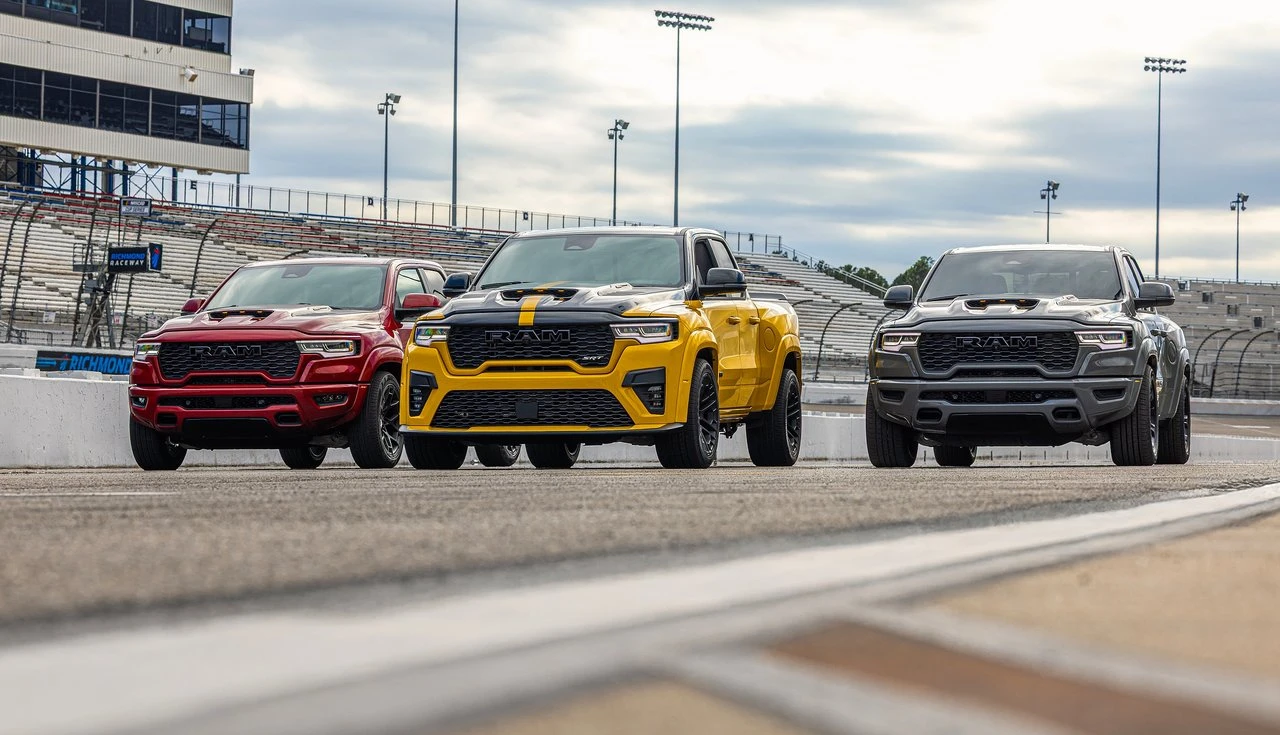
The 2027 Ram 1500 Rumble Bee isn’t a trim package with graphics and bigger wheels. It’s a full performance lineup built around three distinct V8 engines and a radically shortened chassis engineered to dominate street and strip.
The declared target is the Ford F-150 Lobo. The problem for Ford? The top-spec Rumble Bee SRT arrives with nearly twice the output — 777 HP against the Lobo’s 405 HP. That’s not competition. That’s a statement.
In the US market, the SRT is expected to carry an MSRP of approximately $105,000 — a Market Estimate based on MotorMatchup pricing data and the discontinued Ram TRX’s $102,290 starting price. For the buyer who wants the most violent muscle car ever wrapped in a pickup body, the Rumble Bee SRT makes a compelling — if expensive — case.
Widebody Aggression: The Visual Identity of a Street-Bred Weapon
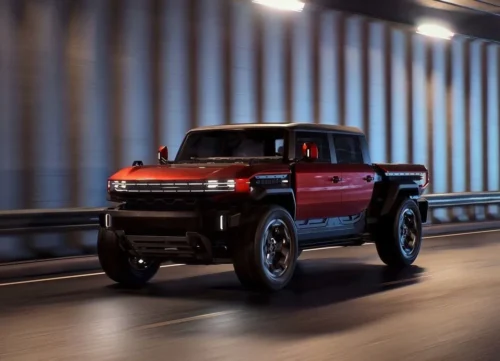
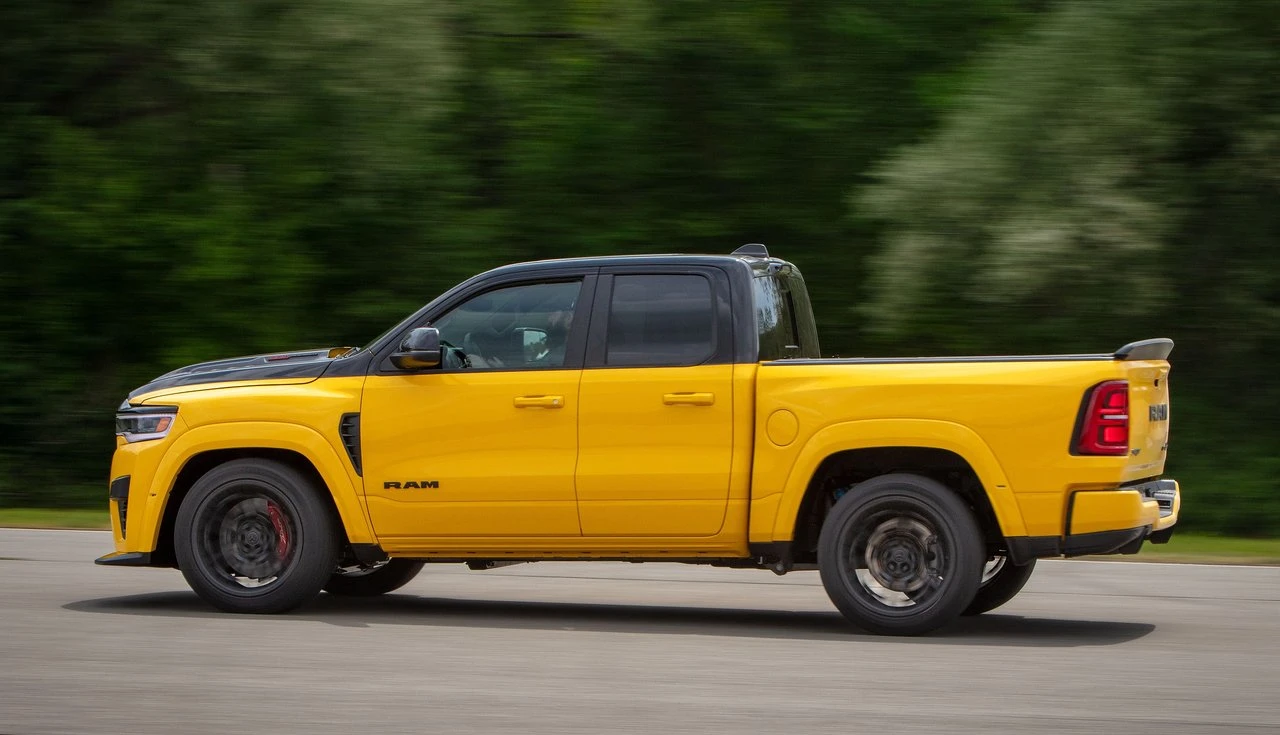
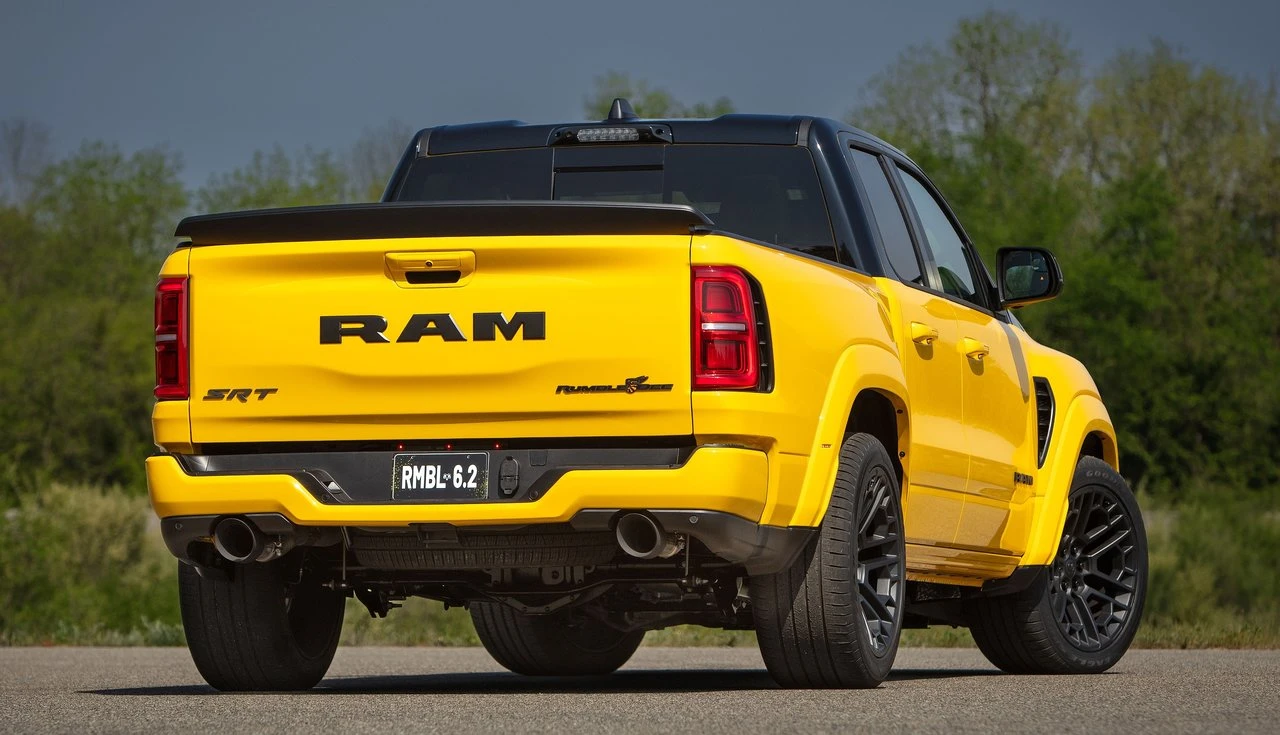
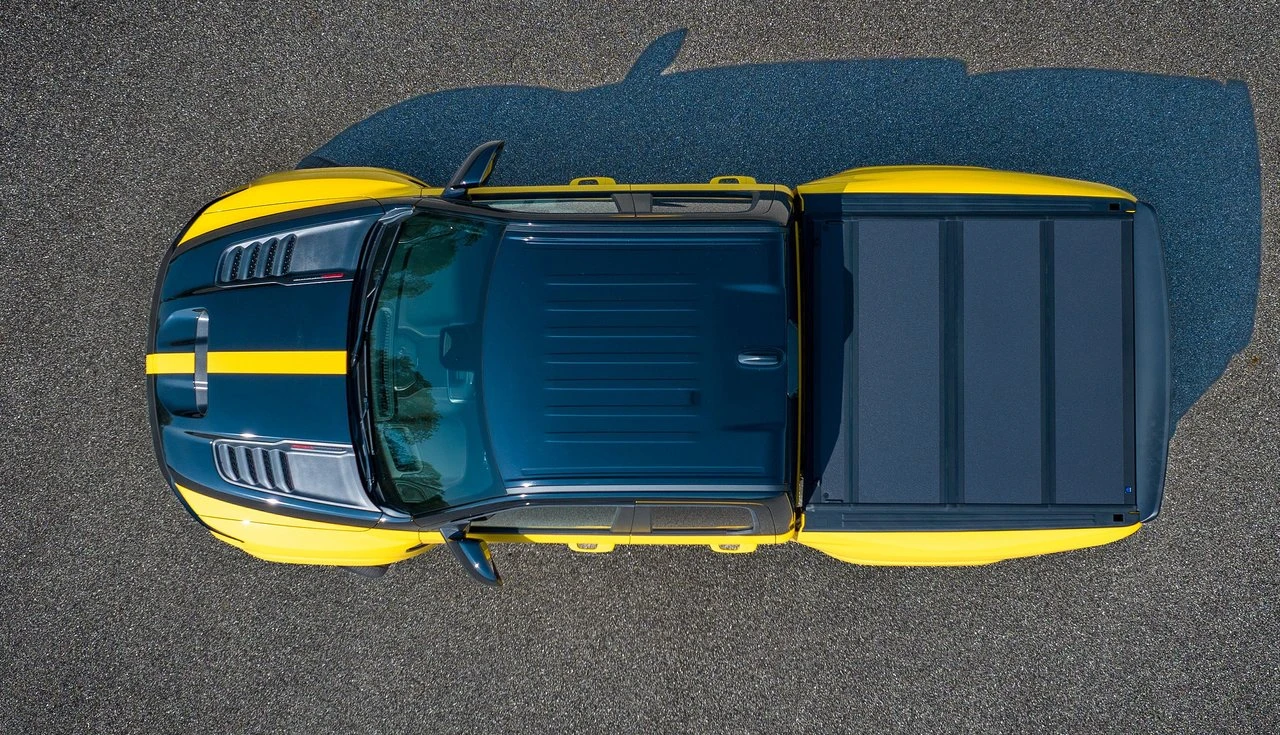
At a distance, the Rumble Bee already tells you everything. The widebody shell stretches 88 inches wide — an imposing footprint that commands attention in any parking lot, on any street.
Up front, cavernous intake ducts dominate the fascia, feeding the supercharger and the multiple heat exchangers beneath. A 4.5-inch front splitter sits low and aggressive, slicing through airflow and generating negative pressure under the chassis to keep the truck planted at speed.
Down the flanks, flared fenders house rear tires that measure 325mm wide — the broadest contact patch the corporation has fitted to a production vehicle since the Dodge Viper. The 22×12-inch forged wheels fill every inch of those arches with no apology.
Out back, a spoiler integrated into the bed lid works in tandem with an optional hard tonneau cover to seal the box, eliminate turbulence and stabilize the rear end at triple-digit speeds. The black and orange details — including the signature orange valve cover — connect the truck directly to the Hellcat bloodline.
A drag coefficient of 0.357 is a remarkable number for a vehicle with this frontal area. The Rumble Bee doesn’t try to hide what it is. Every line is a declaration of intent.
Race-Ready Cockpit With a Full-Size Truck Footprint
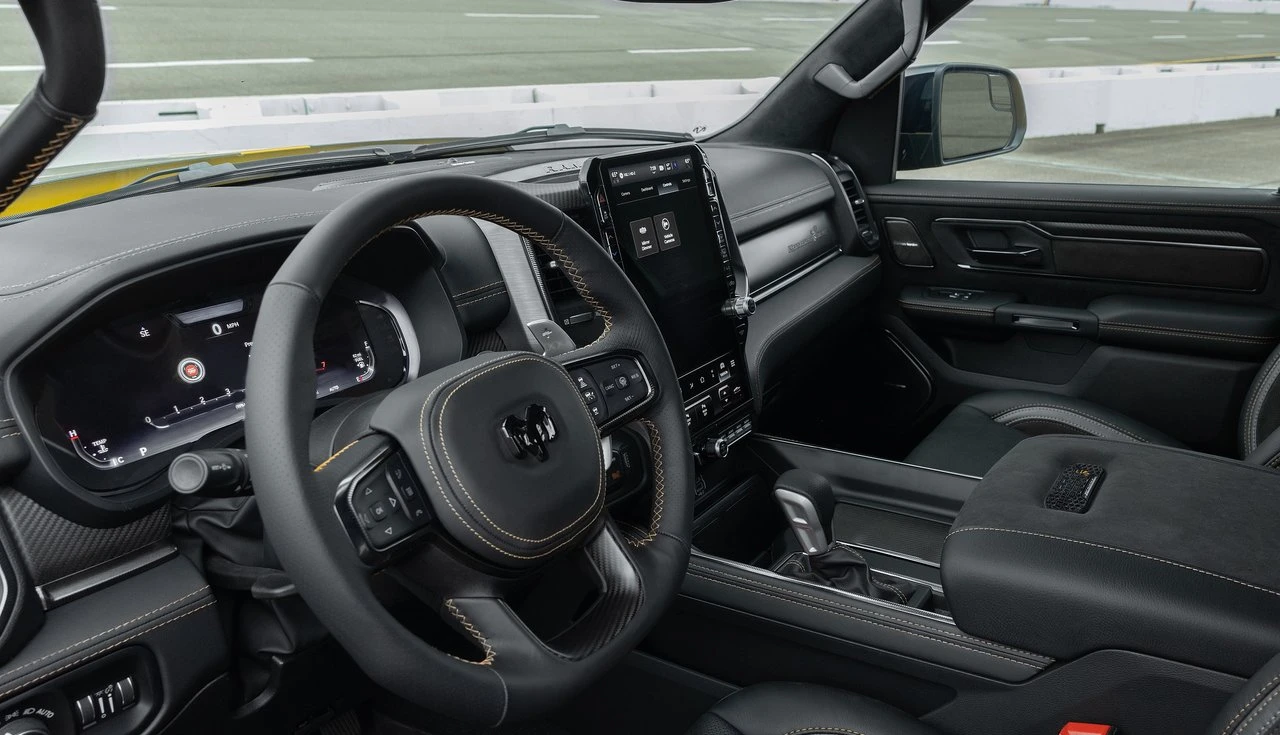
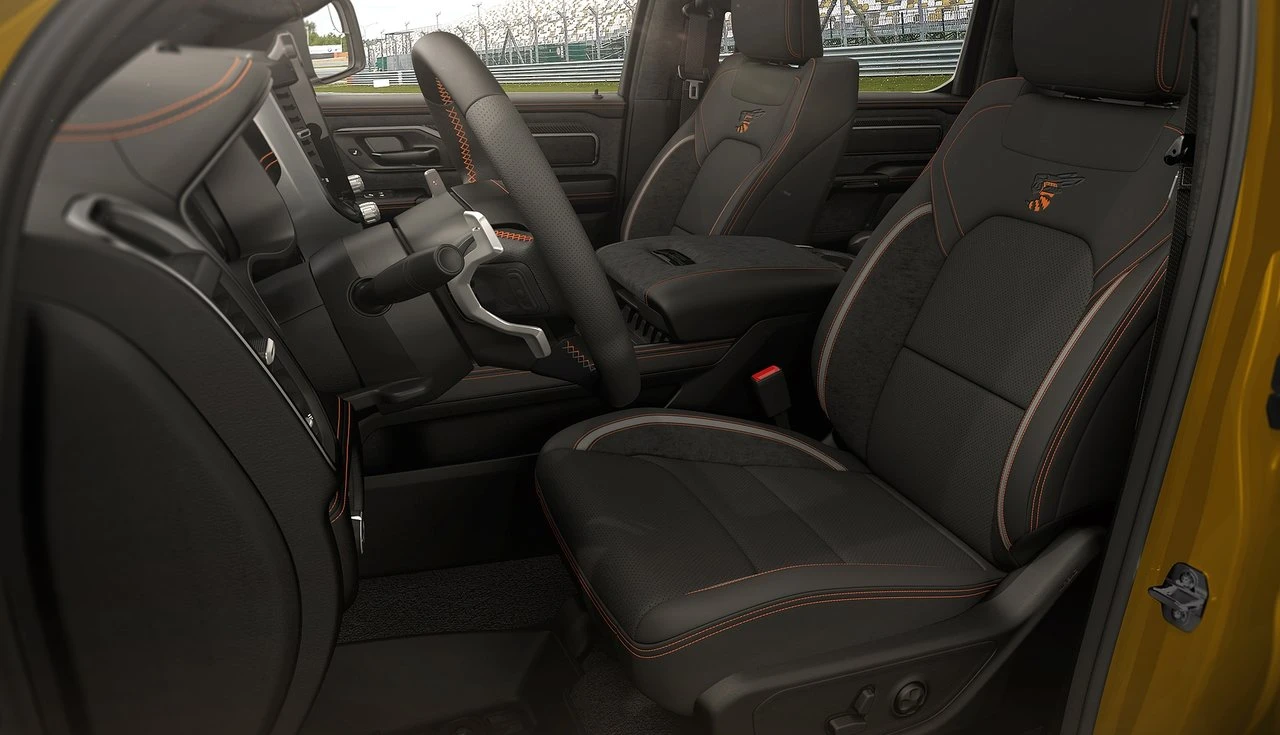
Climbing into the Rumble Bee SRT is crossing a line between pickup cabin and track-focused GT interior. The high-bolster bucket seats are wrapped in Alcantara with genuine carbon fiber and brushed aluminum trim — materials chosen to hold the driver in place during 3.4-second runs to 60 mph, not for aesthetic reasons alone.
The flat-bottom steering wheel, aviation-inspired in its design, puts oversized aluminum paddle shifters directly in the driver’s hands. Trim levels are distinguished by stitching details: Greystone on the base version, Prowler Yellow on the 392 — subtle visual cues that mark the hierarchy within the lineup.
The interior marks a clear departure from the conservative cabin tradition of American full-size trucks. Carbon fiber and synthetic suede replace the generic plastics and leather combinations that still define most direct competitors.
Screens, Telemetry and the System That Can Let You Down
The infotainment hub is the Uconnect 5, with a vertical touchscreen up to 14.5 inches on top trims. The standout feature is the SRT Performance Pages — a real-time data acquisition suite that tracks boost pressure, all fluid temperatures, lateral G-force and reaction times, turning the center stack into a live telemetry display.
The 10-inch color HUD projected onto the windshield on the 392 and SRT goes beyond adaptive cruise readouts. It displays a digital tachometer and gear shift lights in the driver’s peripheral vision — allowing full-rpm upshifts without eyes leaving the road.
A 19-speaker Harman Kardon audio system with a 10-inch subwoofer rounds out the cabin, delivering enough output to compete with the exhaust note.
The undisputed cabin strength is the integration of performance telemetry and premium infotainment into a single, cohesive interface. The real limitation — documented across Ram 1500 owner forums — is Uconnect instability: unexpected screen freezes on long drives, intermittent Lane Sense camera blindness and phantom battery drain are recurring complaints that demand dealer reflashes on the Body Control Module.
777 HP, 3.4 Seconds to 60 and a Transmission Built to Survive It
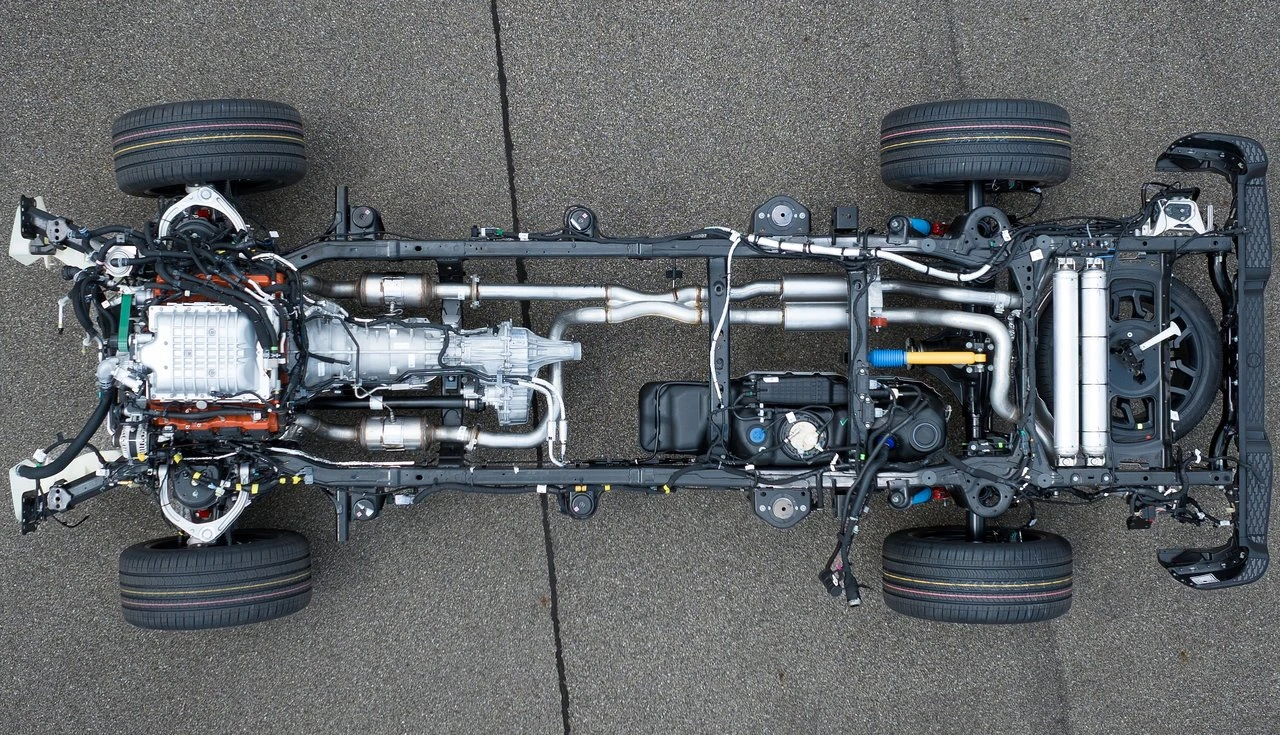
The Rumble Bee lineup offers three engines — all V8, all naturally or force-inducted combustion, zero electrification and no Start-Stop system. The weight savings and throttle response gains were the deliberate trade-off.
The entry-level HEMI 5.7L naturally aspirated makes 395 HP and 410 lb-ft, paired with an 8-speed ZF 8HP75 automatic. It reaches 60 mph in 6.1 seconds. It’s the volume seller of the lineup.
The 392 steps up with the 6.4L Apache V8 — 470 HP and 455 lb-ft — making its debut in the 1500 chassis. Zero to 60 drops to 5.2 seconds, with the quarter-mile finished at 101 mph.
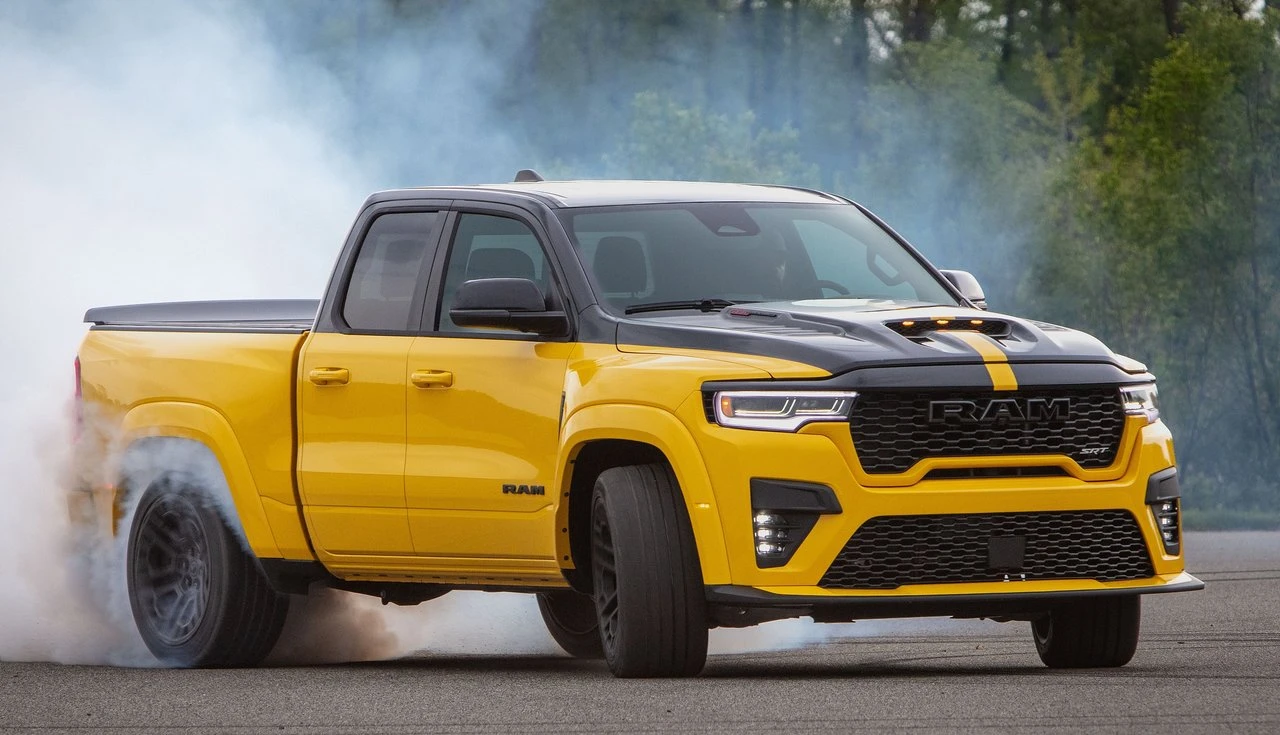
Then there’s the SRT. The 6.2L HEMI with twin-screw supercharger produces 777 HP at 6,100 rpm and 680 lb-ft at 4,800 rpm. A truck weighing 6,258 lbs reaches 60 mph in 3.4 seconds and covers the quarter-mile in 11.6 seconds at 116 mph. Top speed is rated at 170 mph — shattering the previous production-truck record of 154.5 mph set by the Dodge Ram SRT10 with its Viper V10 over two decades ago.
All 680 lb-ft flows through a ZF 8HP95 heavy-duty transmission, featuring a larger torque converter and reinforced clutch packs rated for the shock loads this engine generates. Owner feedback on the Hellcat platform confirms the shifts under hard acceleration feel like controlled detonations — instant, precise and without the slop that defined older domestic automatics.
Fuel economy on the SRT, based on a Market Estimate using EPA data from the mechanically identical Ram TRX, projects at 10 MPG city and 14 MPG highway. There is no efficiency story here. The focus is performance, full stop.
Tech Specs: Ram 1500 Rumble Bee SRT
| Specification | Official Data |
|---|---|
| Engine | 6.2L Supercharged HEMI V8 (Twin-Screw) |
| Peak Horsepower | 777 HP @ 6,100 rpm |
| Peak Torque | 680 lb-ft @ 4,800 rpm |
| Transmission | ZF 8HP95 8-Speed Automatic |
| 0–60 mph | 3.4 seconds |
| Fuel Economy (Est.) | 10 MPG city / 14 MPG highway — Market Estimate |
| Curb Weight | 6,258 lbs |
$105,000 MSRP and a Hellcat Insurance Bill: Who Actually Buys This Truck?
In the US market, the Ram 1500 Rumble Bee SRT is projected to carry an MSRP of approximately $105,000 — a Market Estimate based on MotorMatchup data and the TRX’s $102,290 launch price. The 5.7L and 392 variants are expected to land between $70,000 and $85,000, where actual sales volume will be made.
The SRT sits in unusual competitive territory. The F-150 Lobo maxes out at 405 HP. The nearest factory-built rival in terms of power is the Chevrolet Silverado Yenko/SC at 1,000 HP — but that’s a specialized aftermarket conversion retailing well above $100,000. Ram is essentially selling a factory-built answer to the aftermarket at a near-mainstream price point.
Maintenance costs on the Hellcat platform demand the same discipline and budget as an exotic sports car. Synthetic oil changes every 5,000 miles, transmission fluid replacement every 37,000 miles, and those 325/40R22 rear tires — which wear quickly under hard rear-wheel-drive use — represent recurring four-figure expenses that many buyers underestimate.
Insurance premiums are the most overlooked cost in the ownership equation. Hellcat-platform vehicles carry some of the highest theft-related claim rates in the US, with organized theft operations exploiting CAN-BUS vulnerabilities through the OBD-II port to clone key fobs. Insurers price that risk aggressively. A Market Estimate for full-coverage insurance on the SRT in major metro areas projects annual premiums between $4,500 and $7,000, depending on driver profile and location.
Financing is straightforward through Stellantis Financial and standard lenders — unlike the grey-market complications buyers face in other countries. But the loan terms on a $105,000 truck with high insurance premiums demand serious household budget analysis before signing.
Buying at launch makes sense primarily for the collector who treats the Rumble Bee as a long-term asset. Short-term depreciation on high-MSRP launches is inevitable. Long-term, with the V8 supercharged era visibly closing, Hellcat-platform vehicles are already appreciating in the used market — a trend the Rumble Bee SRT is structurally positioned to follow.
Straight Answers: What to Know Before You Buy the Rumble Bee
What is the actual horsepower of the Ram Rumble Bee SRT?
777 HP at 6,100 rpm and 680 lb-ft of torque, produced by the 6.2L supercharged HEMI V8 — the same Hellcat architecture used in the discontinued Ram TRX.
Who are the direct competitors to the Ram Rumble Bee SRT?
The declared rival is the Ford F-150 Lobo at 405 HP. In pure power terms, only aftermarket builds like the Chevrolet Silverado Yenko/SC at 1,000 HP compete — no factory truck comes close at this price point.
Are maintenance costs high compared to other performance trucks?
Significantly. Maintenance costs mirror those of an exotic sports car — short oil change intervals, specialized fluids, and rear tire replacement bills that accumulate fast if rear-wheel-drive mode gets regular use.
Is the Ram Rumble Bee SRT worth buying over the TRX?
The TRX is discontinued. The Rumble Bee SRT delivers comparable power in a shorter, stiffer chassis tuned for street performance rather than off-road dominance — making it the more focused option for pavement-only buyers.
CarrosBemMontados Verdict: Does the Ram Rumble Bee SRT Justify the Price?
This is a purely emotional purchase — and there’s nothing wrong with that, as long as you walk in with clear eyes.
For the collector who sees the SRT as a long-term hold, a direct heir to the Hellcat era in a body configuration that has never existed before, the case is legitimate. For anyone prioritizing low maintenance costs, daily efficiency or urban practicality, this truck is the wrong tool entirely.
The Uconnect instability, heat soak under sustained load and the aggressive insurance premiums are real ownership liabilities that the spec sheet won’t mention.
But when you flip the system to rear-wheel drive and plant the throttle, none of that matters. The Rumble Bee SRT is the last loud chapter of a combustion era that’s running out of pages — and it intends to be heard.
What do you think — does a $105,000 factory muscle truck make sense in 2027, or is the Rumble Bee SRT a masterpiece nobody needed? Drop your honest take in the comments below!
Share this article
Related posts