Ferrari Luce: The Electric That Split the Enthusiast Community in Half
Ferrari just launched its first pure EV: 1,113 HP, 0–60 in 2.5 seconds and an $823K price tag. Is the risk worth it?
Por: Danniel Bittencourt
25/05/2026
Ferrari Luce: The Brand’s First Pure Electric Arrives With Everything on the Line
Ferrari officially unveiled the Luce on May 25, 2026 — its first battery-electric production vehicle in 78 years of history. Not a concept. Not a prototype. A product.
With 1,113 HP and an 880-volt architecture engineered from scratch, the Luce targets buyers currently eyeing the Lucid Air Sapphire and the Porsche Taycan Turbo GT — but who want an Italian badge on the nose.
US deliveries are scheduled for 2027. Base MSRP sits between $640,000 and $647,000 before options. Fully configured through the Tailor Made program, real-world transaction prices approach $823,000 at the dealership door.
The Five-Meter Grand Tourer That Ditched the Muscle
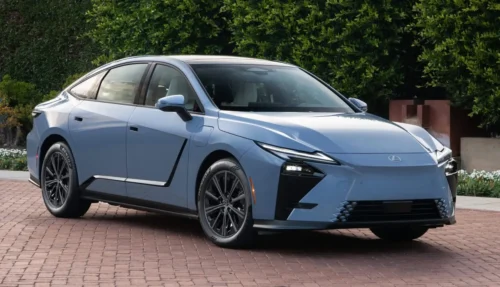
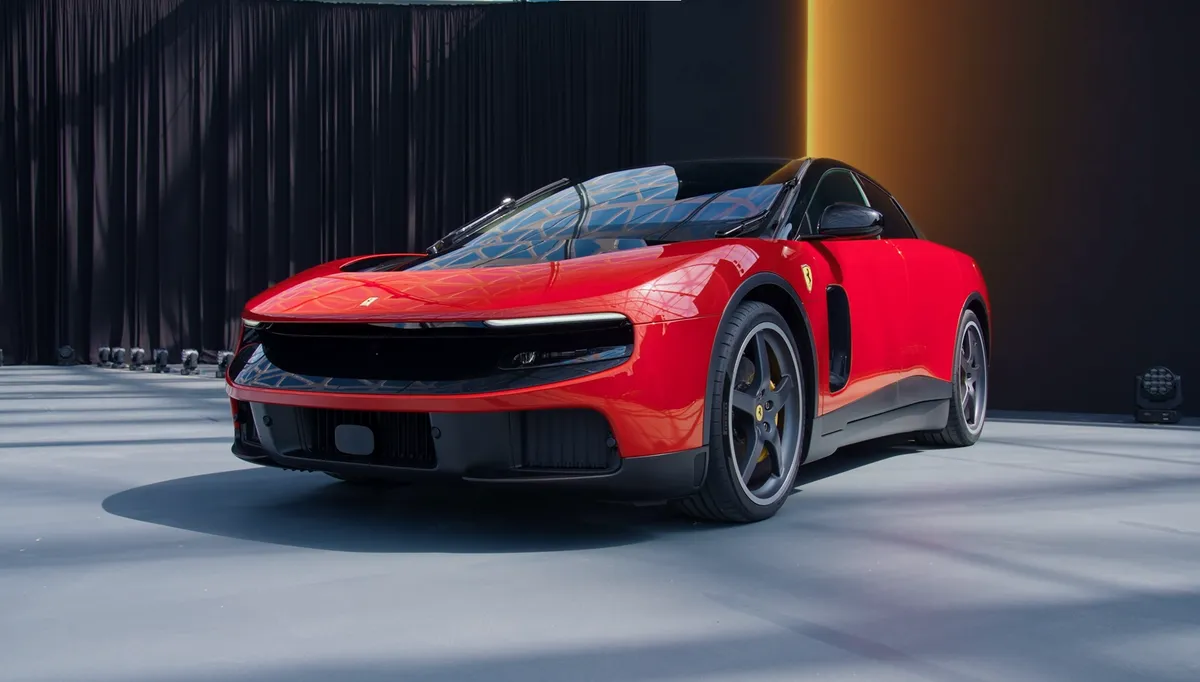
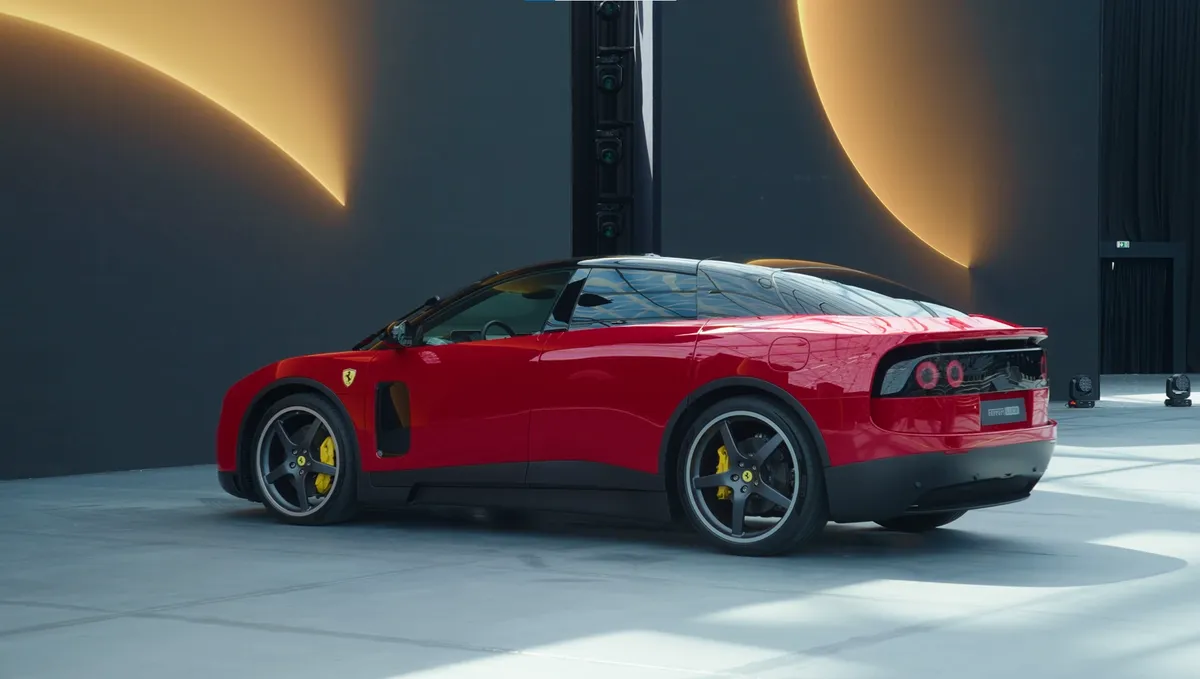
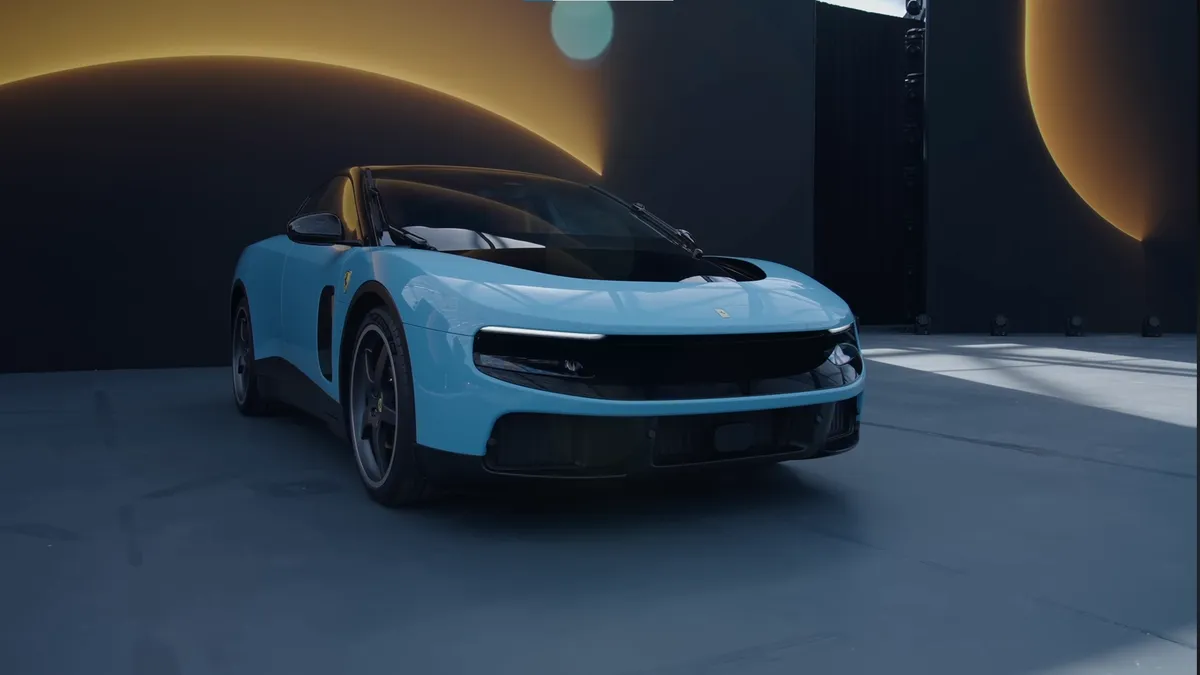
Walking around the Luce is an exercise in contradicted expectations. The teardrop silhouette — cab-forward, continuous glass roof, gently sloping tail — stretches 197.9 inches in length and stands just 60.8 inches tall. Nearly two inches lower than the Purosangue, yet two inches longer.
Up front, the headlights hide behind opaque panels when the car is off. Switch it on, and they emerge from darkness. It’s theatrical, and it works. The active grille manages airflow to three internal radiators without punching aggressive vents into the face — the drag coefficient lands at 0.254 Cd, a number supercars rarely achieve.
On the sides, turbine-style wheels measure 23 inches up front and 24 inches at the rear — the largest ever fitted to a production Ferrari from the factory. The aluminum body panels carry smooth, organic creases. No exaggerated fender bulges, no wide-body aggression.
Out back, there’s no active wing. Downforce is generated passively through front and rear aerodynamic tunnels. Buyers expecting the explosive visual attitude of the 296 GTB will walk away disappointed. The aesthetic is refined — some call it elegant, others call it cold.
The result reads two ways: aerodynamic mastery or a loss of Italian identity. Maranello placed its bet on the former.
CNC-Machined Aluminum, No Giant Screen, No Apologies
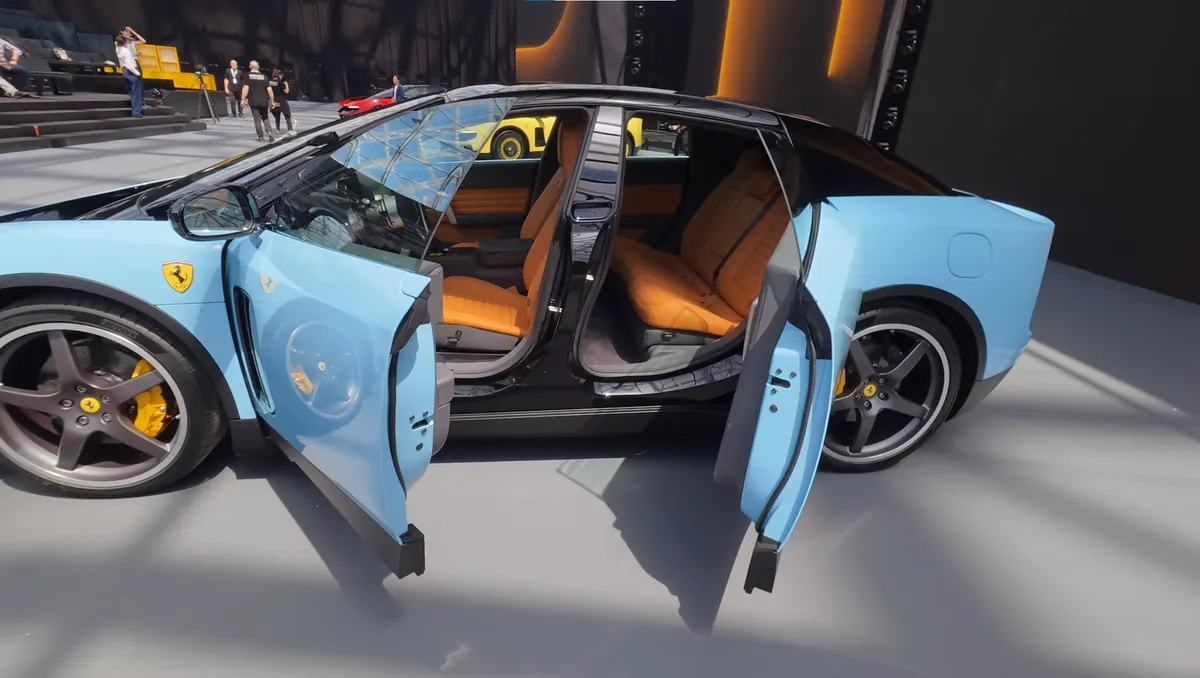
Stepping into the Luce is where the “Ritual of Control” philosophy stops being a press release tagline. The dashboard is built from 100% recycled, anodized aluminum machined via CNC — dense visual weight, reduced physical weight. No glossy plastic. No piano black that scuffs on contact.
There is no panoramic touchscreen dominating the driver’s sightline. The infotainment display is compact and pivoting, shared with the passenger. The primary instrument cluster sits on the binnacle attached to the steering column, moving with every wheel adjustment.
The gauges are high-resolution OLED units framed in metal rings with real physical needles. It’s one of the most defiant design choices in recent automotive history: in a market demanding ever-larger screens, Ferrari went the other direction and delivered something that reads as analog even when it’s digital.
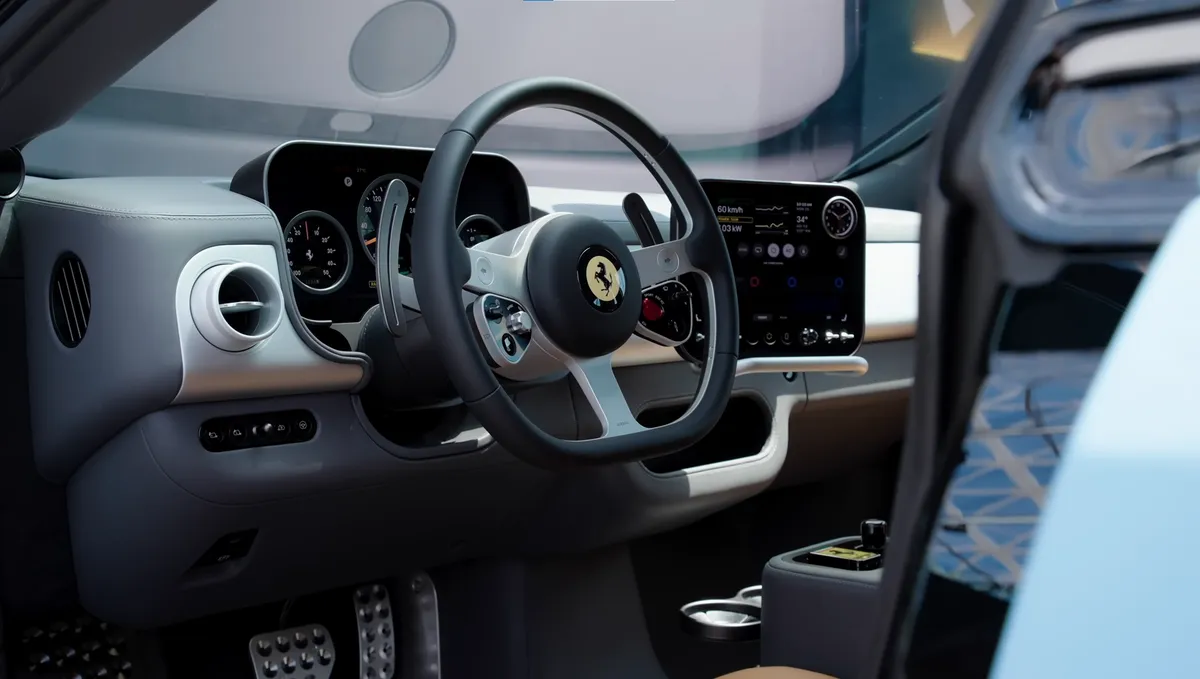
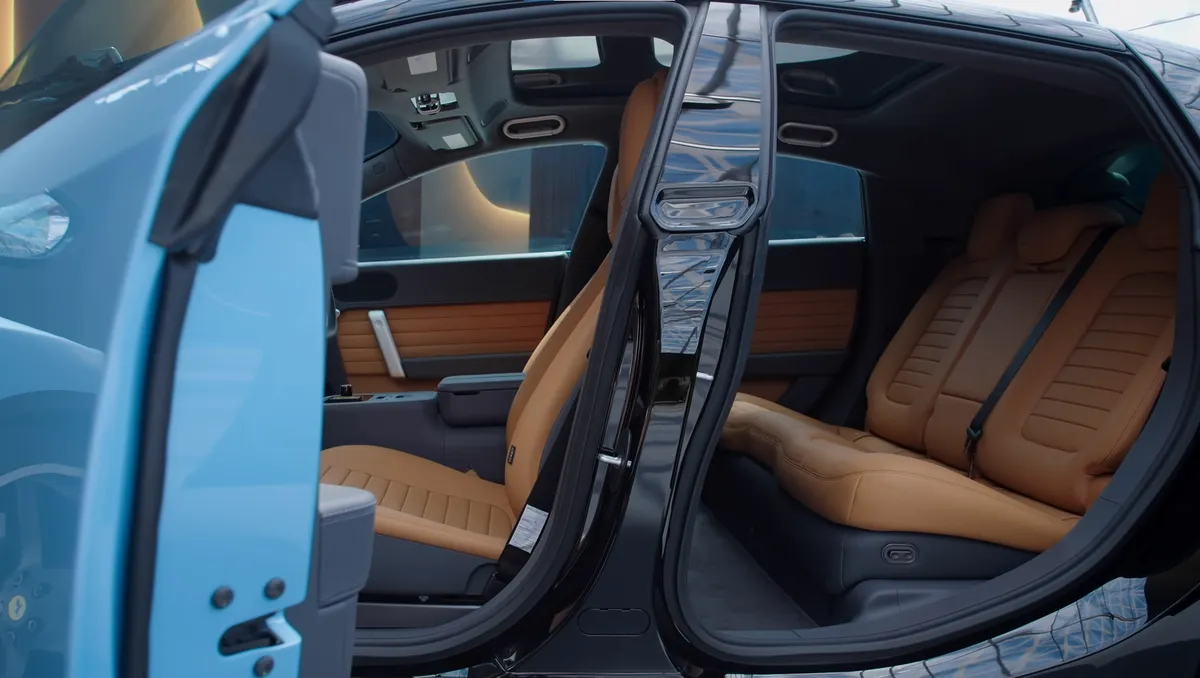
The seats blend semi-aniline leather with Corning Fusion5 aerospace-grade glass panels — thin, translucent, structural. The visual result is unlike anything in the segment, and the knee room gained for rear passengers is a genuine improvement.
Connectivity, Cargo Space and the Reality of the Back Seat
Apple CarPlay is natively integrated. The gear selector uses e-ink technology embedded in tempered glass, shifting tone with ambient lighting. Launch Control commands are positioned on the overhead console, modeled after fighter jet cockpit switches.
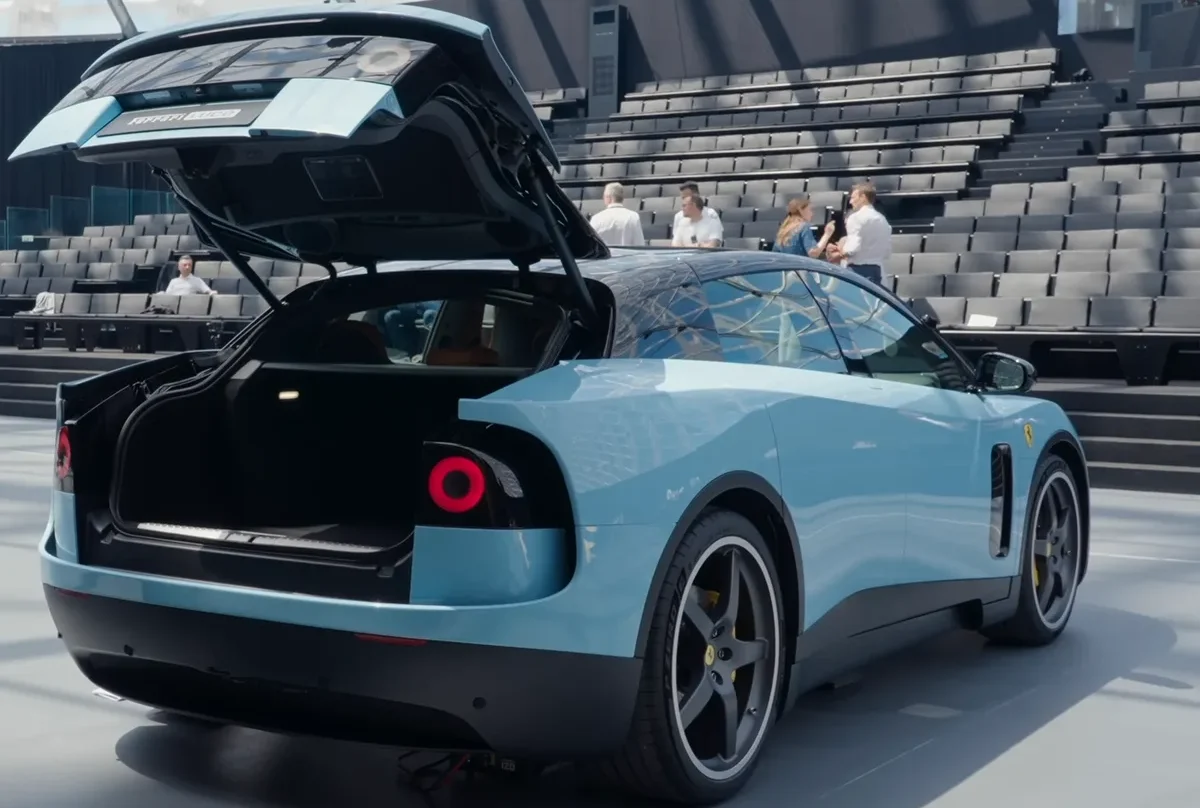
The absence of a B-pillar — made possible by rear coach doors — creates genuinely generous rear access for a car with sporting proportions. The flat floor, free of any driveshaft tunnel, means the center rear seat is actually habitable — a first in the brand’s history.
The trunk holds 21.1 cubic feet. For a five-door electric grand tourer producing 1,113 HP, that number opens serious conversations about real-world usability.
Undisputed strength: the coherence of the analog interior delivers a tactile experience unmatched in its class.
Real limitation: the compact central display may frustrate passengers accustomed to the expansive digital interfaces found in rivals like the Lucid Air Sapphire, where screen real estate is treated as premium territory.
Four Motors, 880 Volts and the Weight Problem Physics Won’t Let Go
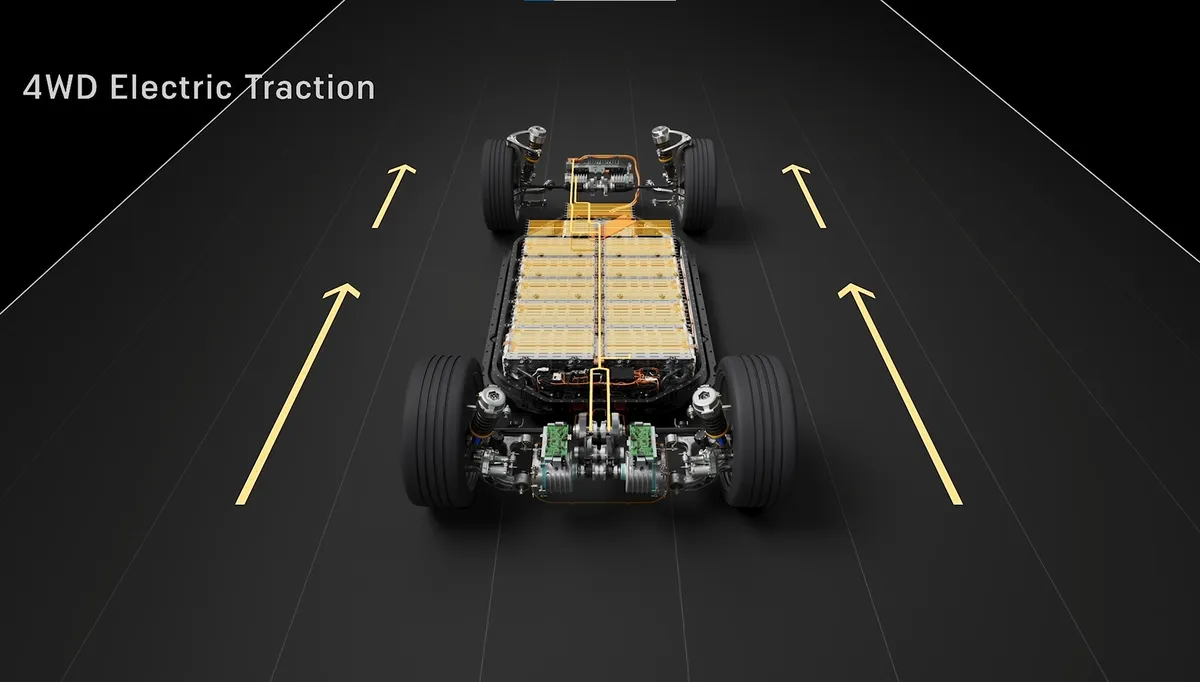
Four permanent magnet synchronous motors arranged in a Halbach Array configuration — one per wheel, no driveshaft connecting them. The front units spin to 30,000 rpm and deliver 141 HP each. The rear units reach 25,500 rpm and pour 476 HP per corner to the pavement.
At highway cruise, electromagnetic clutches mechanically decouple the front motors from their half-shafts, eliminating rotational drag. Overall efficiency climbs to as high as 93% under light load.
Power output scales by drive mode. Range Mode delivers 430 HP on rear-wheel drive only. Tour Mode unlocks 617 HP with full AWD. Performance Mode releases 986 HP. Boost/Launch — triggered by a pull-handle on the overhead console — unleashes the full 1,113 HP, sending over two tons of car from 0 to 60 mph in 2.5 seconds. The 0–124 mph run clocks in at 6.8 seconds.
Top speed exceeds 193 mph in Performance mapping. EPA-estimated range is approximately 280 miles. DC fast charging peaks at 350 kW.
The suspension abandons traditional anti-roll bars entirely. The Multimatic True Active Spool Valve dampers carry dedicated 48V motors at each corner, capable of injecting 1,124 lbf against the damper shaft in under one millisecond. The car stays flat through high-G corners. At speed, the body automatically drops 0.4 inches for improved atmospheric penetration.
The 4,982 lb curb weight doesn’t vanish through clever engineering. On track, the battery thermal management system and the rear motor stators spinning at 25,500 rpm reach their limits faster than a comparable ICE car with direct frontal airflow.
Specs Sheet: Ferrari Luce (2027)
| Specification | Official Data |
|---|---|
| Powertrain | 4 Halbach Array Permanent Magnet Synchronous Motors |
| Peak Output | 1,113 HP (830 kW) — Boost/Launch Mode |
| Peak Wheel Torque | 2,581 lb-ft (front) / 5,900 lb-ft (rear) |
| Transmission | Single-speed, continuous all-wheel torque vectoring |
| 0–60 mph | 2.5 seconds |
| Range / Efficiency | ~280 miles EPA est. / ~2.3 mi/kWh |
| Cargo Space / Curb Weight | 21.1 cu-ft / 4,982 lbs |
What It Actually Costs to Own the First Electric Ferrari — and What Happens Next
Base MSRP is set at $640,000 to $647,000 before options. Through the Tailor Made personalization program, fully configured examples are approaching $823,000 out the door at US dealerships.
The ownership cost picture splits in two directions. On one side, the absence of engine oil, timing belts and spark plugs eliminates several expensive periodic services. On the other, the carbon-ceramic brake pads face brutal attrition from 4,982 lbs of kinetic energy in aggressive driving, and the annual bill for replacing 23- and 24-inch bespoke tires will be a consistent and significant maintenance cost.
Insurance premiums for the Luce present a paradox. Externally, luxury BEVs have historically carried premiums 10% to 20% lower than combustion-engine supercars, partly due to lower spontaneous combustion risk. However, because the battery pack is a structural chassis member, insurers may classify any significant floor impact as a total structural loss — pushing insurance premiums well above typical supercar benchmarks in the US market.
Financing at this price tier is not a conventional consideration for the target buyer. The majority of transactions at this level are cash purchases. Maintenance costs, while lower in routine service intervals, are front-loaded by tire and brake consumables that no cost-cutting measure can offset.
Buying at launch carries documented patrimony risk. The Porsche Taycan’s depreciation curve proves that BEV technology iterations make earlier versions obsolete faster than combustion platforms. Solid-state battery chemistry expected before 2030 will render the SK On NMC architecture less competitive in range and density. Early adopters absorb the steepest depreciation in the segment.
The Luce makes rational sense for the buyer who wants to own the opening chapter of Ferrari’s electric era — and who will use it primarily in high-end urban environments or short interstate runs where 350 kW charging infrastructure already exists.
Frequently Asked Questions: What to Know Before Buying the Ferrari Luce
What is the real-world range of the Ferrari Luce?
EPA-estimated range is approximately 280 miles (~2.3 mi/kWh). The European WLTP figure exceeds 330 miles under its more favorable testing cycle.
Are maintenance costs high on the Luce?
Above average for the luxury BEV segment. Routine engine service disappears, but carbon-ceramic brake wear and bespoke 23/24-inch tire replacement make annual maintenance costs significant.
Who are the Luce’s closest competitors in the US?
The Lucid Air Sapphire ($250,500 / 1,234 HP) and the Porsche Taycan Turbo GT (~$230,000 / 1,019 HP) are the nearest technical rivals — both delivering comparable performance at a fraction of the price.
When does the Ferrari Luce go on sale in the United States?
Deliveries are scheduled for 2027 through authorized Ferrari dealerships in the US.
Verdict: Does the Ferrari Luce Justify Its Price?
This is an emotional purchase. Full stop. The performance numbers are genuine, the analog interior philosophy is one of the most courageous decisions made by any manufacturer this decade, and the Multimatic TASV suspension is legitimate engineering excellence.
The issue isn’t what the Luce is today. It’s what it becomes in five years. Buying into a flagship BEV architecture that solid-state technology will outpace before 2030 means accepting the steepest depreciation curve in the luxury segment.
For buyers who need the asset to hold value: walk away. For buyers who want to write the first page of Ferrari’s electric history: here’s your car.
The Luce didn’t come to replace the soul of the brand. It came to prove that soul doesn’t require combustion.
So — did Ferrari get it right by leaving the V12 behind to build the Luce, or did they go too far? Drop your honest take in the comments below.
Share this article
Related posts