2026 Lexus ES 350e: The Japanese EV That Put BMW on Notice
The 2026 Lexus ES 350e marks a genuine turning point for the executive sedan segment: the first fully electric ES ever built, packing 221 hp, up to 307 miles of EPA-estimated range and a feature-rich cabin — all at an MSRP that significantly undercuts its German competition. Refined, silent and sharper than ever.

Por: Danniel Bittencourt
27/05/2026
2026 Lexus ES 350e: The Electric Sedan That Flipped the Executive Class Upside Down
The 2026 Lexus ES 350e arrives as the first fully electric version in the model’s history, marking a definitive shift for a nameplate long associated with refined hybrid powertrains. This isn’t a refresh. It’s a clean break.
The ES 350e kicks off an entirely new eighth generation, featuring a permanent magnet synchronous motor producing 221 hp, a 74.7 kWh battery pack, up to 307 miles of estimated range and a platform that grew in every measurable dimension. Step up to the ES 500e and you get dual motors, AWD and 338 combined hp.
The positioning is deliberate: a large executive sedan built to go directly at the BMW i5, Mercedes-Benz EQE and Audi A6 e-tron, but with a starting MSRP that lands well below all three. Stateside, the ES 350e is already confirmed for the 2026 model year; availability in other global markets is expected to follow through 2026 and into 2027.
A Silhouette That Means Business: The Redesigned Executive Presence
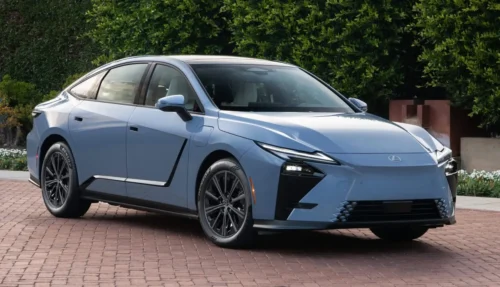
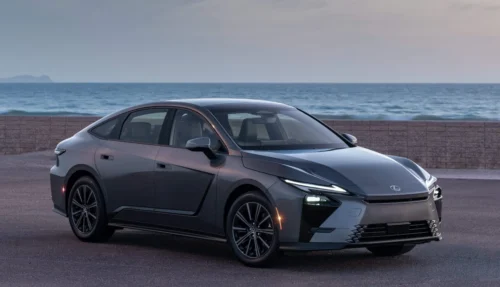
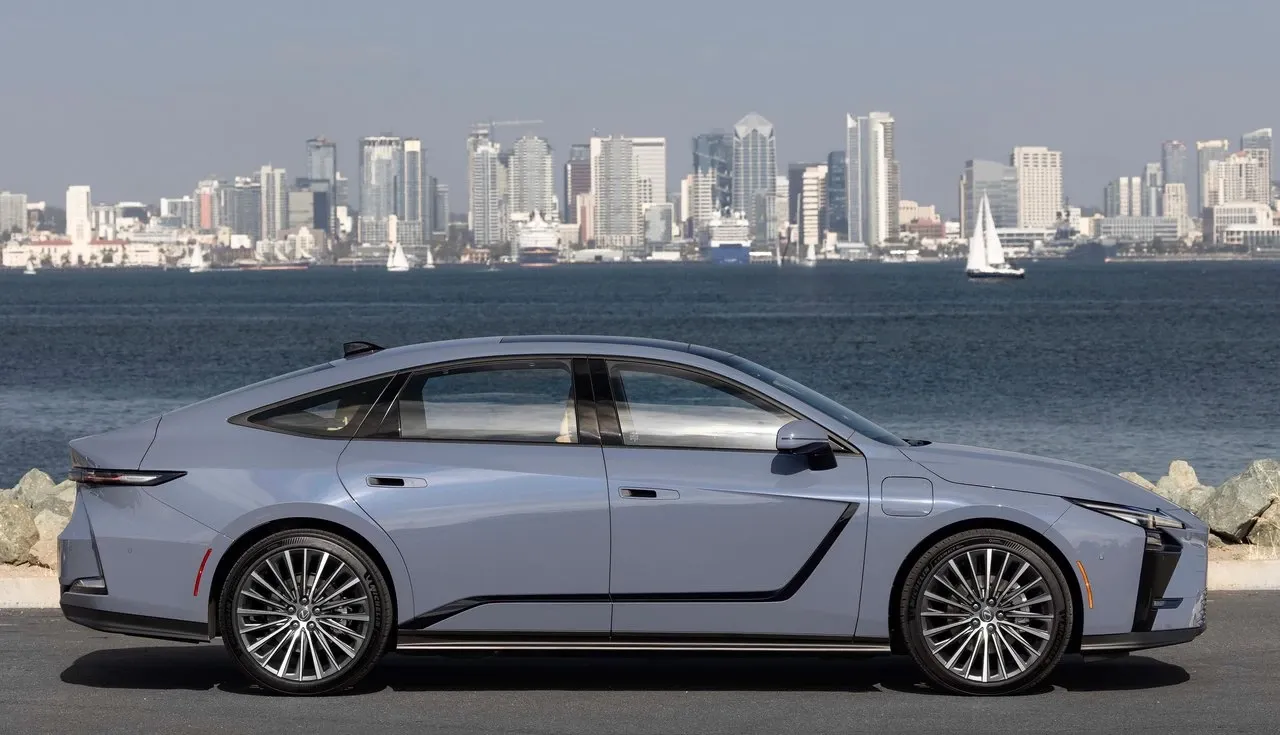
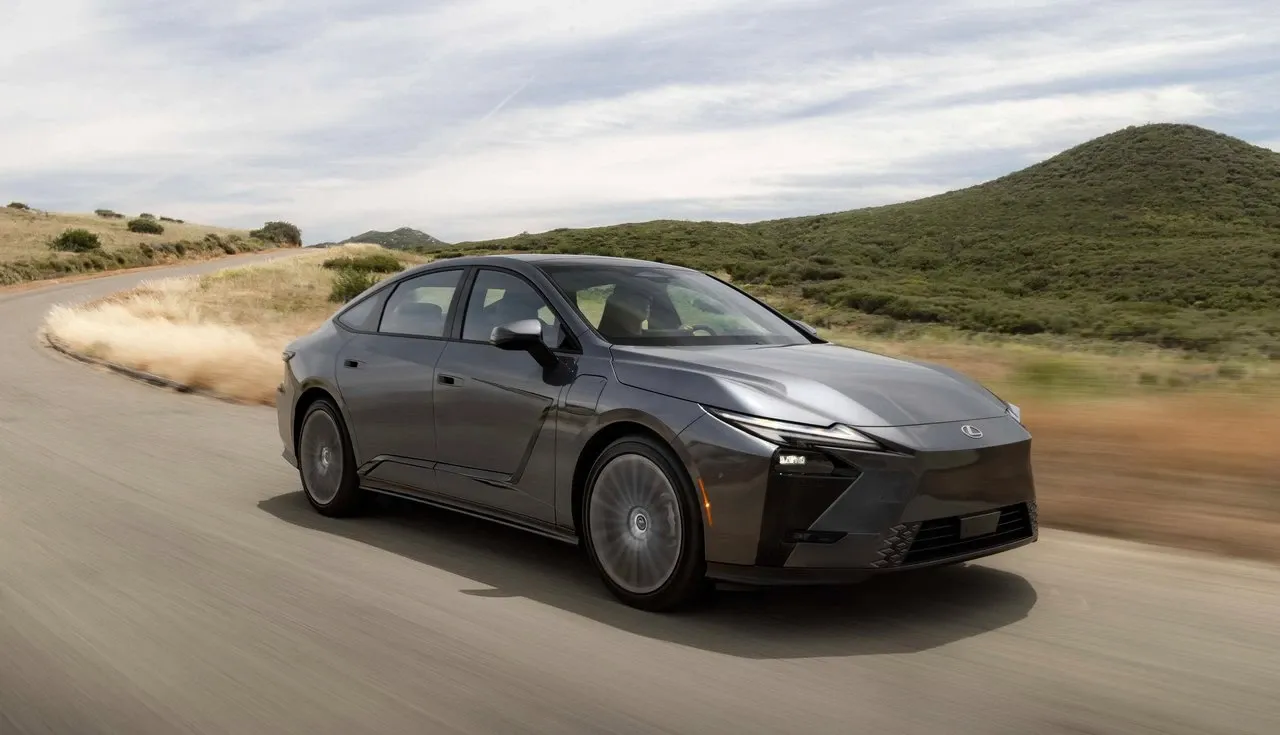
The size jump is the first thing you notice. The ES 350e stretches to 202.4 inches in overall length — more than 2.5 inches longer than its predecessor — with a wider track, taller roofline and a wheelbase that now measures 116.1 inches. On the street, it carries itself more like the old LS than any previous ES.
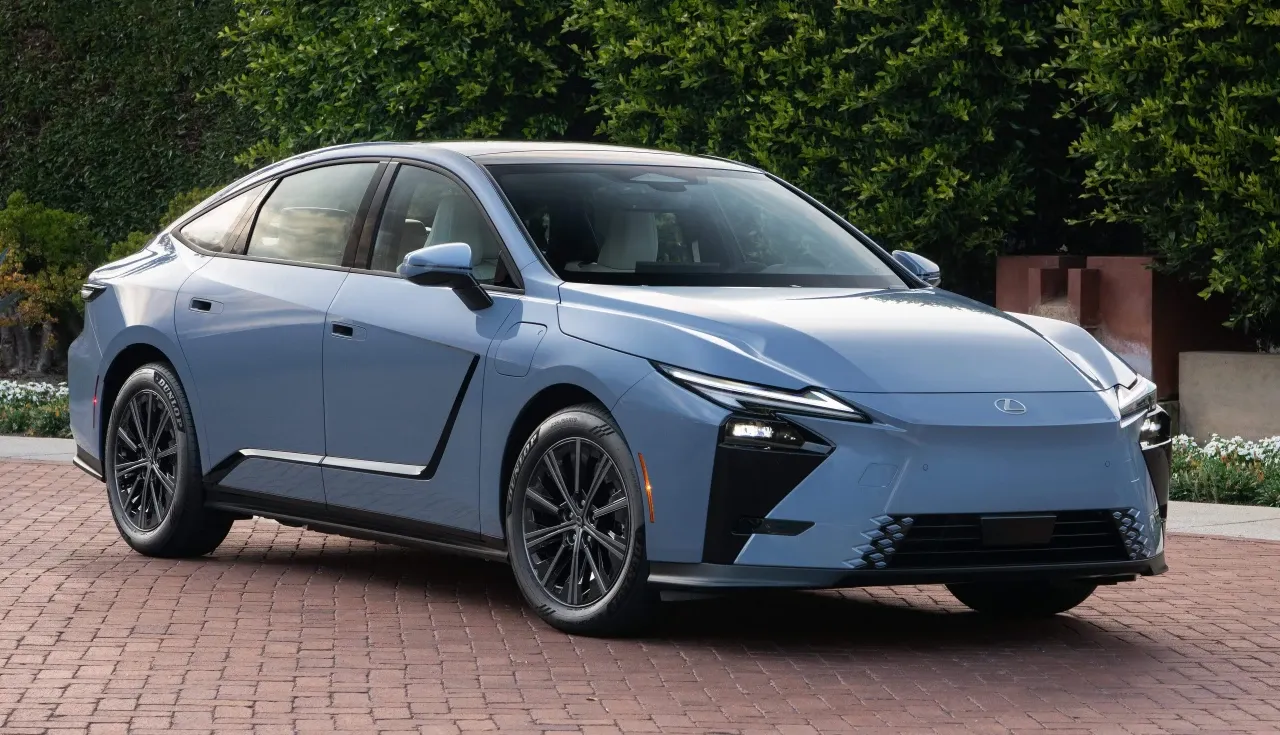
Up front, the iconic spindle grille gives way to a cleaner, more sculptural face. The hood sits low, the fenders push outward with intent, and the new “Twin L-Signature” DRL graphic cuts a sharp horizontal line that’s instantly recognizable at night. It’s a confident departure from the conservative face the ES wore for years.
Along the sides, taut body surfaces create strong light reflections, while the roofline slopes gracefully toward the tail in a near-coupe arc — without compromising rear headroom. Wheel options run up to 21 inches on top trims.
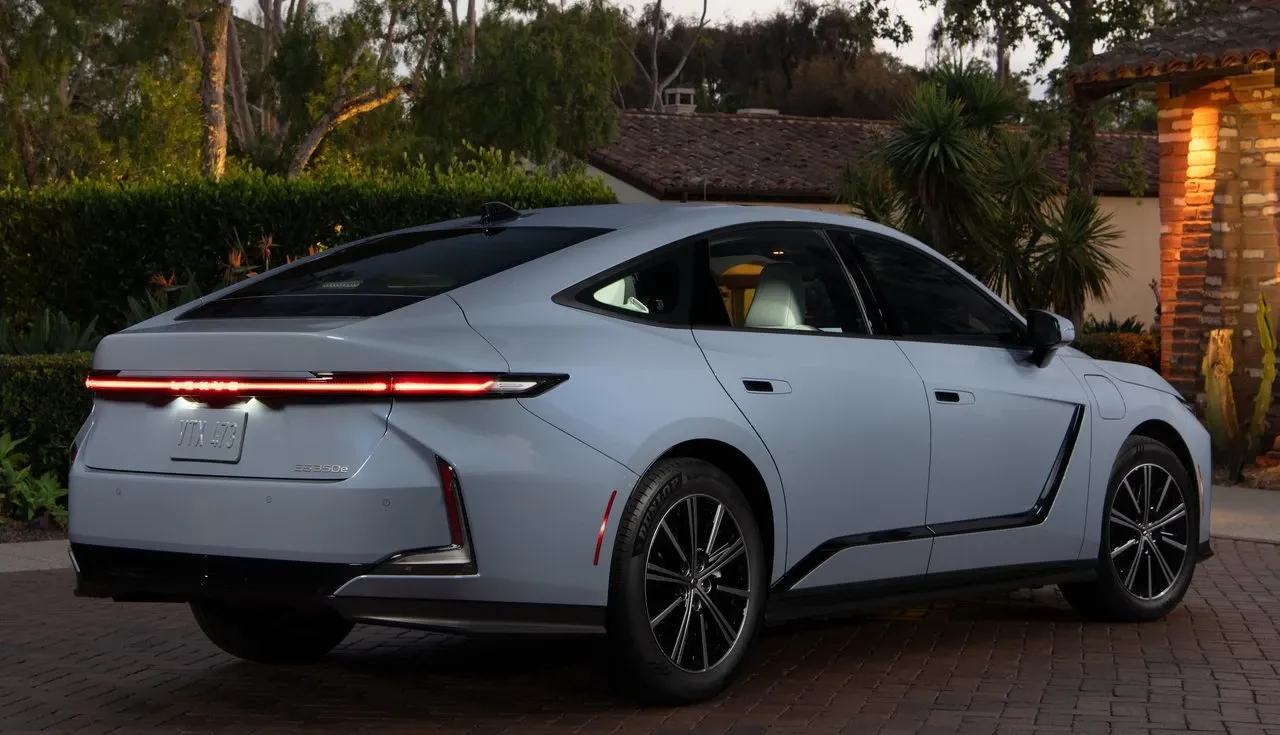
Out back, a full-width light bar spans the entire rear fascia and frames the illuminated Lexus logo at center. Clean, deliberate and unmistakably modern. The 0.25 drag coefficient isn’t just a talking point — it directly feeds those 307 miles of range and keeps wind noise nearly nonexistent at highway speeds.
Compared to the outgoing generation, this ES 350e reads as a genuine stylistic leap, drawing from the LF-ZC concept language in a way that feels production-ready without being tamed into blandness.
Inside the ES: Where Japanese Luxury Finally Caught Up With the Times
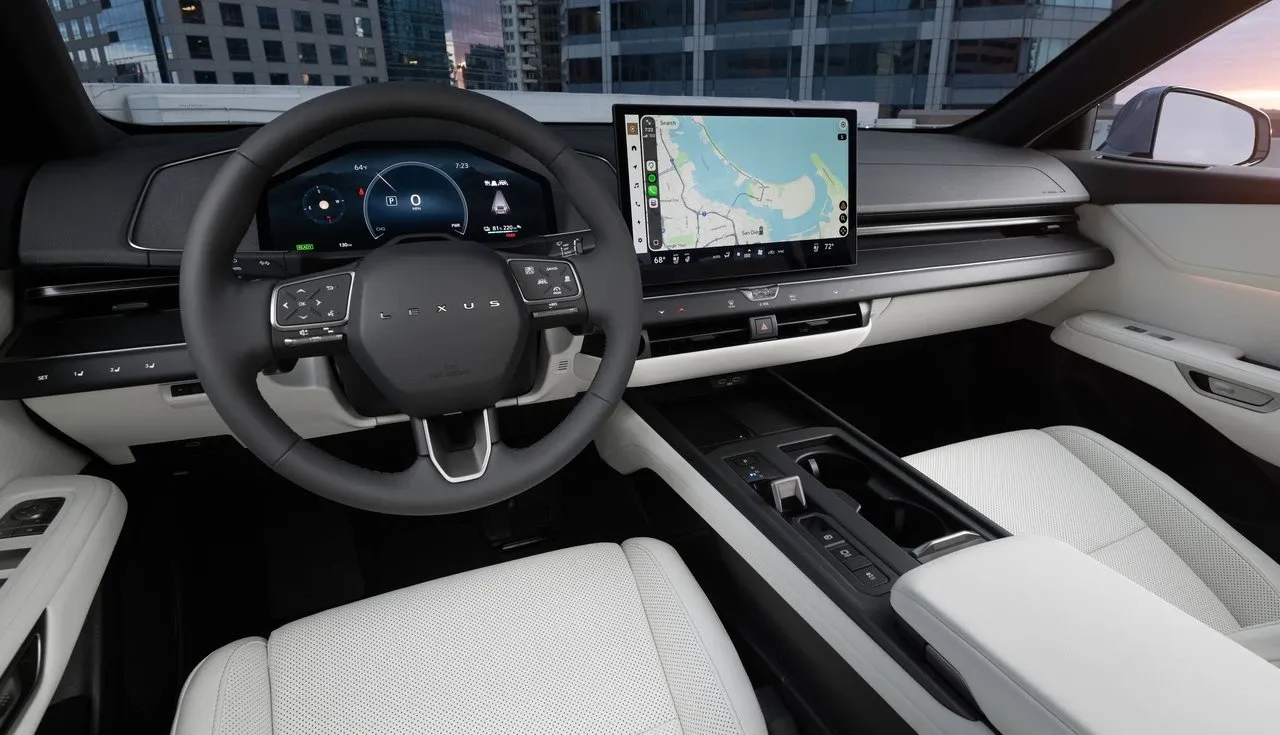
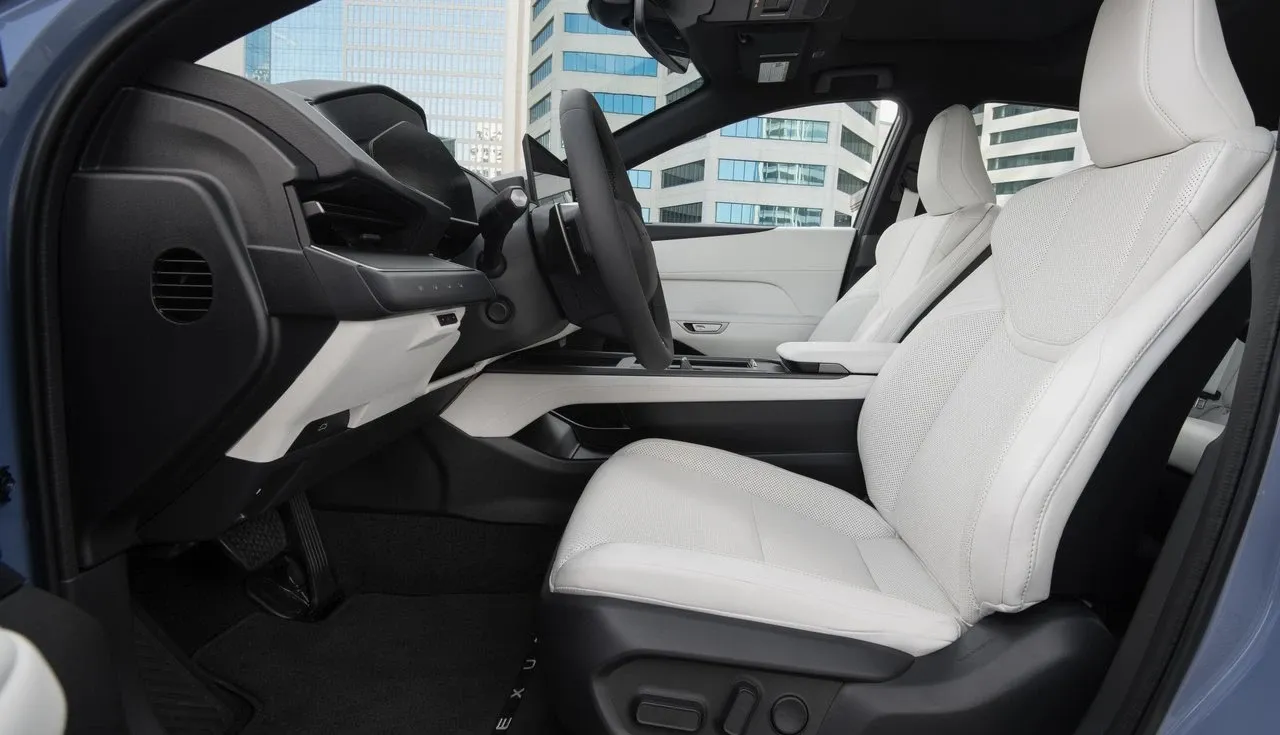
Open the door and the horizontal dashboard layout immediately signals a different philosophy. The “tazuna” cockpit concept places all primary controls within the driver’s sightline, minimizing the need to look away from the road. Materials quality took a real step forward: semi-aniline leather on Luxury trims, new synthetic panel textures and the standout visual detail — “Bamboo Layering,” backlit bamboo veneer layers built into the door panels and center console, creating an atmosphere that has no direct equivalent in the German competition.
Front seats are well-bolstered and genuinely comfortable, designed for long-haul relaxation rather than lateral support during spirited driving. The seating position sits slightly higher than the previous generation, making entry and exit noticeably easier and giving the drive a more commanding feel.
Screens, Safety Tech and What’s Behind You
The infotainment system now centers on a 14-inch touchscreen — replacing the universally disliked touchpad controller — paired with a 12.3-inch digital instrument cluster. The redesigned interface is faster, more intuitive and launches with a configurable widget home screen. Wireless Apple CarPlay and Android Auto, wireless phone charging and a Wi-Fi hotspot for up to five devices are all standard.
Active safety runs through Lexus Safety System+ 4.0, covering autonomous emergency braking with pedestrian, cyclist and motorcycle detection, lane centering, front cross-traffic alert, lane change assist and the Proactive Driving Assist system — which makes subtle steering and braking micro-adjustments to maintain following distance in live traffic. Top trims add Traffic Jam Assist and remote park assist.
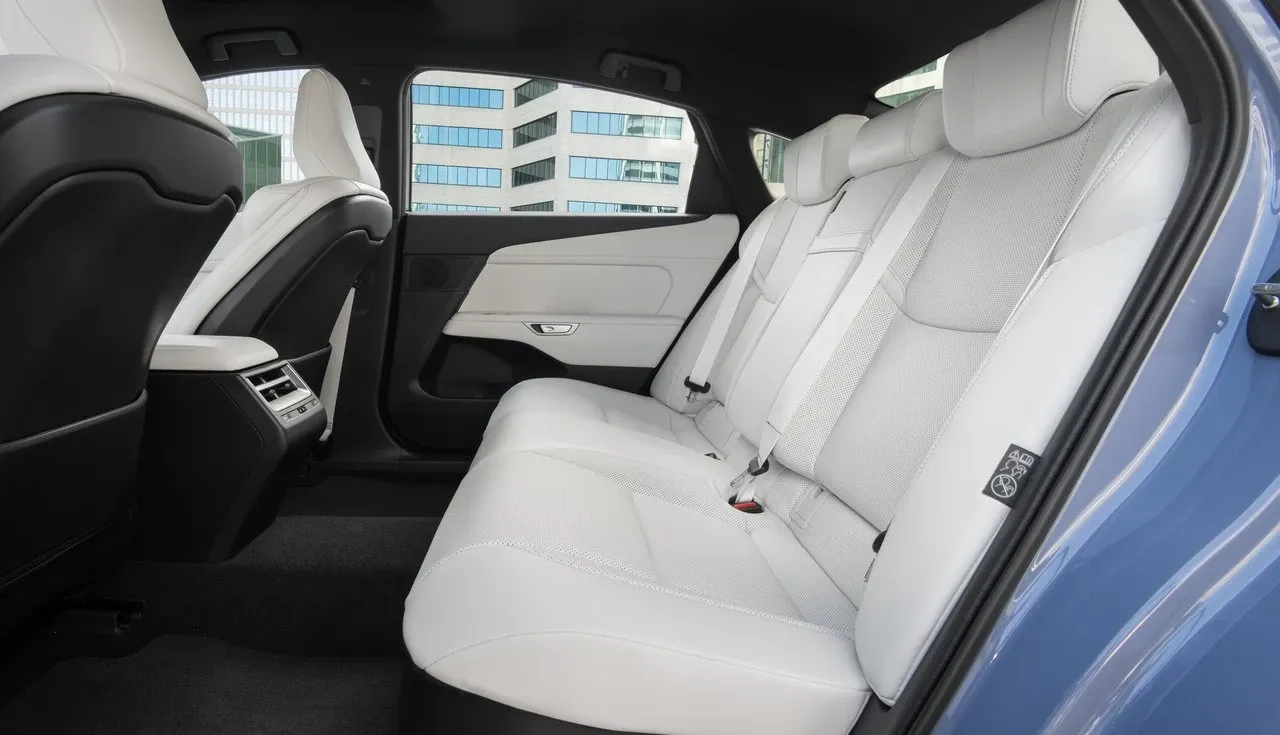
Rear seat space benefited directly from the longer wheelbase, with meaningful gains in both legroom and headroom. The Executive Package on ES 350e Luxury trims adds reclining rear seats with heating, ventilation, massage and ottoman-style leg rests — turning the back seat into the most compelling reason to buy this car.
Undisputed strength: the available Mark Levinson PurePlay 17-speaker, 1,800-watt system with 3D sound imaging on Luxury trims is a genuine differentiator in this segment.
Real limitation: a portion of the automotive press notes that the updated 14-inch interface, despite being a significant improvement, still doesn’t quite match the responsiveness and integration levels of the latest BMW iDrive or Mercedes MBUX systems. The touch-sensitive climate controls have also drawn mixed reactions from reviewers.

No Drama, All Performance: What the ES 350e Actually Does on the Road
The ES 350e runs a front-mounted permanent magnet synchronous motor fed by a 74.7 kWh lithium-ion battery pack mounted in the floor. Power routes through a single-speed transmission with CVT-style logic and steering-wheel-mounted paddle shifters for regenerative braking adjustment. Front-wheel drive across all ES 350e configurations.
The numbers: 221 hp and 198 lb-ft of torque. Lexus quotes a 0–60 mph time of 7.4 seconds — entirely adequate for an executive sedan built around refinement rather than acceleration figures. In real-world use, that translates to responsive city pulls and confident highway passing, well within the comfort zone of the buyer this car targets.
Lexus tuned the ES for composure, not excitement. Press evaluations consistently highlight the seamless transition between regenerative and friction braking, the linear throttle response and — above all — the cabin isolation that benefits enormously from the absence of any combustion engine. For daily commuting and long interstate trips, the package is genuinely impressive.
EPA-estimated range sits at 307 miles on 19-inch wheels and 292 miles on 21-inch wheels. European WLTP figures indicate approximately 14.8 kWh per 100 km in combined cycles, a competitive result against premium EV rivals. DC fast charging tops out around 150 kW, with a 10–80% charge estimated at roughly 28–30 minutes — workable for road trips, but not class-leading given that rivals like the BMW i5 already push past 200 kW.
Specs Breakdown: 2026 Lexus ES 350e
| Specification | Official Data |
|---|---|
| Motor | Front permanent magnet synchronous electric motor |
| Peak Power | 221 hp |
| Peak Torque | 198 lb-ft |
| Transmission | Single-speed, CVT-logic with regen paddles |
| 0–60 mph | 7.4 seconds (Lexus official) |
| EPA Range | 307 miles (19-in wheels) / 292 miles (21-in wheels) |
| Energy Consumption | ≈14.8 kWh/100 km (WLTP combined, European spec) |
| Cargo Volume | ≈13.3 cu-ft (US spec) / up to 17.7 cu-ft (European VDA norm) |
| Curb Weight | 4,608–4,640 lbs (depending on trim) |
| Battery Pack | 74.7 kWh lithium-ion, floor-mounted |
| DC Fast Charging | Up to 150 kW (10–80% in approx. 28–30 min) |
MSRP, Ownership Costs and the Question Every Buyer Is Asking
The 2026 ES 350e Premium opens at an MSRP of $48,795 including destination. The Luxury trim starts at $57,195. For direct comparison, the BMW i5 eDrive40 starts above $67,000 and the Mercedes EQE 350+ lists north of $74,000. The gap is real and it’s consistent — the ES isn’t pretending to undercut the competition; it structurally does.
That price delta is the core of Lexus’s pitch here. You get a fully loaded premium EV sedan with a Mark Levinson audio system, Lexus Safety System+ 4.0 and a genuinely upscale interior at a price point where German rivals are still configuring base trims. The value equation is hard to argue with on paper.
Maintenance costs are where the Lexus ownership story gets even more compelling. Shared engineering DNA with Toyota means lower dealer service rates and broadly available parts compared to European alternatives. Add in the inherent advantages of a BEV — no oil changes, reduced brake wear thanks to regenerative braking — and five-year cost-of-ownership projections look favorable against any combustion-powered competitor in this class.
Insurance premiums for a luxury import at this price point will run above average for the segment, consistent with what BMW 5 Series and Mercedes E-Class buyers face. Parts costs and low production volume factor into underwriting; budget accordingly.
Financing a luxury EV at launch carries the usual caveat: depreciation on premium electric vehicles tends to accelerate during the first 24–36 months as battery technology advances and newer models enter the market. Buyers who can wait 18–24 months after launch may find significantly better value in the certified pre-owned market.
The target buyer is straightforward: an executive or professional who prioritizes cabin refinement, low operating costs and proven reliability over driving dynamics. Anyone cross-shopping this against a BMW i5 for commuting purposes will find the Lexus a rational and well-equipped choice.
FAQ — 2026 Lexus ES 350e
1. What is the real-world range of the 2026 Lexus ES 350e? EPA-estimated range is 307 miles on 19-inch wheels. In mixed real-world driving with highway speeds, climate control use and 21-inch wheels, expect figures in the 250–275 mile range — still competitive for a premium executive EV sedan.
2. How does the 2026 Lexus ES 350e compare to the BMW i5? The ES 350e starts roughly $18,000–$20,000 below a comparable BMW i5, with a similar equipment level. The BMW offers more engaging driving dynamics and a faster DC charging rate above 200 kW. The Lexus counters with a quieter cabin, lower ownership costs and a longer reliability track record. Different priorities, different answers.
3. Is the 2026 Lexus ES 350e worth buying over a used luxury sedan? For buyers prioritizing low maintenance costs and modern safety tech, the ES 350e makes a strong case even against well-depreciated German alternatives. The real risk is EV depreciation in the first two years — patience in the used market could yield significant savings.
4. How much does it cost to maintain the 2026 Lexus ES 350e? Maintenance costs are among the lowest in the premium EV segment. No oil changes, reduced brake service needs and shared Toyota engineering all point toward below-average service bills. J.D. Power and third-party cost-of-ownership studies consistently rank Lexus hybrid and electric models in the top tier for five-year expenses.
5. Is the 2026 Lexus ES 350e fun to drive? Not particularly — and that’s intentional. Press tests and owner forums describe the ES as extraordinarily comfortable but low on driving excitement, with light steering, controlled body roll and minimal road feedback. If engaging dynamics are the priority, look elsewhere. If a refined, stress-free daily commute is what you need, the ES 350e delivers exactly that.
6. How fast does the 2026 Lexus ES 350e charge? DC fast charging maxes out at approximately 150 kW, taking the battery from 10% to 80% in roughly 28–30 minutes. It’s functional for road trips but trails segment leaders — the BMW i5 and Mercedes EQE both charge faster. Level 2 home charging covers most overnight needs without issue.
7. Does the 2026 Lexus ES 350e have AWD? No. The ES 350e is front-wheel drive only. All-wheel drive is exclusive to the ES 500e, which adds a rear motor for 338 combined hp and a 0–60 mph time of approximately 5.1 seconds — a meaningful step up in performance at a higher MSRP starting around $51,795.
CarrosBemMontados Verdict
ES 350e: The Rational Buy for Drivers Who Don’t Need Thrills
The 2026 Lexus ES 350e makes a disciplined, well-reasoned case for itself: competitive range, genuine luxury and below-average ownership costs in a package that starts well under $50,000 — a price point where German rivals are still negotiating base configurations.
Let’s be direct: this car is not for driving enthusiasts. If steering feel, cornering precision or outright acceleration matter to you, the ES 350e will disappoint. It was engineered as a premium mobility experience, not a driver’s car.
For the right buyer, it’s one of the most coherent choices in the segment. A fully electric executive sedan, refined to a fault, with reliability credentials few European competitors can match.
What’s your take — does the 2026 Lexus ES 350e justify its price against the BMW i5, or do the Germans still win on overall package? Drop your honest opinion in the comments below.
Share this article
Related posts