2027 AMG GT 63: Mercedes’ Most Powerful Electric Sedan Ever Built
Packing 1,169 horsepower, three axial flux motors and a 0–60 mph time of just 2.1 seconds, the 2027 Mercedes-AMG GT 63 is the most extreme electric four-door sedan AMG has ever dared to build.


Por: Danniel Bittencourt
20/05/2026
The 2027 Mercedes-AMG GT 63 Is the Electric Sedan That Changes Everything
Forget everything you think you know about electric sedans. The 2027 Mercedes-AMG GT 4-Door Coupé isn’t an evolution of what came before — it’s a complete break from AMG’s entire history.
Built from the ground up on the brand-new AMG.EA 800-volt platform, it arrives in two variants: the GT 55, expected in late 2026, and the range-topping GT 63, hitting showrooms in early 2027. Three axial flux motors, technology pulled straight from Formula 1 programs, and one number that defines the whole project: 2,000 Nm of instantaneous torque.
In the ring, its main rivals are the Porsche Taycan Turbo GT — the current benchmark for electric driving dynamics — and the Lucid Air Sapphire, which owns the straight-line acceleration crown. The target buyer is a C-suite executive or hardcore AMG loyalist who refuses to compromise on raw performance when making the switch to electric.
A Body Carved by Physics: The 2027 AMG GT 63’s Exterior Design
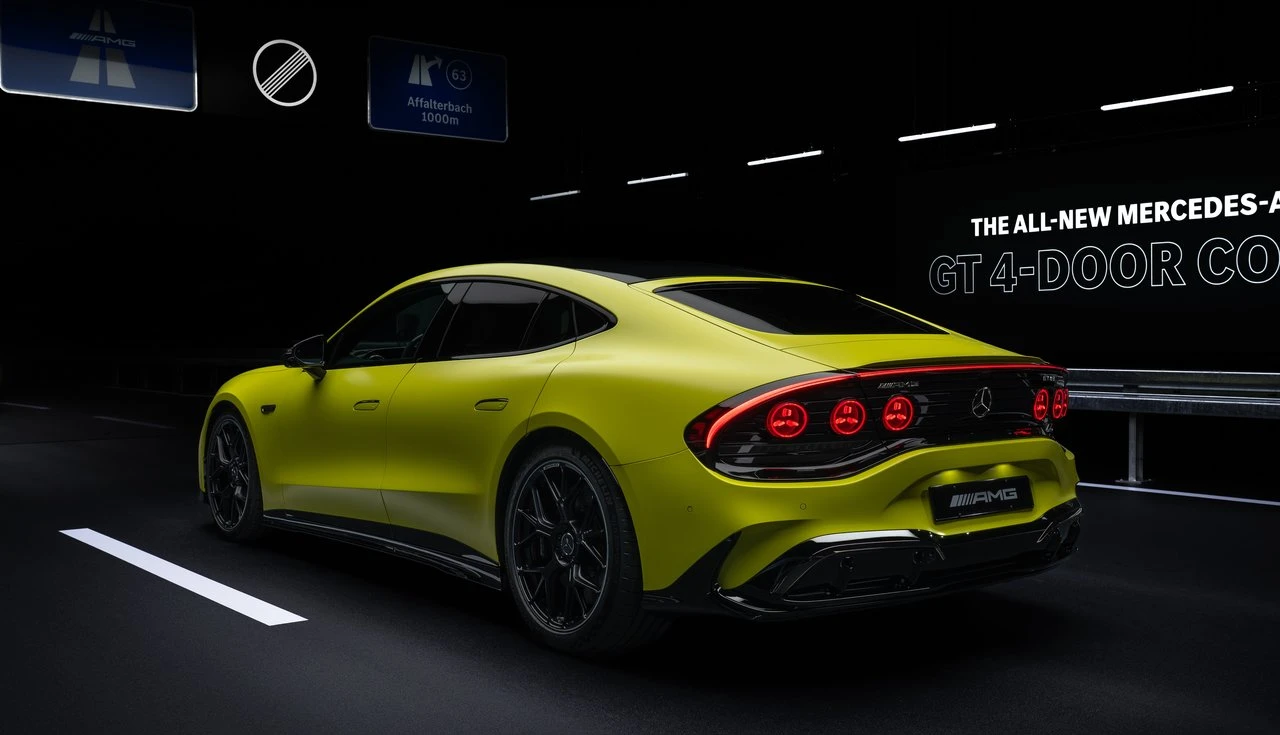
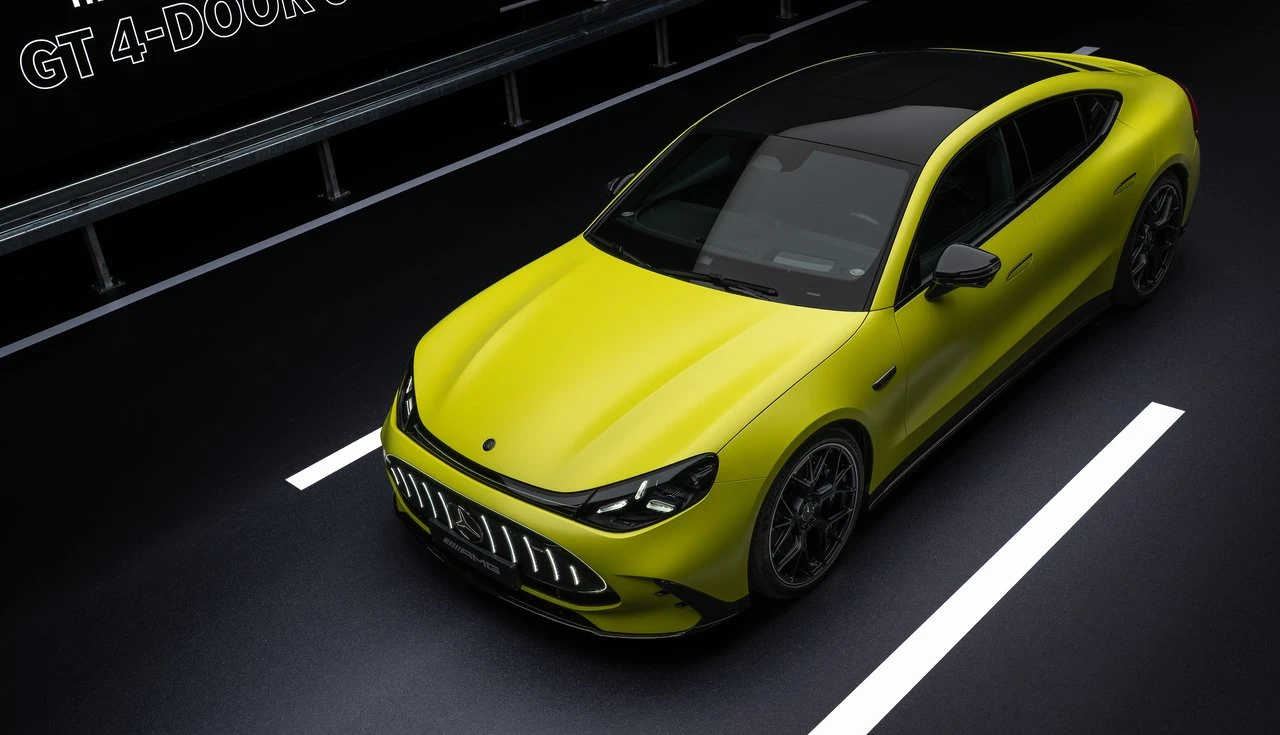
The first thing the 2027 AMG GT 63 does is own the room. At 200.6 inches long and 77.1 inches wide, the fastback body drops sharply from roofline to tail — with the roofline sitting 1.6 inches lower than the previous model. That’s not just a styling choice. It’s aero, it’s structural, and it lowers the center of gravity exactly where it needs to be.
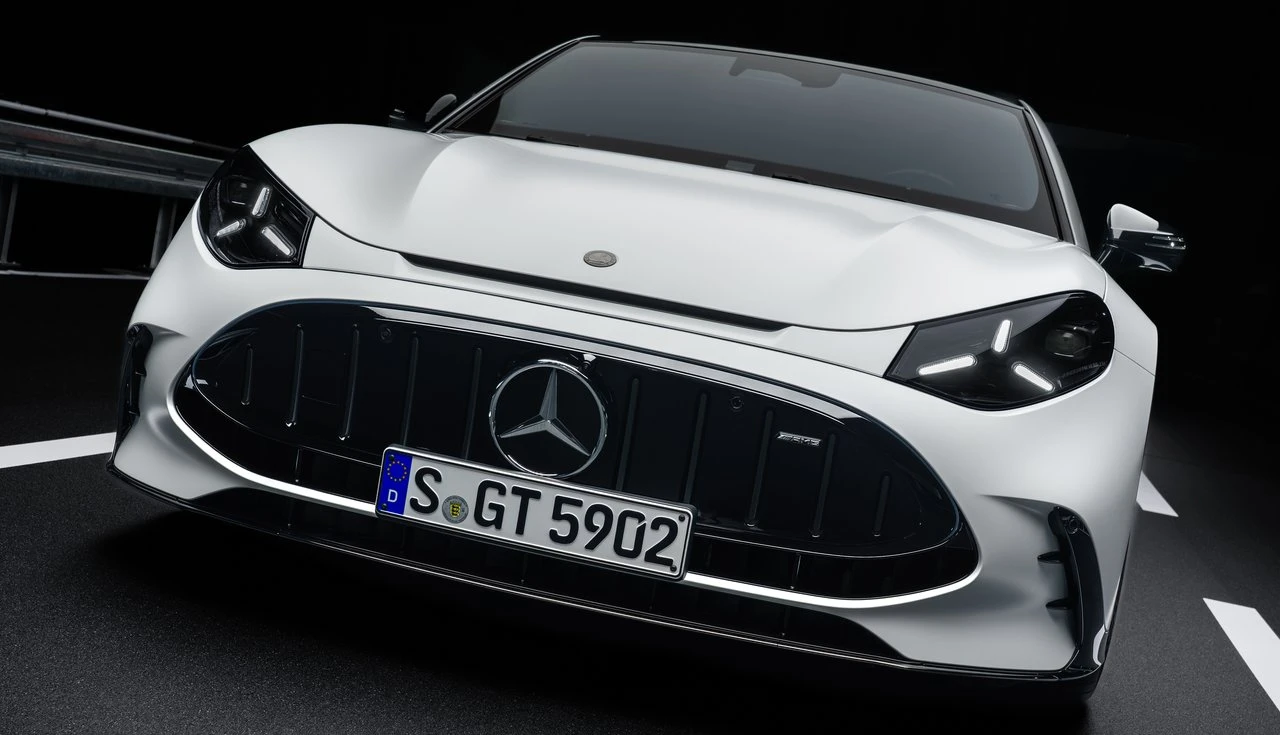
Up front, the active grille system manages airflow with precision: shutters close at highway speeds to cut drag, and open under load to feed the cooling systems. The headlight clusters are sculpted to direct the eye straight toward muscular fender flares wrapping oversized wheels.
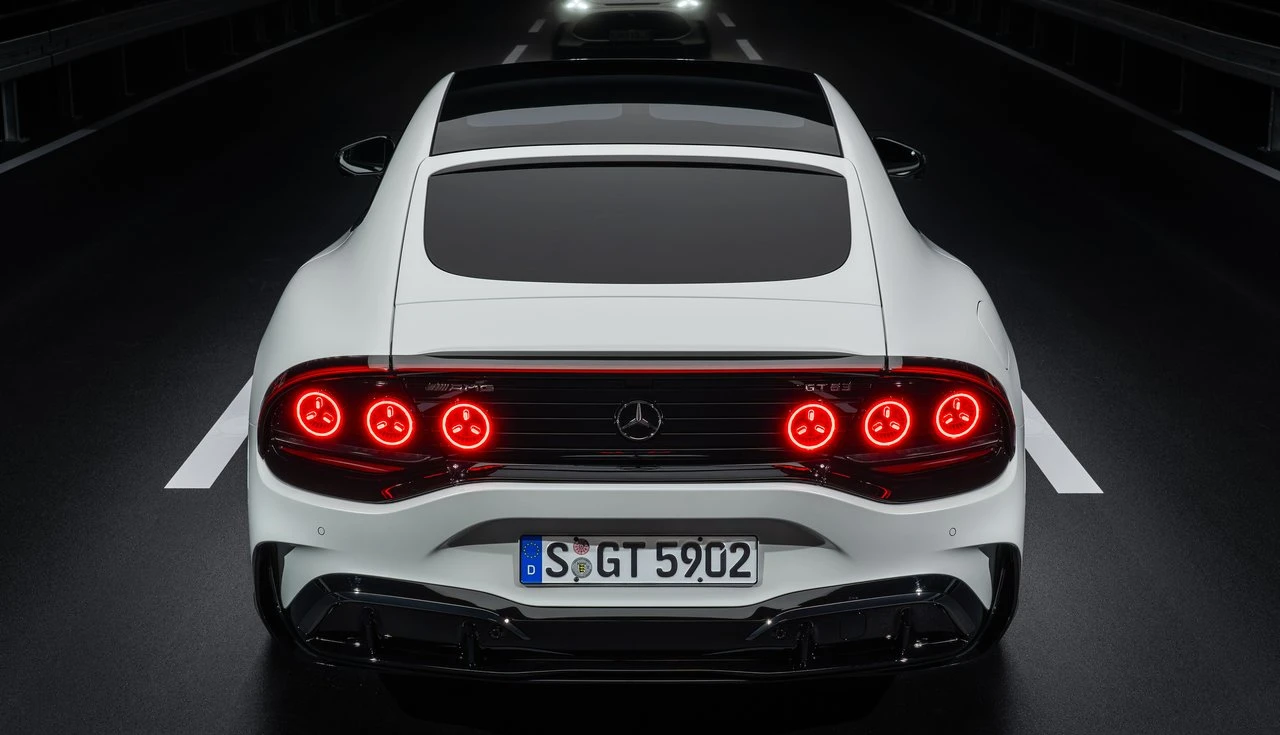
From the side, the long, low proportion reads like a classic European Grand Tourer — but with the surface tension of a race car. The rear is where the aerodynamic engineering becomes theater: a retractable rear spoiler rises automatically above 50 mph, and an active rear diffuser — claimed by Mercedes-AMG as a world-first for production cars — extends up to 8 inches rearward at autobahn speeds.
A drag coefficient of 0.22 is a remarkable number for a car this powerful, this wide and this serious about cooling. The design makes zero apologies — it’s simultaneously the most aerodynamically efficient and most commanding car in the AMG lineup.
A Fighter Jet Cockpit With Grand Tourer Space: Inside the 2027 AMG GT 63
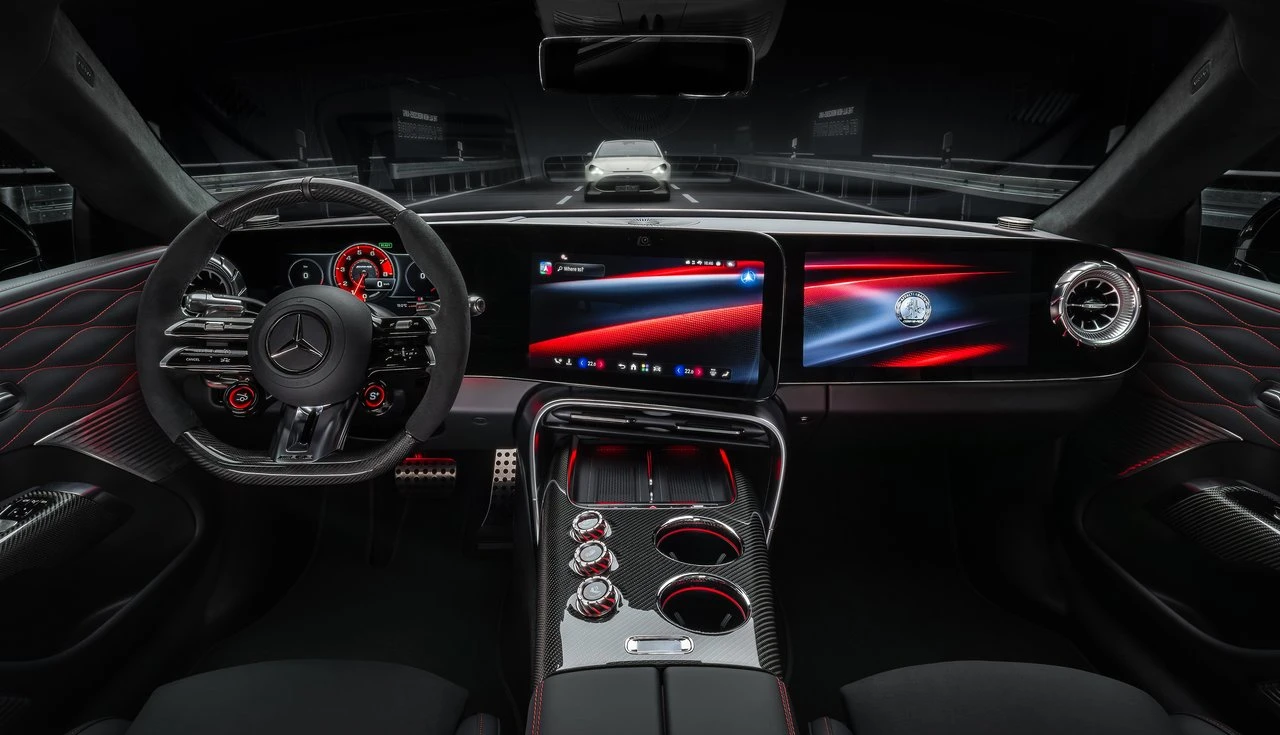
Climbing into the 2027 AMG GT 63 means entering a cabin built around two competing ideas — make the driver feel like they’re strapped into a combat aircraft, while keeping every passenger comfortable on a 400-mile run. AMG pulls it off.
The dashboard is dominated by a seamless glass surface housing three independent high-resolution screens: a 10.2-inch driver instrument cluster, a 14-inch central infotainment display angled toward the driver, and a separate 14-inch screen exclusively for the front passenger — allowing them to stream content or assist with navigation independently. Everything runs through the new MB.OS operating system, with AMG-specific modes including Track Pace, a lap-timer and braking-point telemetry system built for track days.
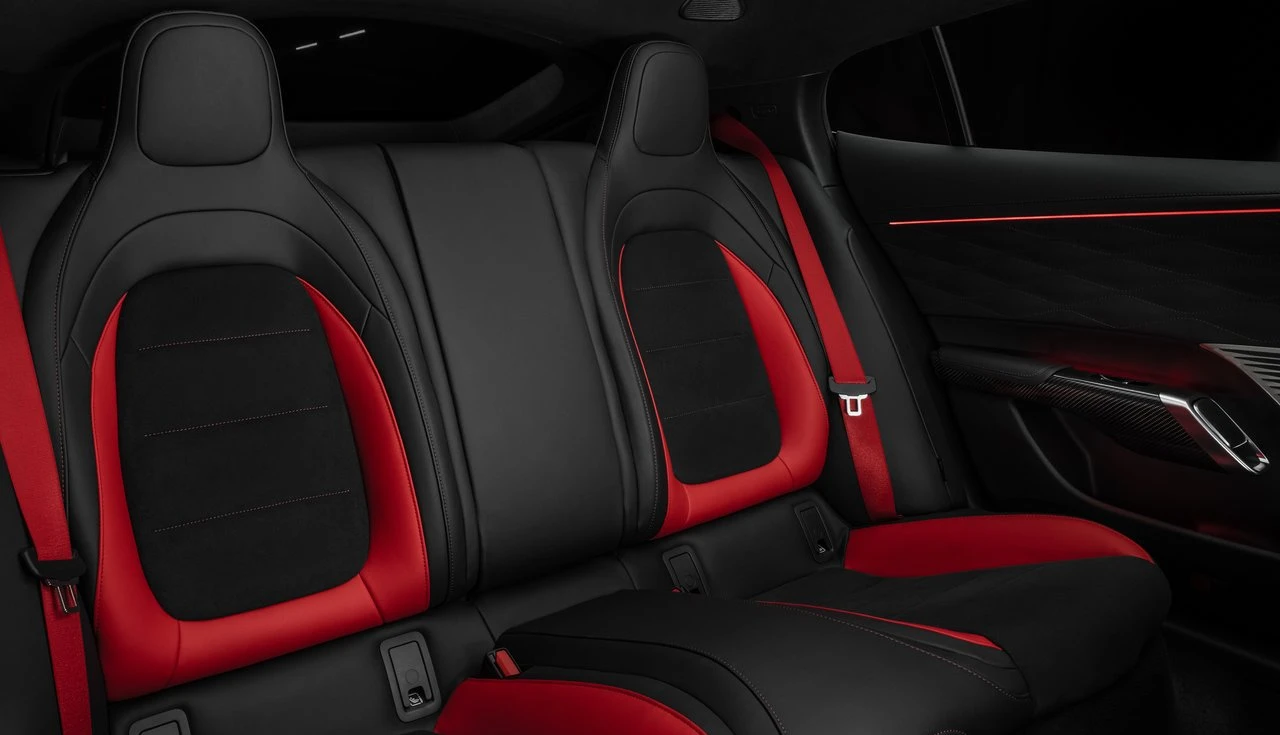
Materials follow the Mercedes Manufaktur program: fine-grain leather, diamond-pattern stitching, exposed carbon fiber inserts, and galvanized metal trim. The air vents are machined metal concentric turbines lit by ambient LEDs. Nothing here is generic. Optional Burmester High End 4D audio goes beyond speakers — tactile actuators built into the seat bases pulse with the music for a full-body listening experience.
The Clever Engineering Trick That Fixes the EV Headroom Problem
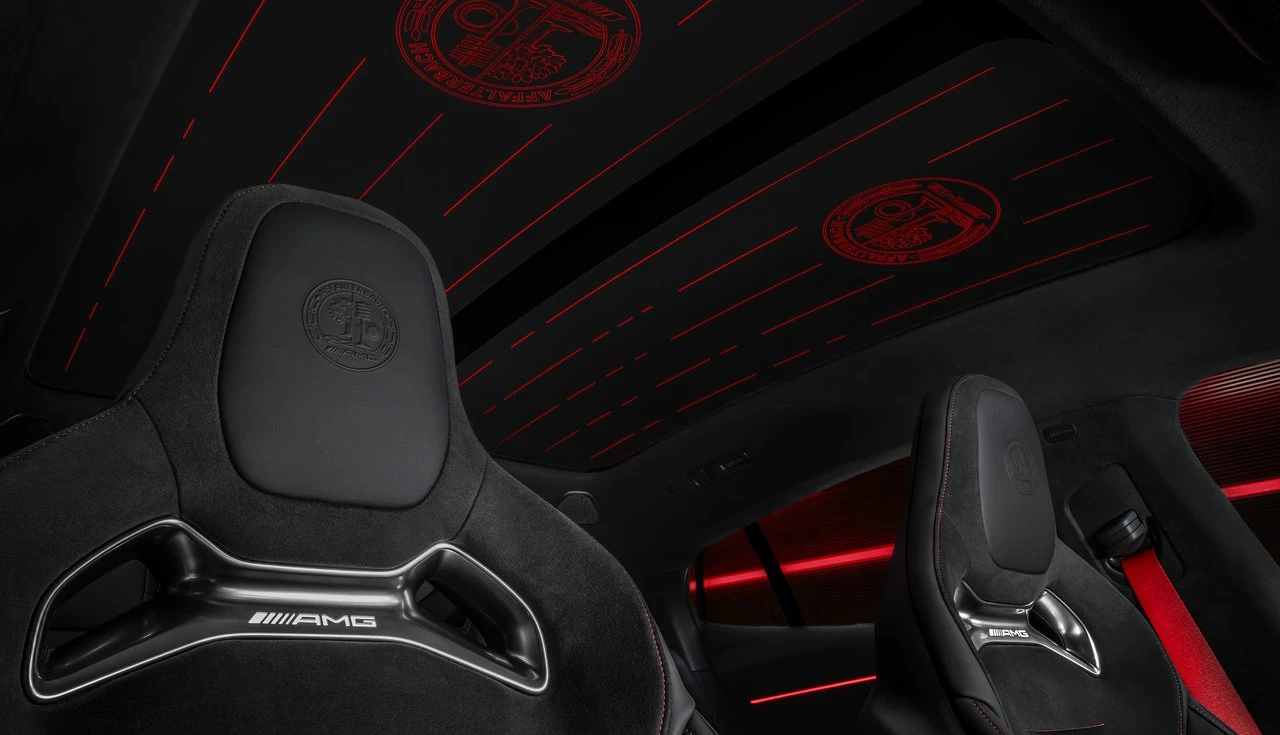
The panoramic Sky Control glass roof uses electrochromic technology to shift from fully opaque to crystal clear with a single touch, blocking heat when needed without a conventional sunshade.
In the rear seats, the most intelligent solution in the car stays invisible: “foot garages” — structural recesses engineered directly into the battery pack — create deep cavities for rear passengers’ feet and legs. This allows the rear seat cushions to sit lower, recovering critical headroom under the sloping roofline. It’s a precise engineering answer to the chronic problem that plagues virtually every aerodynamic electric sedan on sale today.
The cabin’s standout strength is the seamless integration of technology and ergonomics — nothing feels added just to look good in photos. The honest limitation: the all-screen interface takes real adjustment for drivers used to physical controls, especially during aggressive driving when you’d rather not hunt through menus.



Three Axial Flux Motors, 2,000 Nm and Zero Apologies: The Powertrain of the 2027 AMG GT 63
The heart of the 2027 AMG GT 63 isn’t one motor — it’s three. And not conventional radial-flux motors like every other production EV uses, including the Porsche Taycan. Mercedes-AMG went with axial flux motors developed by YASA, a British subsidiary acquired in 2021, whose disc-shaped architecture delivers three times the power density and 67% less weight compared to a traditional radial unit.
The layout is surgical. A single motor sits on the front axle — just 3.5 inches thick, weighing 176 lbs — and disconnects electronically during light-load cruising to conserve range, reengaging in milliseconds when all-wheel drive is needed. At the rear, two fully independent motors, one per wheel, eliminate the conventional mechanical differential entirely. That independence is what makes genuine torque vectoring possible: the system sends positive torque or regenerative braking to each rear wheel independently, in milliseconds, based on exactly what the chassis needs.
The combined output: 1,169 horsepower at peak Launch Control with the battery above 80% state of charge, and 2,000 Nm of instant torque. The GT 63 reaches 60 mph in 2.1 seconds, 124 mph in 6.4 seconds, with an electronically limited top speed of 186 mph with the AMG Driver’s Package. The 106 kWh net battery supports peak DC charging of over 600 kW, recovering 10–80% charge in just 11 minutes — enough to add up to 286 miles in a single short stop. Full WLTP range is projected between 370 and 432 miles.
Efficiency? 17.9 kWh per 100 km — genuinely impressive for a car with this performance envelope.
Tech Specs — 2027 Mercedes-AMG GT 63 4-Door
| Item | Specification |
|---|---|
| Motor | 3 YASA axial flux electric motors (1 front + 2 rear) |
| Peak Horsepower | 1,169 hp (Launch Control, battery >80%) |
| Peak Torque | 1,475 lb-ft (2,000 Nm) |
| Transmission | Single-speed (front) + dual planetary (rear) |
| 0–60 mph | 2.1 seconds |
| Top Speed | 186 mph (with AMG Driver’s Package) |
| Battery Capacity | 106 kWh (net usable) |
| Efficiency | 17.9 kWh/100 km (WLTP combined) |
| Estimated Range | 370–432 miles (WLTP) |
| Max DC Charging | 600+ kW peak |
| Curb Weight | 5,423 lbs (2,460 kg) |
| Wheelbase | 119.7 inches (3,040 mm) |
| Cargo Space | 17.9 cu ft (rear) + 1.4 cu ft (frunk) |
What Does the 2027 Mercedes-AMG GT 63 Actually Cost — And Who’s Really Buying It?
In the US, the entry-level GT 55 is expected to start around $150,000, while the GT 63 opens at approximately $210,000 before options. Add the AMG Driver’s Package, active diffuser, Manufaktur interior, and profiled sport seats, and you’re comfortably past $240,000–$250,000 fully loaded.
That puts it in direct financial competition with mid-engine European exotics — not just performance sedans.
On the maintenance side, the picture is split. The electric powertrain itself is genuinely simpler than a combustion engine: no oil changes, no timing chains, no ignition system to service. But the real costs come from elsewhere. The 2,000 Nm of torque pushing 5,400 lbs will destroy rear tires on an aggressive schedule — and those are model-specific homologated compounds that don’t come cheap. The carbon-ceramic front brake rotors, subjected to repeated stops from 186 mph, carry a replacement bill that rivals the purchase price of a base economy car.
Insurance sits firmly in the highest-risk tier. The combination of replacement value, imported parts costs, and 1,169 horsepower places this model among the most expensive vehicles to insure in the US premium market. Expect annual premiums that reflect every one of those numbers.
For the right buyer — a high-earning executive who uses the car daily, travels with family, and wants to be first with the most advanced hardware available — the GT 63 2027 is genuinely unmatched. For anyone calculating total cost of ownership with discipline, the Porsche Taycan Turbo GT or Lucid Air Sapphire offer a more measured entry point into the same performance tier.
Frequently Asked Questions About the 2027 Mercedes-AMG GT 63
What is the real-world range of the 2027 AMG GT 63? WLTP-certified range sits between 370 and 432 miles. Under hard driving — track sessions, frequent full-throttle pulls — expect that number to drop significantly, as with any high-performance EV.
When does the 2027 AMG GT 63 go on sale in the US? The GT 55 is expected in late 2026; the GT 63 follows in early 2027. US market allocation and official pricing haven’t been confirmed, but AMG’s track record suggests limited early availability.
How much does it cost to insure the 2027 AMG GT 63? It sits in the highest-risk insurance bracket in the US market. High replacement value, expensive imported parts, and extreme performance push annual premiums well above the luxury segment average.
Who are the main competitors of the 2027 AMG GT 63? The Porsche Taycan Turbo GT and Lucid Air Sapphire are the closest rivals on performance. For pricing and luxury positioning, the Panamera Turbo E-Hybrid also belongs in the conversation.
Is the 2027 Mercedes-AMG GT 63 Worth $210,000?
For buyers who approach this rationally, the honest answer right now is: wait. First-generation technology always carries accelerated depreciation risk, and solid-state battery platforms are already on the near horizon.
But for the buyer who views that price as the cost of access to the most advanced four-door driving machine on earth today — the GT 63 has no real answer. It’s a new launch that resets what a performance sedan is capable of.
It’s pure emotion with an engineering degree — and a monthly payment to match.
Share this article
Related posts