The 2026 Subaru Trailseeker Does 0–60 in Under 4 Seconds — And It’s a Wagon
The fastest production Subaru ever built hits 60 mph in 3.9 seconds, comes standard with all-wheel drive across every trim, and is specifically engineered for drivers who haul kayaks, mountain bikes, and camping gear — not just groceries.

Por: Danniel Bittencourt
21/05/2026
The 2026 Subaru Trailseeker Is the Electric SUV Outback Owners Have Been Waiting For
Subaru has always made cars for people who actually use them. Not for the driveway. Not for the school pickup line. For the trailhead, the boat ramp, the muddy forest road at mile marker 47.
The 2026 Trailseeker is the brand’s electric answer to everything the Solterra wasn’t. It’s bigger, faster, more capable — and it’s going after the same loyal buyers who’ve been putting Outbacks and Foresters through their paces for decades.
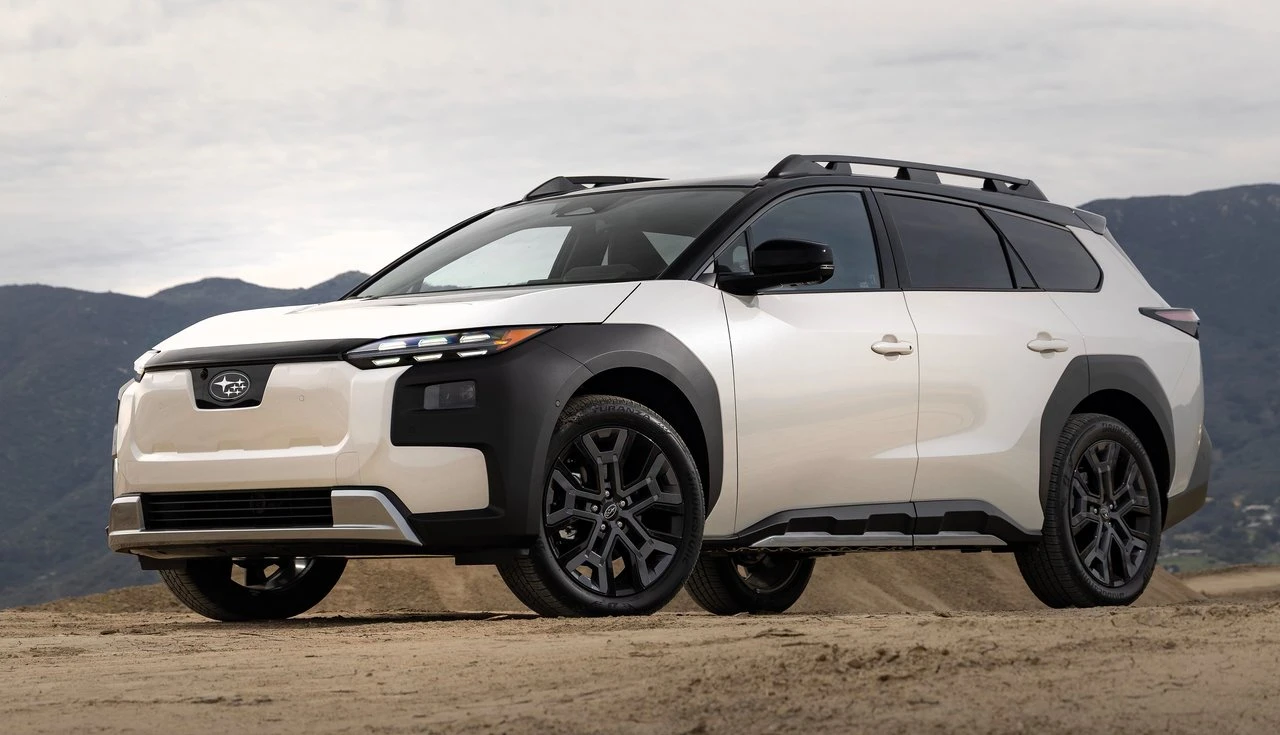
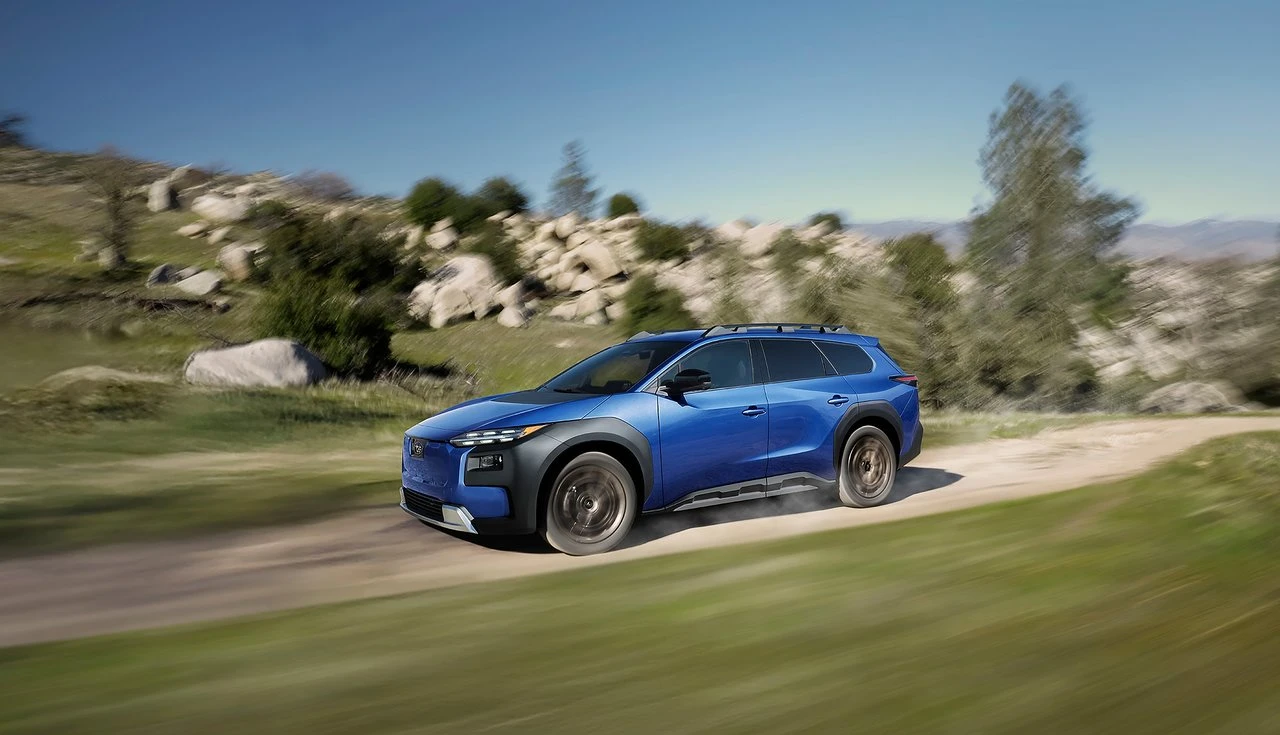
This is a midsize electric crossover that goes head-to-head with the Hyundai Ioniq 5 XRT and the Ford Mustang Mach-E. But Subaru’s pitch is fundamentally different: standard AWD on every single trim, 8.5 inches of ground clearance, and a roof rack system engineered to hold 700 lbs of gear. These aren’t options. They’re standard.
As one of the most significant new launches in the brand’s modern history, the Trailseeker isn’t just another electric SUV dressed up for trail duty. It’s Subaru making a genuine statement about where the brand is headed.
Bold, Boxy and Built for Work: The Trailseeker’s Design Means Business
The Trailseeker wasn’t designed to win a beauty contest. It was designed to haul a kayak on the roof and come home dirty — and the styling makes zero apologies for that.
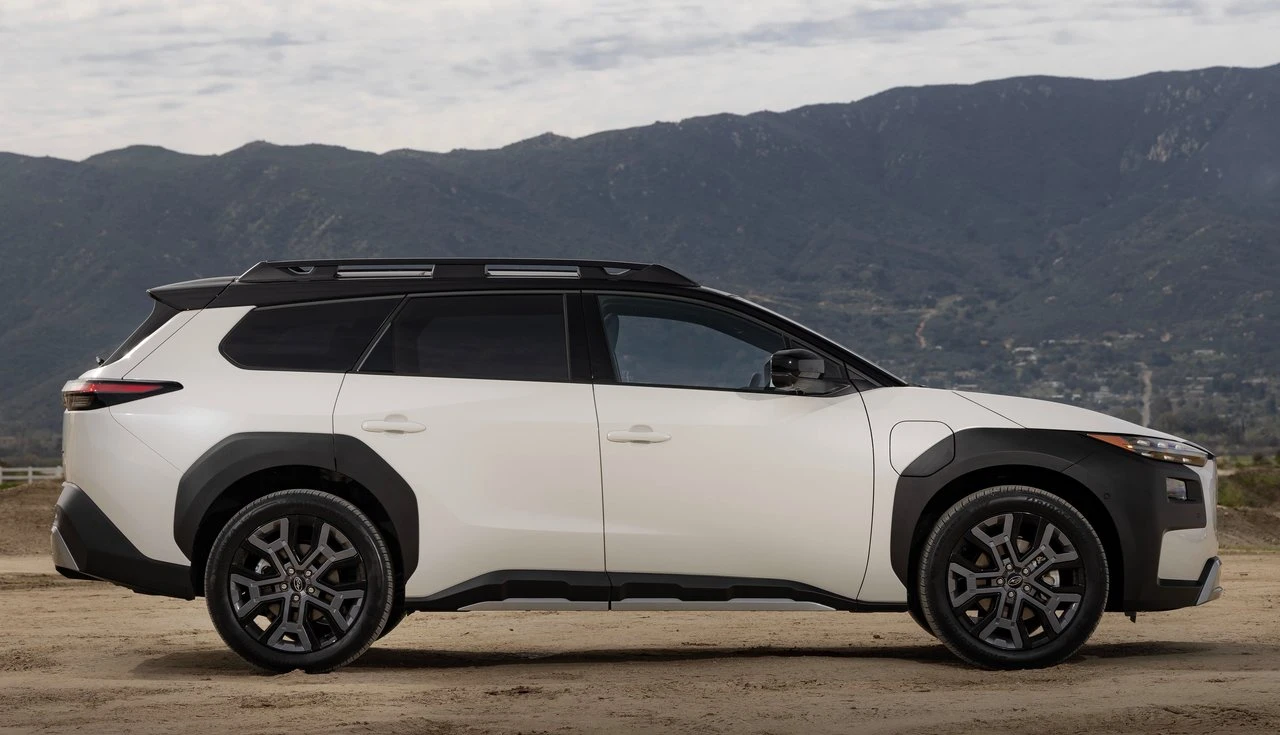
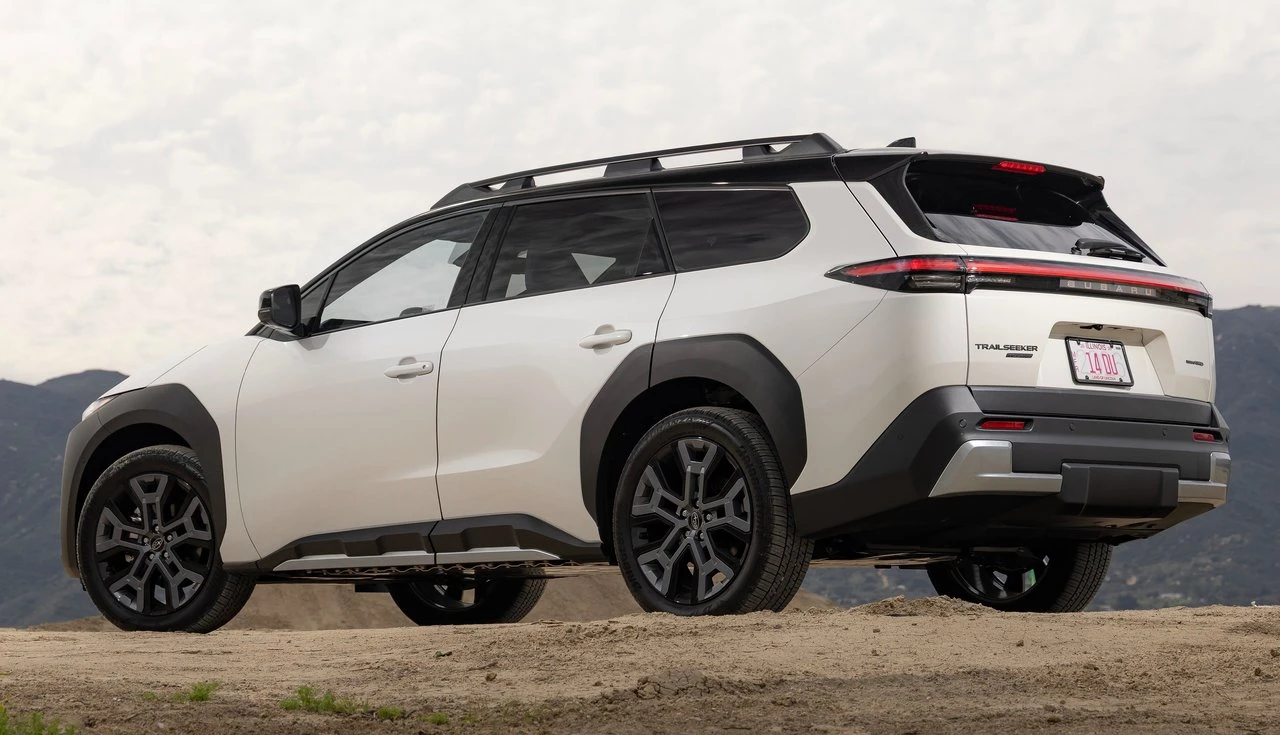
The body stretches 190.8 inches long on a 112.2-inch wheelbase, pushing the wheels to the very corners of the chassis. The roofline stays flat and squared-off, a deliberate rejection of the fastback slope that sacrifices cargo space for aesthetics. Sitting on top are standard ladder-type roof rails — not the decorative flush-mount trim pieces found on most crossovers, but genuine structural rails rated to carry up to 700 lbs of static load.
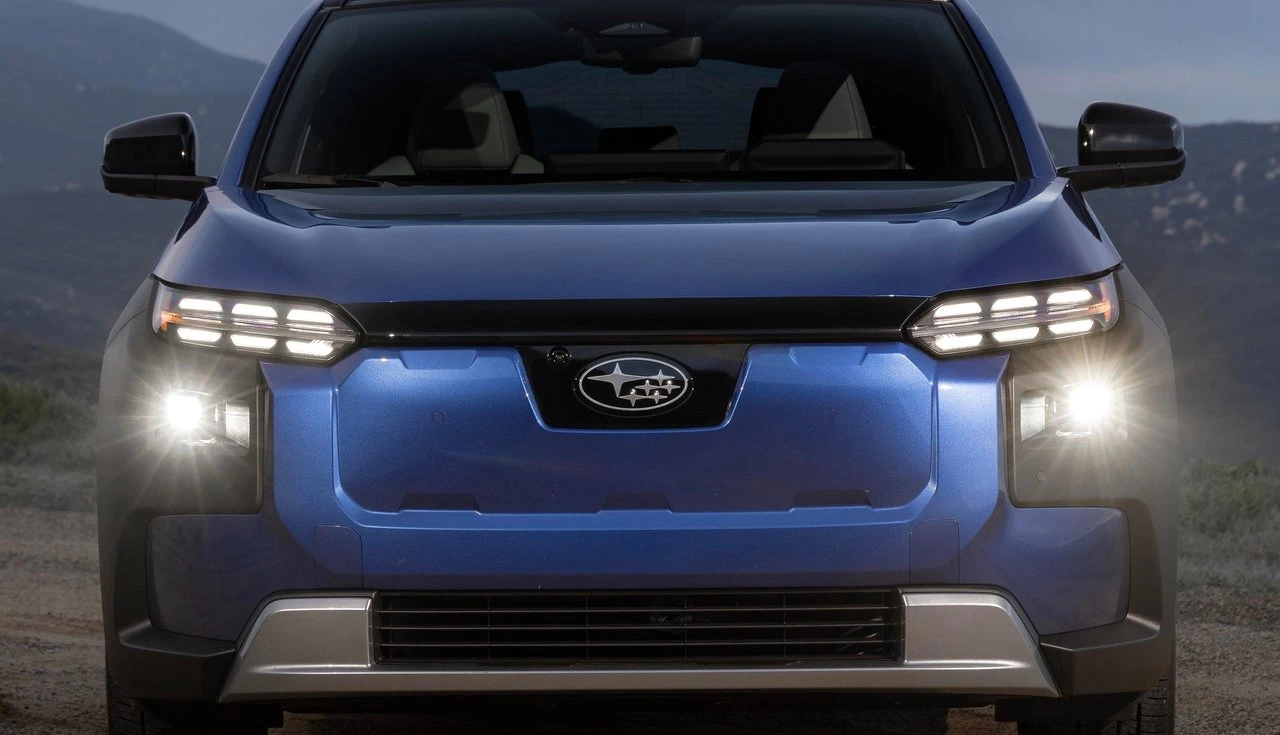
The front fascia ditches the traditional grille entirely. In its place, a sleek aerodynamic panel centers the iconic Subaru Pleiades star cluster emblem, fully illuminated — giving the Trailseeker a distinct nighttime identity. The lower bumper openings aren’t styling tricks; they’re functional vents directing airflow to the battery’s thermal management system.
Along the sides, chunky polymer cladding wraps the wheel arches and rocker panels. It protects the body from rocks and debris on unpaved roads — the kind of real-world abuse that would chip lesser crossovers on a single trail run. Wheels start at 18 inches on the base Premium trim and step up to 20-inch alloys on the Limited and Touring.
Compared to the Solterra, this is a significant evolution. Compared to rivals like the Ioniq 5, the Trailseeker looks and feels like it was built for a completely different mission.
Inside the Trailseeker: More Space, Smarter Tech — and One Baffling Decision
Step inside and the absence of a traditional driveshaft tunnel immediately opens up the cabin. Front passengers get 42.1 inches of legroom. Rear passengers aren’t an afterthought either, with 35.3 inches of knee room — figures that benchmark well against most competitors in the segment.
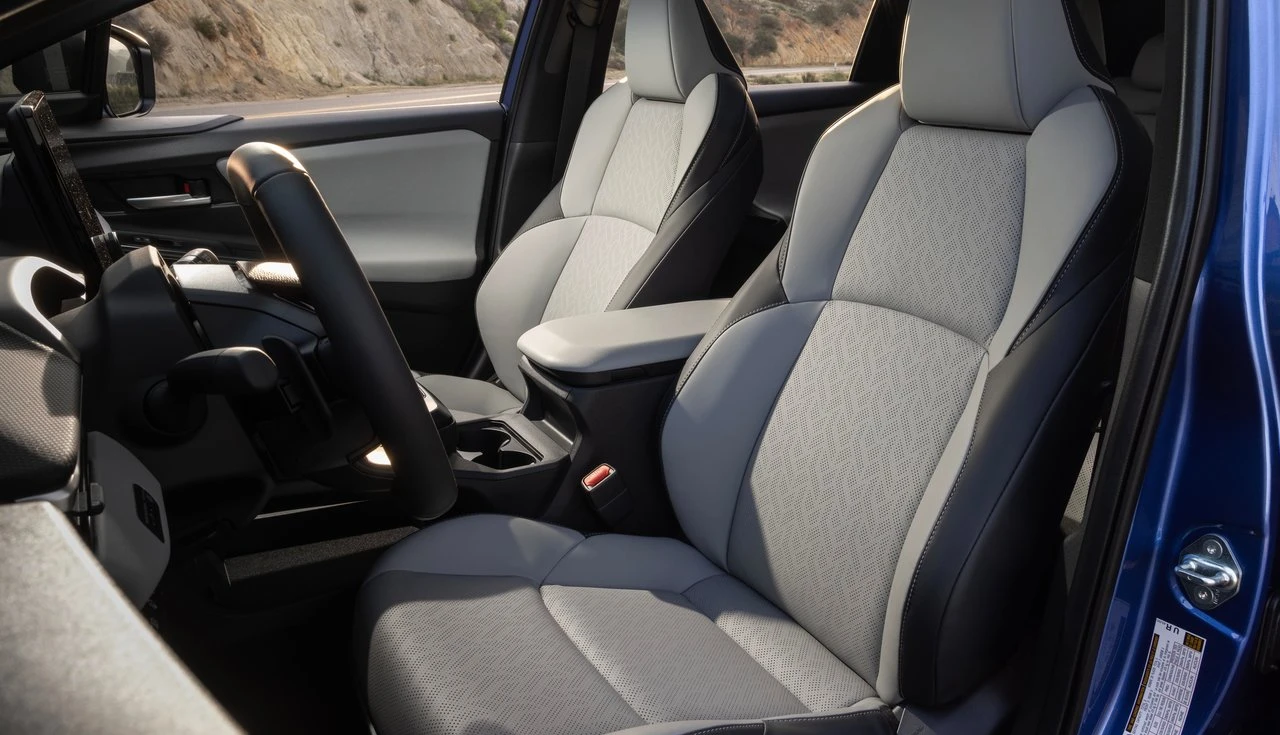
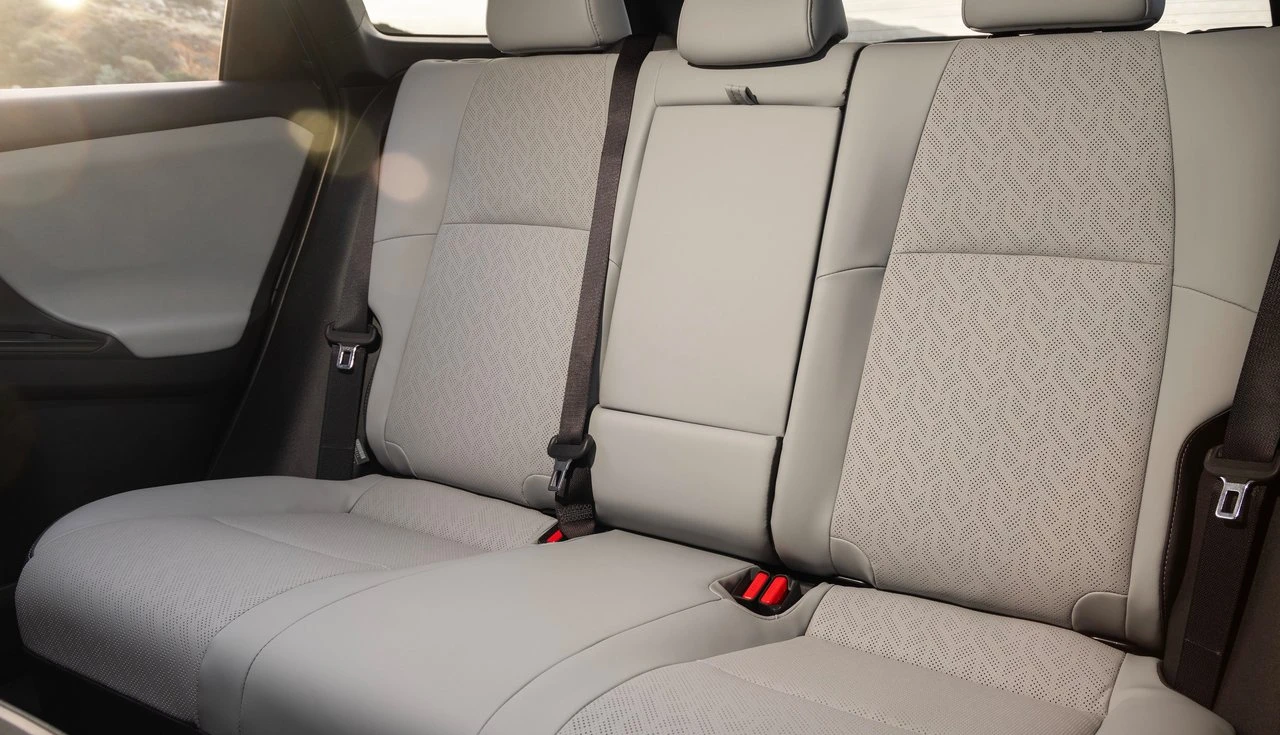
The dashboard centers on a 14-inch horizontal touchscreen with a clean, responsive interface. Wireless Apple CarPlay and Android Auto come standard. Below the screen, dual wireless phone chargers sit side by side — a small detail that lands as genuinely useful for families constantly fighting over a single charging pad. The base Premium and mid-range Limited trims are wrapped in Subaru’s StarTex® upholstery, a water-resistant polyurethane material built for people who climb in soaking wet after a surf session or caked in mud after a mountain bike ride. The top-spec Touring adds optional two-tone genuine leather seating.
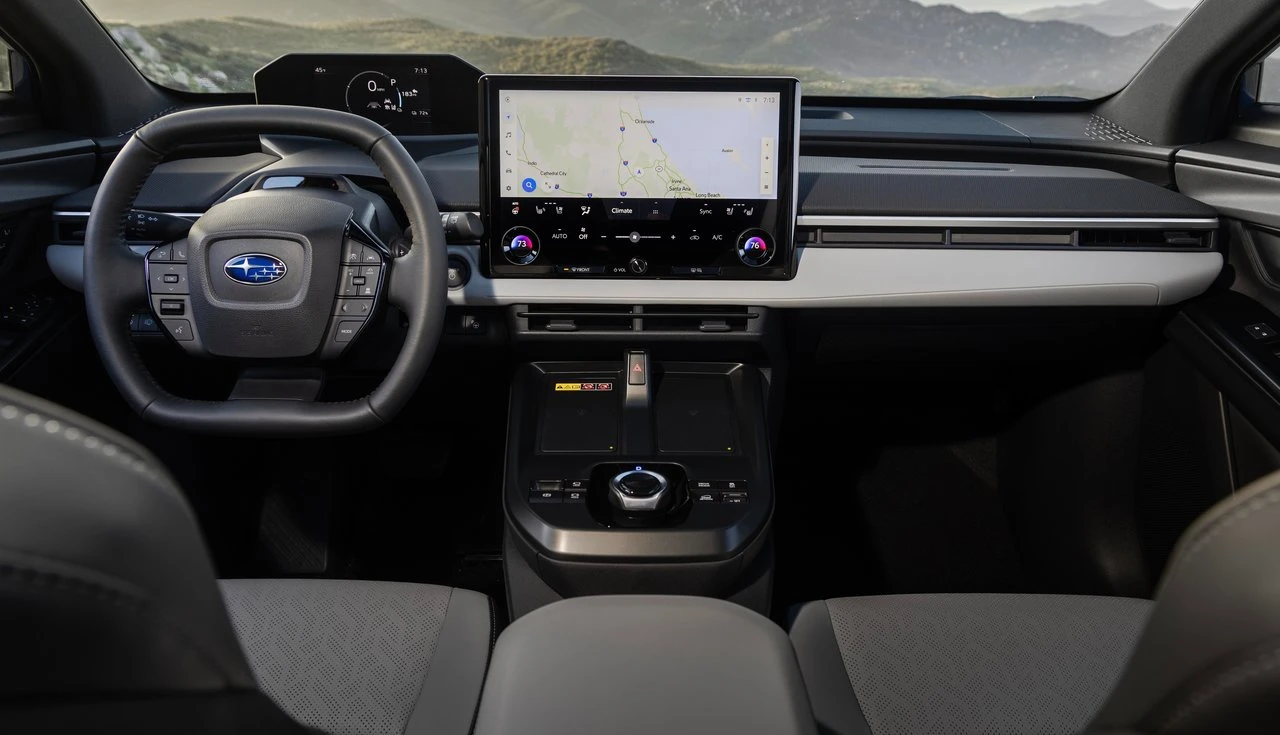
Screens, Safety Tech and the Case of the Missing Glove Box
The EyeSight driver assistance suite comes loaded across every trim: automatic emergency braking, blind-spot monitoring with active steering intervention, adaptive cruise control, and active lane centering. The Limited and Touring add a 360-degree Panoramic View Monitor and a Smart-View interior mirror that streams a live rear camera feed — invaluable when the cargo area is stacked to the headliner with gear.
The Touring’s Traffic Jam Assist enables true hands-free Level 2 driving below 25 mph in mapped highway conditions. Cargo space is genuinely impressive: 31.3 cubic feet behind the second row, expanding to 74 cubic feet with the seats folded flat. A built-in 1,500-watt AC power outlet turns the cargo area into a mobile power station — capable of running a portable fridge, a coffee maker, or power tools in the field.
There are two legitimate complaints. First, the digital instrument cluster is only 7 inches and positioned unusually high on the dash, requiring the driver to read information over the top of the steering wheel rather than through it. Depending on your driving position, the wheel rim can partially block the display. Second — and more frustrating — the passenger-side glove box has been completely removed to accommodate the radiant leg heaters. Subaru added a deeper center console and a rubberized under-screen tray to compensate, but daily drivers will miss having a real glove box.
380 Horsepower, Instant AWD Torque and a Braking System That Needs Work
Two permanent magnet AC motors — one per axle — form the Dual-Motor Symmetrical All-Wheel Drive system, standard on every Trailseeker regardless of trim. Combined output hits 380 horsepower and 395 lb-ft of torque, delivered the moment your right foot asks for it. No turbo spool. No hesitation. Just immediate, linear thrust.
In instrumented testing by Car and Driver, the Trailseeker posted a 0–60 mph time of 3.9 seconds and covered the quarter mile in 12.5 seconds at 110 mph. Those numbers don’t just beat the Solterra’s best — they redefine what anyone should expect from a family adventure wagon. Top speed is electronically limited to 115 mph.
The official EPA range estimate reaches 281 miles on the base 18-inch wheels. At a steady 75 mph highway cruise with the roof racks in place, that number drops to a more realistic 190 miles — a meaningful limitation on long road trips through areas with sparse Supercharger coverage. The native NACS port gives Trailseeker owners plug-and-play access to Tesla’s 25,000+ Supercharger stations nationwide, which helps. Peak DC fast-charging capacity is 150 kW, taking the battery from 10% to 80% in 28 to 30 minutes under ideal conditions. Level 2 AC charging at 11 kW fills the pack overnight in roughly seven hours.
Off the pavement, the updated Dual-Function X-MODE® with Grip Control manages traction thousands of times per second — reacting to wheel slip far faster than any mechanical differential can. Ground clearance sits at a legitimate 8.5 inches, and the platform supports 3,500 lbs of towing capacity.
The serious concern is braking. From 70 mph to a full stop, the Trailseeker required 181 feet in testing — and from 100 mph, a troubling 365 feet. Repeated hard stops produced noticeable brake fade as the pads overheated. Part of the blame falls on weak regenerative braking calibration: even at the strongest paddle-shifter setting, regen deceleration is mild. This isn’t a one-pedal driving experience, and on mountain descents, the friction brakes carry most of the load.
2026 Subaru Trailseeker — Full Specs
| Item | Specification |
|---|---|
| Drivetrain | Dual-motor electric AWD |
| Combined horsepower | 380 hp |
| Combined torque | 395 lb-ft |
| Battery capacity | 74.7 kWh (lithium-ion) |
| EPA range (18″ wheels) | Up to 281 miles |
| Real-world highway range | ~190 miles at 75 mph |
| 0–60 mph | 3.9 sec (C&D tested) |
| Top speed | 115 mph (limited) |
| Peak DC charging | 150 kW |
| AC charging (Level 2) | 11 kW |
| Towing capacity | 3,500 lbs |
| Ground clearance | 8.5 inches |
| Cargo space (seats up) | 31.3 cu-ft |
| Cargo space (seats folded) | 74.0 cu-ft |
What Does the 2026 Subaru Trailseeker Cost — and Is It Actually Worth It?
Pricing starts at $39,995 MSRP for the base Premium trim — before destination charges, which typically add around $1,450. The mid-level Limited runs $43,995, and the top-spec Touring opens at $46,555, reaching $48,005 with the two-tone leather interior. Every trim gets the full 380 hp, standard AWD, X-MODE off-road system and the structural roof rack system without paying extra.
Edmunds named the base Premium trim its top pick in the electric SUV segment for 2026. That recognition says a lot: you get the full mechanical package without being pushed into a higher trim just to get AWD or real off-road hardware.
In terms of ownership costs, the shift to an electric drivetrain eliminates oil changes, timing belt services, spark plugs and transmission fluid. Subaru backs the battery with an 8-year/100,000-mile warranty, with projected degradation of roughly 1–2% per year — meaning well over 230 miles of usable range after eight years of regular use. The real recurring costs are tires and brakes. The instant torque is hard on 20-inch rubber, and the weak regenerative braking means the friction brakes work harder than they should. Budget for tire replacements more frequently than you might expect on a conventional SUV.
Insurance will run on the higher end of the midsize SUV range. The cost of replacing the e-TNGA battery pack in a severe accident, combined with the expense of recalibrating EyeSight sensors after any significant front-end repair, pushes premiums up for most carriers.
For buyers who already have a Level 2 charger at home and use the car for weekend trail access within 150 miles of base, the Trailseeker makes a compelling case. If your life involves frequent 300-plus-mile interstate hauls without planned charging stops, the highway range limitation is a genuine constraint worth weighing carefully.
Frequently Asked Questions About the 2026 Subaru Trailseeker
What is the real-world range of the 2026 Subaru Trailseeker? In mixed city and suburban driving, expect around 240–260 miles. At a steady 75 mph on the highway with the roof racks installed, plan for approximately 190 miles between charges.
Does the 2026 Subaru Trailseeker come with AWD standard? Yes — on every single trim. The Dual-Motor Symmetrical AWD system with X-MODE is standard on the Premium, Limited and Touring without any additional cost.
Who are the main competitors of the Subaru Trailseeker? The Hyundai Ioniq 5 XRT, Ford Mustang Mach-E, Chevrolet Blazer EV and Tesla Model Y are the closest rivals. For genuine off-road capability in the segment, few come close.
Is the Subaru Trailseeker expensive to maintain? The electric drivetrain significantly cuts routine maintenance costs. The main budget items are tires — worn faster by the instant torque — and brake pads, which wear more quickly due to limited regenerative braking effectiveness.
Is the 2026 Subaru Trailseeker Worth Buying?
The Trailseeker is the best electric vehicle Subaru has ever built — and it isn’t particularly close. Standard AWD, real ground clearance, a cavernous cargo area, a 700-lb roof rack system and 3.9-second 0–60 performance, all under $50,000. For the active family that camps, bikes, surfs and needs a reliable daily driver, it’s a genuinely difficult package to argue against.
But it’s not for everyone. Long highway trips without charging infrastructure demand careful planning. The braking system needs a software update — or two. And the missing glove box will annoy more people than Subaru anticipated.
For Subaru loyalists ready to go electric without giving up what made the brand great, the Trailseeker is exactly the bridge they’ve been waiting for.
Share this article
Related posts